
Social Ties or Social Traps? The Hidden Cost of Executive Networks in SEOs
The Relationship of Companies Social Connection and SEOs
This study investigates the impact of social networks between Seasoned Equity Offering (SEO) firms and their underwriters on stock performance. Utilizing a sample of 330 Taiwanese SEOs from 2002 to 2013, the research reveals that while strong connections facilitate information transfer, they paradoxically lead to poorer long-term stock returns.
TL;DR
Does "who you know" help or hurt your stock price in the long run? This research examines the social networks between companies issuing Seasoned Equity Offerings (SEOs) and their underwriters. While these connections are often thought to reduce information asymmetry, the evidence from the Taiwan stock market (2002–2013) suggests a darker reality: high social connectivity is a significant predictor of poor long-term abnormal returns.
Problem & Motivation: The Information Asymmetry Gap
In the world of corporate finance, Information Asymmetry is the perennial villain. Investors rarely have the same level of insight as managers, leading to "valuation bias"—where stocks are either hyped up or undervalued during new share issuances.
The prevailing "Social Network" theory in finance (e.g., Gompers & Xuan) typically argues that shared education or board networks act as a bridge for information flow. However, this paper challenges that optimism by asking: Does this bridge lead to better investments, or does it simply fuel "subscription fads" (lottery-type gambling behavior)?
Methodology: Measuring the "Connected" Performance
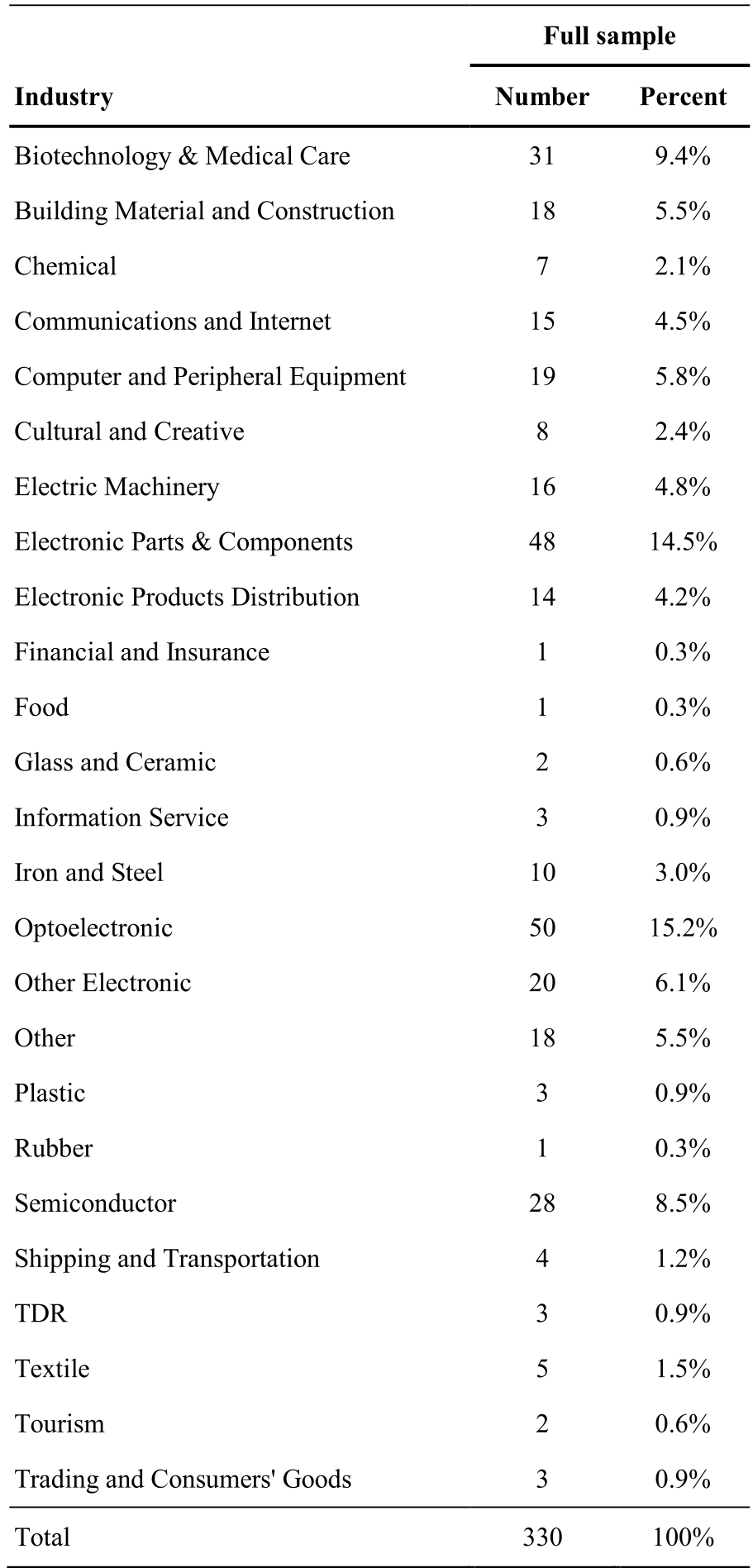
The researchers analyzed 330 SEO transactions in Taiwan, focusing heavily on the Optoelectronic and Electronic components industries, which comprised nearly 30% of the sample.
The Variable of Interest
The study defines Social Connection as the presence of shared ties between directors/top executives of the issuing firm and those of the underwriting brokerage.
- High Connection: Average ties above the sample median.
- Low Connection: Average ties below the sample median.
The performance was measured using Cumulative Abnormal Returns (CAR) for the first year following the SEO, calculated using a market model to filter out general market movements.
Core Findings: The Negative Alpha of Connections
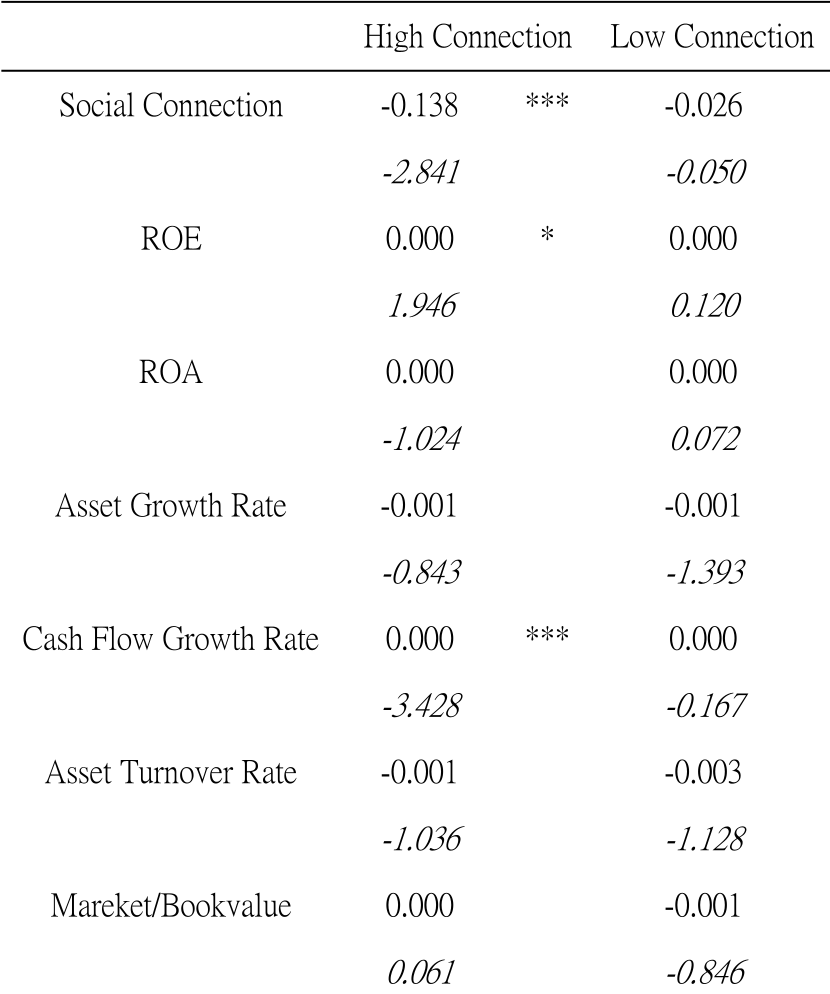
The most striking result from the OLS regression is the divergence between "Connected" and "Independent" deals.
1. Significant Underperformance
For firms with high social connectivity, the coefficient for social connection on one-year CAR was -0.138 (p < 0.01). In contrast, the low-connection group showed no statistically significant relationship. This suggests that "connected" SEOs are prone to severe mean reversion—initial hype gives way to long-term disappointment.
2. Information vs. Bias
The authors conclude that in the context of SEOs, the negative impact on decision-making (perhaps due to cronyism or lack of objective due diligence) outweighs the positive impact of information exchange.
Critical Analysis & Conclusion
This paper provides a sobering counter-narrative to the "social capital" trend in finance. It suggests that when SEO firms and underwriters are too close, the underwriting process might lose its "gatekeeper" function.
Key Takeaways:
- For Investors: Beware of SEOs characterized by strong social ties between the issuer and the underwriter; these are often "lottery-type" stocks that suffer from subscription fads.
- For Regulators: Increased disclosure of social ties between financial intermediaries and corporate boards might be necessary to protect minority shareholders.
Limitations & Future Work
The study focuses strictly on the Taiwan market, which has specific internationalization and IT service characteristics. Future research could explore whether these "social traps" exist in more mature markets or if they are intensified in industries with higher levels of "charisma-based" leadership.
Final Thought: In SEOs, a social network might not be a ladder to success, but rather a safety net that encourages risky, value-destroying behavior.