
Designing the Ideal Team: How Personality Traits Shape Collaborative Knowledge Construction
Comparative Analysis of Collaborative Learning Process in the Combination of Different Team Personality Traits
This study presents a comparative analysis of knowledge construction in online collaborative learning between groups with high vs. low "Big Five" personality trait alignment. By employing content and social network analysis, the research identifies how specific personality combinations—particularly high average Openness, Agreeableness, and Conscientiousness—impact interaction quality and learning outcomes.
TL;DR
Not all teams are created equal. This study reveals that a team's ability to move beyond "small talk" into "deep learning" depends heavily on its Big Five personality composition. By comparing two student groups, researchers found that teams with high Openness, Agreeableness, and Conscientiousness—combined with a healthy variance in Extraversion—allocate nearly 95% of their energy to learning, whereas misaligned teams waste nearly half their time on social chatter.
The "Process" Gap in Collaborative Learning
For decades, educators have known that group work should work. Yet, we often focus on the static results (the final grade) rather than the dynamic process (the discussion). The researchers identified a critical gap: while management science has long studied team personality, educational psychology lacks empirical data on how these traits actually translate into Knowledge Construction—the active process of building, debating, and refining ideas.
The authors' core insight was that the variance of personality might be just as important as the average. Does a group of purely extroverted people just talk over each other? Does a group lacking "conscientiousness" ever finish a task?
Methodology: Coding the Conversation
The researchers analyzed two distinct groups of master's students at Beijing Normal University. Using the Big Five Personality Questionnaire, they identified:
- Group A (The Control): Low average scores in Openness/Agreeableness/Conscientiousness; low variance in Extraversion.
- Group B (The High-Performers): High average scores in the same traits; high variance in Extraversion/Neuroticism (suggesting a mix of leaders and followers).
They then applied the Pena-Shaff Interaction Type Coding Table to nearly 1,600 WeChat interaction records, categorizing messages into functional types like Questions, Clarifications, Assertions, and Social Interaction.
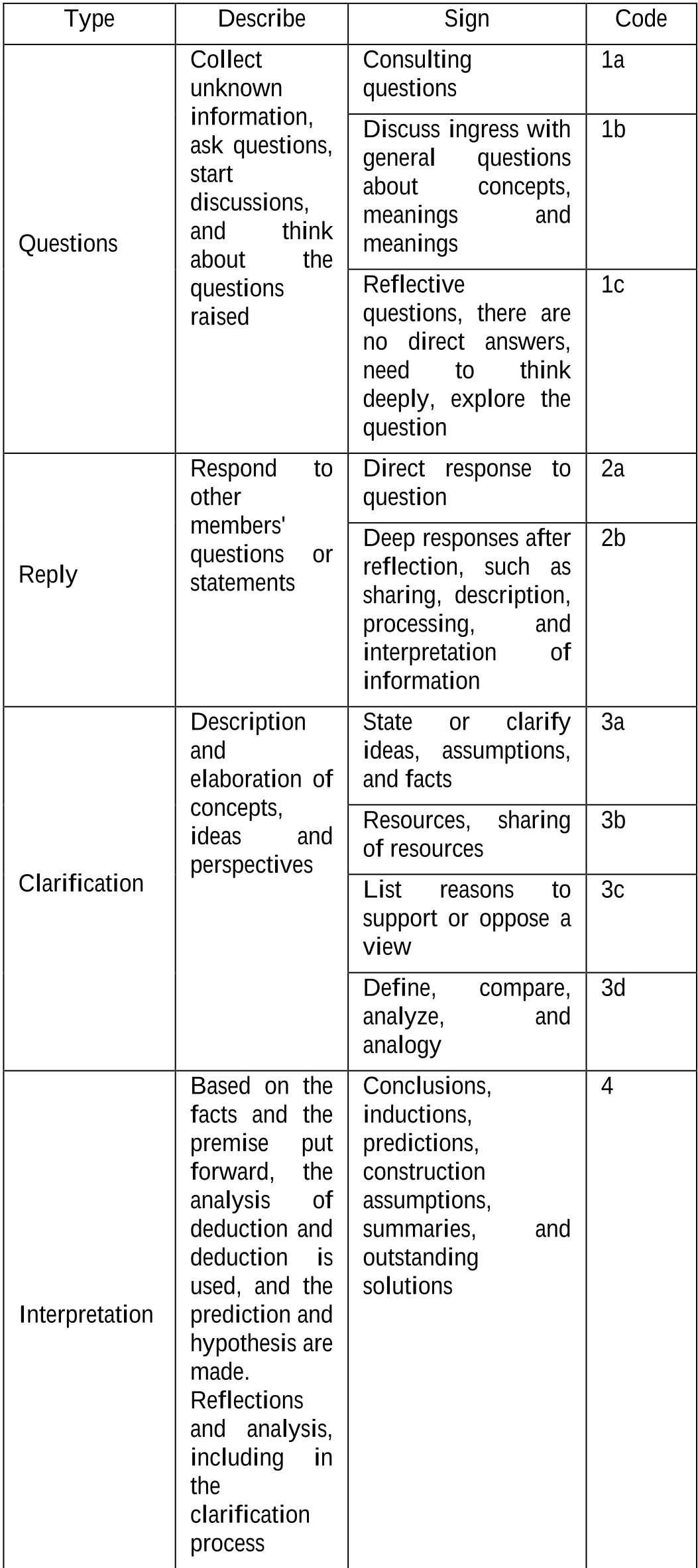 Figure 1: The framework used to categorize student interactions into knowledge construction levels.
Key Findings: Social Chatter vs. Deep Analysis
The disparity between the two groups was stark.
1. The Trap of "Social Interaction"
Group A's biggest hurdle wasn't a lack of intelligence, but a lack of focus. 44.59% of their messages were categorized as "Other" (jokes, greetings, off-topic social talk). In contrast, Group B was laser-focused, with social talk accounting for only 5.47% of their stream.
2. Leadership and Layering
Content analysis revealed that Group B had "Key People" (Leaders) who emerged to control the situation. These individuals used phrases like "OK, about this matter..." to pull the group back to the task. Group A, lacking this structural leadership (due to low Extraversion variance), frequently "ran away" from the topic.
3. Depth of Knowledge
Group B engaged in significantly more Clarification (33.7% vs 16.5%) and Support (8.7% vs 4.9%). They didn't just state facts; they defined, compared, and analyzed them.
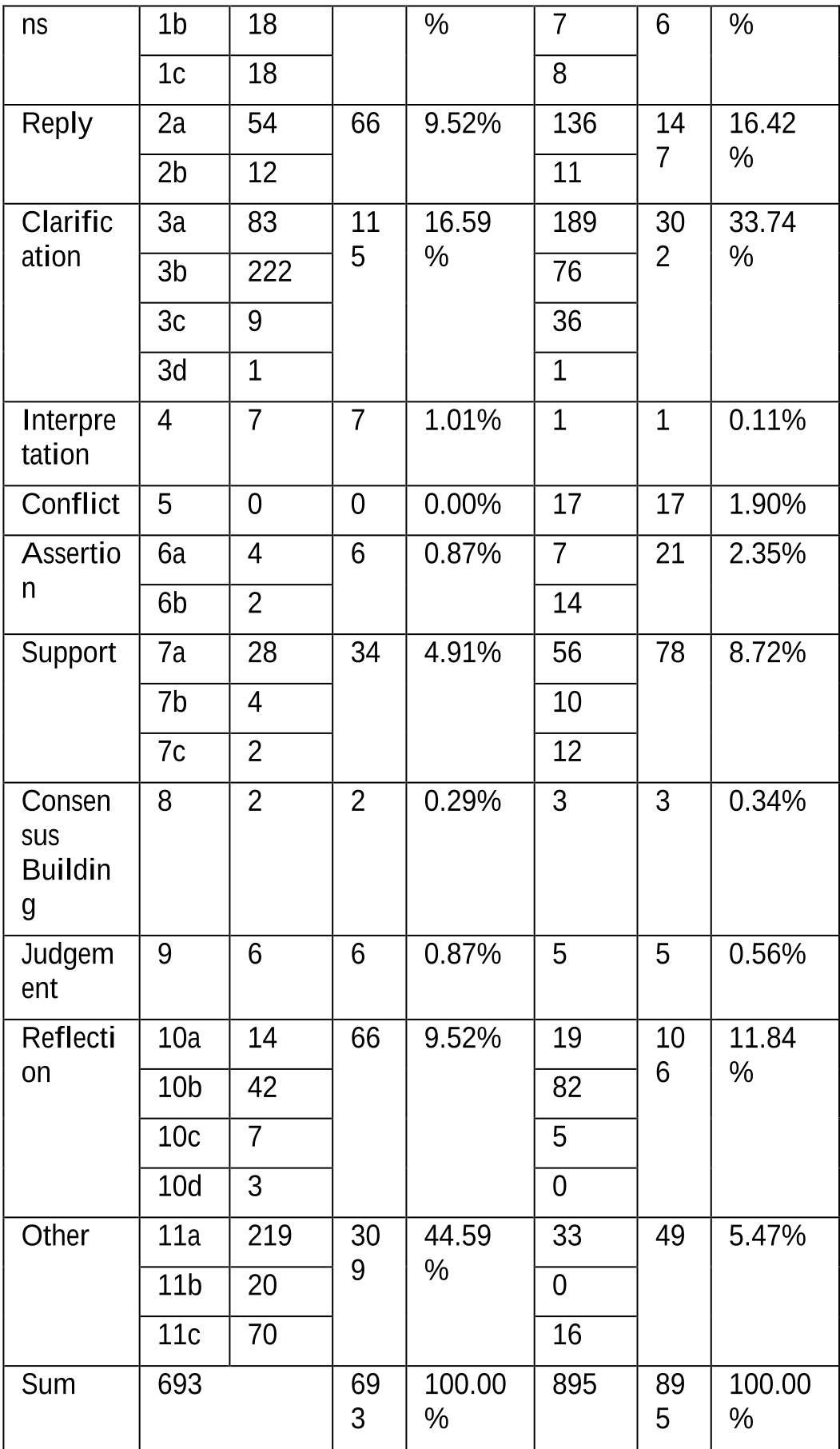 Table 1: Quantitative breakdown of interaction types between Group A and Group B.
Critical Insights: Why it Works
The "Secret Sauce" for Group B's success was rooted in three specific personality dimensions:
- Conscientiousness: High scores here ensured members were methodical and met deadlines.
- Agreeableness: This acted as a "social lubricant," allowing for constructive debate without personal friction (Conflict in Group B was only 1.9%).
- Extraversion Variance: Having one or two highly extroverted members provided the "Strong Leadership" necessary to organize tasks and synthesize different viewpoints.
Conclusion & Future Outlook
This study provides a roadmap for Smarter Grouping. Instead of random assignment, educators and professional trainers should:
- Screen for Personality: Aim for high levels of Openness and Conscientiousness.
- Ensure Leadership Potential: Mix personalities to ensure at least one "coordinator" is present.
- Provide Scaffolding: Teachers must monitor the process and provide "prompts" or "scaffolds" to help low-performing groups transition from social chatter to analytical debate.
Limitations: The study was conducted in a specific cultural context (China) and used instant messaging (WeChat), which inherently encourages fragmented, shorter messages compared to face-to-face debate. Future research should explore if these personality effects persist in VR or purely video-based collaborative environments.