
Deciphering Android Malware: A Deep Dive into Feature Representations and Transfer Learning
Comparative analysis of feature representations and machine learning methods in Android family classification
2020-10-28
Summary
Problem
Method
Results
Takeaways
Abstract
This paper presents a comprehensive comparative analysis of Android malware family classification using five machine learning and neural network methods across three major datasets (Genome, Drebin, AMD). The authors introduce a customized Multi-Layer Perceptron (MLP) with Focal Loss, achieving a state-of-the-art Accuracy of 99.2% on the Genome dataset.
## TL;DR
Manual analysis of the millions of new Android malware variants discovered annually is no longer feasible. This study systematically evaluates how different feature sets (Permissions, APIs, ICC) and machine learning models (SVM, RF, MLP) perform in classifying malware into families. The authors demonstrate that an MLP with Focal Loss achieves SOTA results and, for the first time, prove that models trained on older malware can be effectively transferred to newer, larger datasets.
## The Battle Against the Long Tail
Modern malware analysis faces a "needle in a haystack" problem. Within datasets like **Drebin** or **AMD**, a few families have thousands of samples, while hundreds of other families have fewer than ten. This "long-tail" distribution makes standard classifiers biased toward majority classes.
The authors' research intuition was shift the focus from the "What" (the classifier) to the "How" (the feature representation and the loss function). They argue that while many papers focus on complex semantic features like Control Flow Graphs (CFG), **Syntactic Features** (API calls and Permissions) are more robust and scalable if handled with the right objective function.
## Methodology: Beyond Simple Boolean Vectors
The paper compares two distinct feature philosophies:
1. **Man-F (Manual Features)**: 250 curated features (50 permissions, 156 API calls, 44 ICC attributes) derived from expert literature.
2. **Doc-F (Documentary Features)**: 16,873 features extracted directly from the Android Developer documentation to capture a broader behavioral footprint.
### Model Architecture
The authors chose a Multi-Layer Perceptron (MLP) over Convolutional Neural Networks (CNN) because malware feature vectors are sparse and global; MLP's fully connected structure is better suited for capturing global knowledge across independent feature tokens than CNN's localized kernels.

To combat imbalance, they utilized **Focal Loss**, which dynamically down-weights easy-to-classify examples and focuses the model on the "hard" minority families, effectively replacing the need for risky oversampling techniques.
## Experimental Breakdown: What Drives Success?
### 1. Classifier Performance
While all models performed well, the MLP consistently held a marginal lead.
* **MLP F1-Score**: ~99.2% (Genome/M-1)
* **Random Forest**: ~97.2%
* **Decision Tree**: ~94.2%
### 2. The Power of API Features
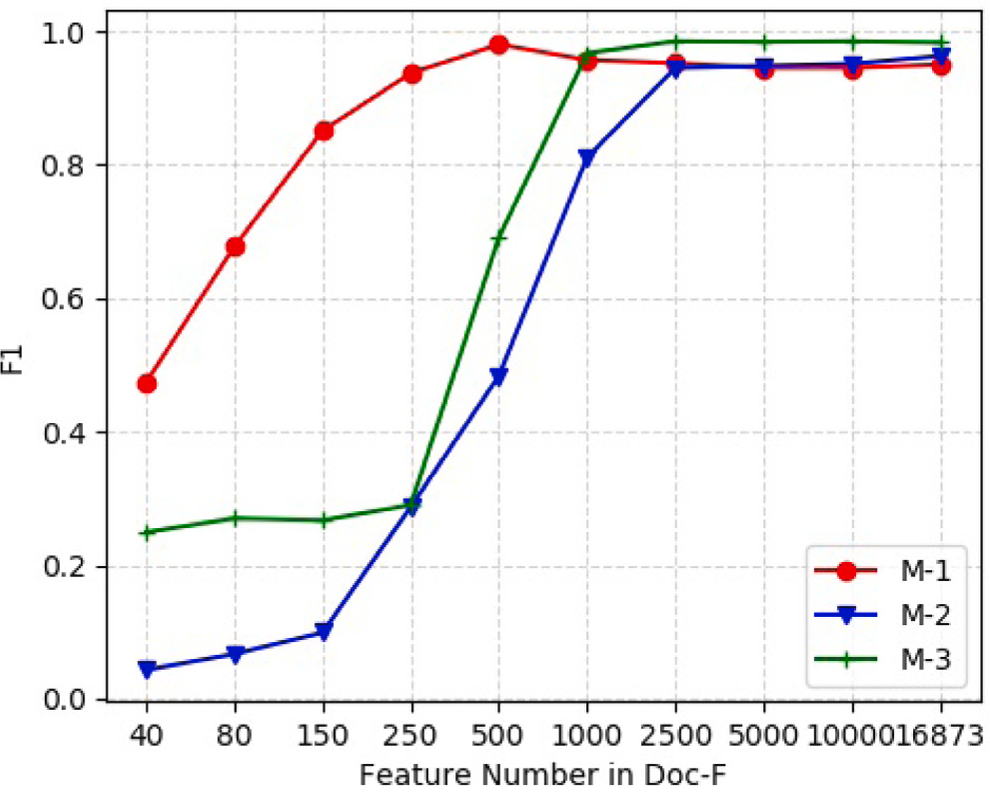
The study reveals a critical insight: **Permissions are necessary, but APIs are sufficient** for scale. As the dataset grows (e.g., from M-1 to M-3), the importance of the 16,659 API features in Doc-F becomes apparent, significantly boosting F1-scores compared to smaller manual sets.
### 3. Transferability: Bridging the Generational Gap
The most novel contribution is the examination of transfer learning. By training on a source dataset (e.g., M-3) and fine-tuning on a target (e.g., M-1), the authors found that the model could successfully adapt.
* **Key Finding**: In tasks like TL_3 (M-2 → M-1), the transferred model actually outperformed the baseline using Doc-F features (97.0% vs 95.0%). This suggests that knowledge from larger datasets helps regularize models on smaller, sparse datasets.
## Critical Analysis & Future Outlook
**Strengths**: This is a rigorous "Ground Truth" study that clears up the fog in the Android malware domain. The introduction of Focal Loss and Transfer Learning provides a much-needed toolkit for dealing with real-world, imbalanced cybersecurity data.
**Limitations**:
* **Feature Sparsity**: While Doc-F is powerful, it introduces extreme sparsity. The authors suggest that selecting the top 2,500 features via Chi-squared tests is the "Goldilocks" zone for performance.
* **Static Nature**: Being a static analysis study, it remains vulnerable to sophisticated code obfuscation and dynamic payloads that only reveal themselves at runtime.
**Conclusion**:
Malware family classification is not just about having the deepest network; it is about the synergy between **expert-curated features** and **imbalance-aware loss functions**. For future researchers, the focus should move toward hybrid models that can transfer knowledge across the ever-evolving landscape of mobile threats.