
Maximizing Influence: A Comparative Look at Greedy, GA, and PageRank
A comparative study on algorithms for influence maximization in social networks
This paper presents a comparative study of three fundamental algorithms—Greedy, Genetic Algorithm (GA), and PageRank—for the Influence Maximization Problem (IMP) under the Linear-Threshold (LT) propagation model. Conducted on social network data, the study evaluates these methods in terms of influence spread and computational efficiency.
TL;DR
In the world of social networks, identifying the right "influencers" to seed information is a classic NP-hard challenge known as the Influence Maximization Problem (IMP). This study compares three distinct paradigms: the intuitive Greedy approach, the evolutionary Genetic Algorithm (GA), and the centrality-based PageRank. The findings reveal a stark trade-off: GA finds the best quality solutions, but PageRank is orders of magnitude faster with nearly identical results.
Context & Motivation: The Quest for the Seed Set
The ultimate goal of IMP is to find a budget-constrained set of nodes (the "seed set") that triggers the widest possible cascade of information across a network. This is traditionally modeled using propagation models like the Linear-Threshold (LT) model, where a node becomes "active" if the influence score from its neighbors exceeds a random threshold.
The primary hurdle is that calculating the "Expected Influence" exactly is computationally prohibitive, forcing researchers to rely on Monte-Carlo simulations and heuristics.
Methodology: Three Paths to Influence
The authors evaluate three established strategies to tackle this complexity:
- The Greedy Heuristic: This is the "standard" approach. It selects one node at a time—the one that provides the maximum marginal increase in total influence. While effective, its sub-modularity doesn't guarantee a global optimum.
- Genetic Algorithm (GA): Inspired by evolution, GA maintains a "population" of potential seed sets. It uses crossover and mutation to evolve these sets over generations, using the influence spread as the fitness function. It explores a wider search space than Greedy but requires massive amounts of simulation time.
- PageRank: Originally Google's way of ranking web pages, it assigns importance based on link structure. Here, it’s used as a proxy for influence. Crucially, PageRank avoids Monte-Carlo simulations entirely, solving a linear equation to find the most "central" nodes.
 Figure 1: Mathematical formulation of node states and influence thresholds in the LT model.
Experimental Analysis: Quality vs. Velocity
Testing on a local BBS social network with 83 nodes, the results create a clear picture of the efficiency bottleneck:
| Method | Execution Time (sec) | Influence Spread (Nodes) |
|---|---|---|
| Greedy | 147.14 | 67.7 |
| GA | 12,283.18 | 70.8 |
| PageRank | ~1.00 (Total) | 70.5 |
Note: PageRank's core computation took only 0.012 seconds; the rest of the time shown in the table was purely for evaluating the resulting influence for comparison.
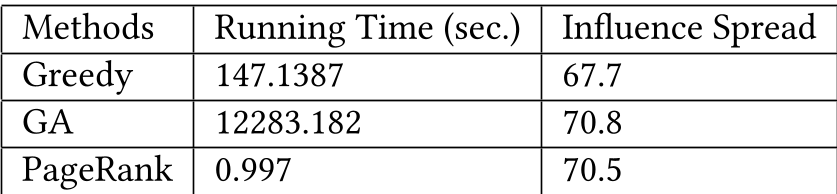 Figure 2: Performance metrics across the three evaluated algorithms.
Deep Insight: Is GA Worth the Wait?
The data suggests that while the Genetic Algorithm did indeed find a "better" solution (reaching 70.8 nodes vs PageRank's 70.5), the 12,000x increase in time makes it virtually unusable for real-time or large-scale applications.
The surprising winner for practical use is PageRank. It captures the "importance" of nodes effectively enough to rival the more complex search algorithms without the need for tens of thousands of Monte-Carlo simulation rounds.
Critical Analysis & Conclusion
This study provides a sobering perspective for those looking to apply high-complexity meta-heuristics to social network problems.
- The Strength: It highlights that centralities (like PageRank) are powerful proxies that should be the "first-look" solution for IMP.
- The Limitation: The study was conducted on a relatively small network (83 nodes). As networks grow to millions of nodes, the "marginal gain" of GA might be even harder to justify.
- Future Outlook: The authors plan to investigate more efficient bio-inspired meta-heuristics. The real breakthrough in this field likely lies in the middle ground: using PageRank to prune the search space and then applying refined GA or Greedy searches on the remaining high-potential nodes.
Takeaway for Practitioners
If you are building an influence-targeting tool today, start with PageRank or Eigenvector Centrality. The incremental gain of 1-3% in spread provided by evolutionary or greedy algorithms rarely justifies the massive technical debt of running months of simulations.