
Unlocking Your Emotions: Finding the Optimal Timing for Fine-Grained Affective Computing
Comparing ESM Timings for Emotional Estimation Model with Fine Temporal Granularity
This paper investigates the effectiveness of different Experience Sampling Methods (ESM) for building fine-grained emotional estimation models using smartphone sensor data. It compares Randomized, Trigger-based, and Unlocking-based ESMs across four temporal granularities, identifying Unlocking ESM as the most effective for data collection and model accuracy.
TL;DR
How can we track the "emotional rollercoaster" of daily life without annoying the user to death? This study from Keio University evaluates how different trigger mechanisms for Experience Sampling Method (ESM) impact the accuracy of smartphone-based emotion estimation. By testing Randomized, Triggered, and Unlocking-based prompts, the researchers found that Unlocking ESM—asking for a report when a user naturally wakes their phone—yields the highest response rates and the most accurate fine-grained models.
Problem & Motivation: The "Volatile Emotion" Paradox
In the field of Affective Computing, your smartphone is essentially a window into your soul. It tracks your location, light exposure, and app usage—all of which correlate with mood. However, most existing models only predict "Daily Mood."
The problem is that human emotion is volatile. You might be frustrated by a traffic jam at 9:00 AM but ecstatic after a lunch meeting at 12:30 PM. To capture these nuances, researchers need "Fine Temporal Granularity" (reporting emotions every hour). But there’s a catch: asking a user to report their mood 10+ times a day is a massive burden. If the user stops responding, the machine learning model loses its "ground truth," and the system fails.
Methodology: The Battle of the ESMs
The authors designed an experiment to find the "sweet spot" of user intervention. They compared three distinct strategies:
- Randomized ESM: The "blind" approach—sampling at random intervals.
- Trigger ESM: The "context-aware" approach—sampling only when the phone detects a change in physical activity (e.g., walking to sitting).
- Unlocking ESM: The "opportunistic" approach—placing the survey directly on the lock screen.
To keep the burden low, they used the Pick-A-Mood (PAM) interface, which allows users to select an emotional icon in under 2 seconds.
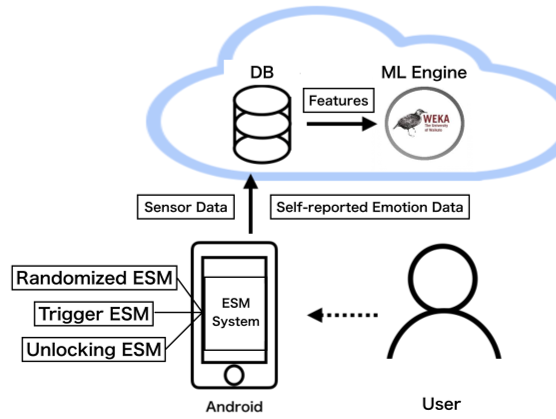 Figure 1: The workflow of data collection and model construction.
Experimental Setup
- Participants: 30 individuals over 4 weeks.
- Features: Socio-contextual data via the AWARE framework (GPS, Wi-Fi, light, battery, app usage).
- Algorithm: Random Forest classifier.
- Granularities: 1 day, 1/3 day, 3 hours, and 1 hour.
Results: Why "Unlocking" Wins
The study collected over 11,800 self-reports. The results were clear: Unlocking ESM outperformed the others across nearly every metric.
1. Response Rates
Unlocking ESM consistent produced higher annotation rates. Users are already engaged with their device at the moment of unlocking, making the "cost" of a 2-second survey feel lower than an interruptive random notification.
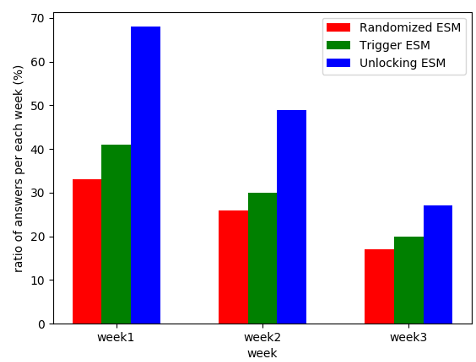 Figure 2: Performance of ESM systems—Unlocking (Blue) shows dominant response rates.
2. Prediction Accuracy
When it came to binary classification (e.g., distinguishing between "Activated" emotions like excitement/irritation vs. "Deactivated" emotions like calm/boredom):
- Daily Accuracy: 78.3% (Unlocking ESM).
- 1-Hour Granularity: 61.3% (Unlocking ESM).
While accuracy naturally drops as the time window shrinks (due to data sparsity), Unlocking ESM provided the most robust dataset for training these high-resolution models.
Critical Analysis & Conclusion
Takeaway
The research confirms that the timing of the query is just as important as the algorithm used for estimation. For developers of mental health or well-being apps, Unlocking ESM provides a frictionless way to gather high-frequency labels.
Limitations & Future Work
- The "Neutral" Bias: As seen in Figure 8 of the paper, "Neutral" was the most common response. This class imbalance makes 9-class classification extremely difficult (achieving only 16.7% accuracy).
- Granularity vs. Labels: Even with Unlocking ESM, a 1-hour granularity suffers from missing labels if the user doesn't check their phone.
- Future Direction: The next step in this research involves "Active Learning," where the system only triggers an ESM when the model is uncertain about the user's current state, further reducing user burden.
Final Thought: If we want computers to truly understand our feelings, we must first master the art of asking "How are you?" at exactly the right moment.