
Beyond the Words: Decoding COVID-19 Misinformation through Community Fingerprints
Complex Network and Source Inspired COVID-19 Fake News Classification on Twitter
2021-01-01
Summary
Problem
Method
Results
Takeaways
Abstract
This paper introduces a novel source-based classification framework for detecting COVID-19 fake news on Twitter by analyzing the community context of information propagators. By integrating complex network measures with user profile features, the authors achieve a state-of-the-art AUC score of 98% using CATBoost and RNN models.
## TL;DR
While most fake news detectors try to "read" the lies, this research suggests we should instead "watch" the liars. By shifting the focus from tweet content to the **Complex Network** patterns of the people who share it, researchers have developed a source-based model that identifies COVID-19 fake news with **98% accuracy**, outperforming traditional text-based AI.
## The Core Challenge: Why AI Struggles with Lies
Detecting fake news during a pandemic is a race against time. Traditional methods usually fall into two traps:
1. **Content Mimicry**: Malicious actors are becoming experts at mimicking scientific or journalistic styles, making text-based detection (NLP) increasingly unreliable.
2. **The Waiting Game**: Propagation-based models need to see the "viral" spread to confirm it's fake, but by then, the social damage is already done.
This paper introduces a third way: **Source-based Community Analysis**. It operates on the principle of *Homophily*—the idea that "birds of a feather flock together." Fake news spreaders often share distinct connectivity signatures that differ from legitimate news circles.
## Methodology: The "Who" and the "How"
The researchers constructed a specialized COVID-19 dataset and analyzed it through four distinct lenses. The most successful approach was **Approach II**, which combined individual user profile data with the structural metrics of their social circle.
### 1. The Feature Engineering
The team tracked 17 high-impact features, categorized into:
* **Complex Network Measures**: Average clustering coefficient, max betweenness centrality, and eigenvector centrality. These measure how "tight-knit" or "centralized" a community is.
* **User Profile Features**: Account age, bot scores, and the ratio of followers to following.
### 2. The Architecture
The system doesn't just look at a single user; it looks at the **Propagator Community**.

*Figure 1: The high-level framework illustrates the pipeline from tweet extraction via Hoaxy and Tweepy to the final ML/DL classification.*
## Experimental Insights: Community Structures
The study found a striking visual difference in how true vs. fake news moves through Twitter.
* **Fake News Communities**: Often smaller, more numerous, and highly interconnected—creating an "echo chamber" effect.
* **True News Communities**: Generally larger, more fragmented, and less interconnected, reflecting a broader, more natural dissemination of information.

*Figure 2: Visualization of fake news propagation (left) vs. true news (right). The structural "tightness" of the fake news community is a primary signal for the model.*
## Results: A New SOTA
By employing advanced ensemble models like **CATBoost** and deep learning via **RNNs**, the researchers achieved:
* **98.4% Accuracy** on COVID-19 specific data.
* **Superior Generalizability**: Validated on PolitiFact and GossipCop datasets, the model maintained over 90% accuracy, proving it isn't just a "COVID-only" solution.
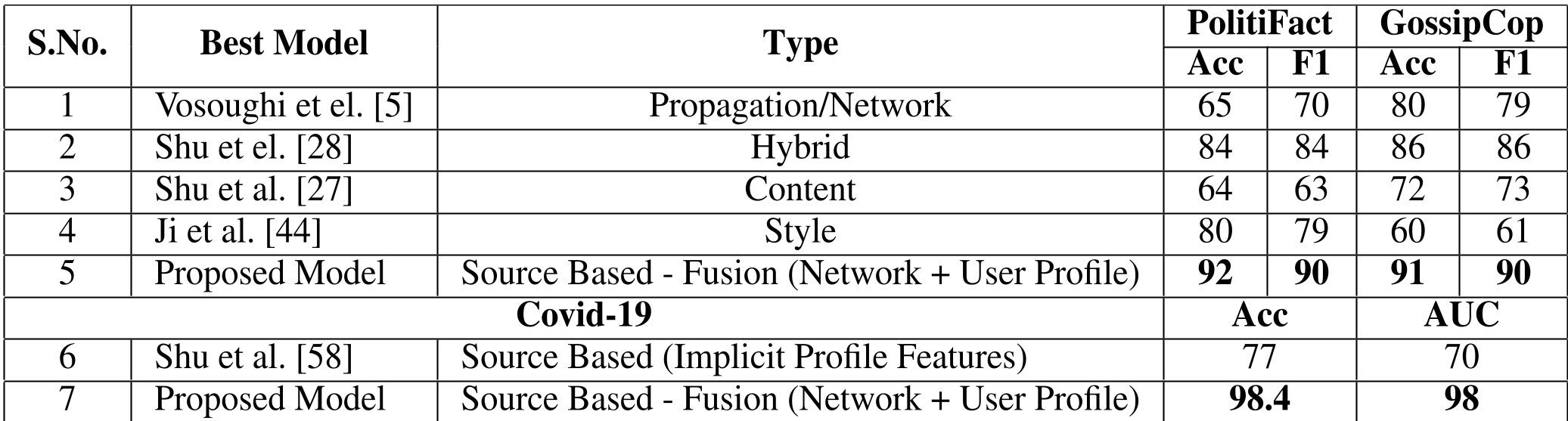
*Table 1: The proposed Source-Based Fusion model consistently outperforms Hybrid, Content, and Style-based baselines.*
## Conclusion & Future Horizon
The true value of this work lies in its **efficiency with small data**. Even with only 75 core news articles, the structural "fingerprints" of the communities were so strong that the model could train effectively.
**Limitations**: The model currently relies on the availability of follower/following data, which can be restricted by API limits or privacy settings.
**Takeaway**: In the battle against infodemics, the graph is our greatest weapon. Moving forward, social media platforms should integrate these complex network measures into their real-time safety "heatmaps" to flag suspicious communities before their content goes viral.