
Enforcing Privacy in the Wild: Transparent Compliance Monitoring for Social Media Apps
Compliance Monitoring of Third-Party Applications in Online Social Networks
The paper proposes a transparent compliance monitoring framework for Third-Party Applications (TPAs) in Online Social Networks (OSNs). By integrating usage control and information flow control into a trusted Platform-as-a-Service (PaaS) environment, it enforces privacy policies (like data caching limits) without requiring modifications to existing application code.
TL;DR
Online Social Networks (OSNs) are teeming with third-party apps that feast on your personal data. This paper introduces a novel infrastructure that forces these apps to follow the rules (like "don't store data for more than 24 hours") by baking security policies directly into the cloud platform where the apps run. It requires no changes to the app's code and provides technical certainty for privacy enforcement.
The "Consent Gap" Problem
When you click "Authorize" on a Facebook game, you are essentially handing over a key to your digital life. While the OSN uses OAuth to manage the initial access, what happens next is a "black box." A TPA might promise to follow privacy guidelines, but nothing stops them from selling your friend list to an advertiser or caching sensitive info indefinitely.
The authors identify a critical gap: Trust is not a technical control. Manual audits are stagnant, and current technical solutions often require developers to use restrictive, non-standard frameworks—a deal-breaker for most high-velocity dev teams.
Methodology: The "Policy-Aware" PaaS
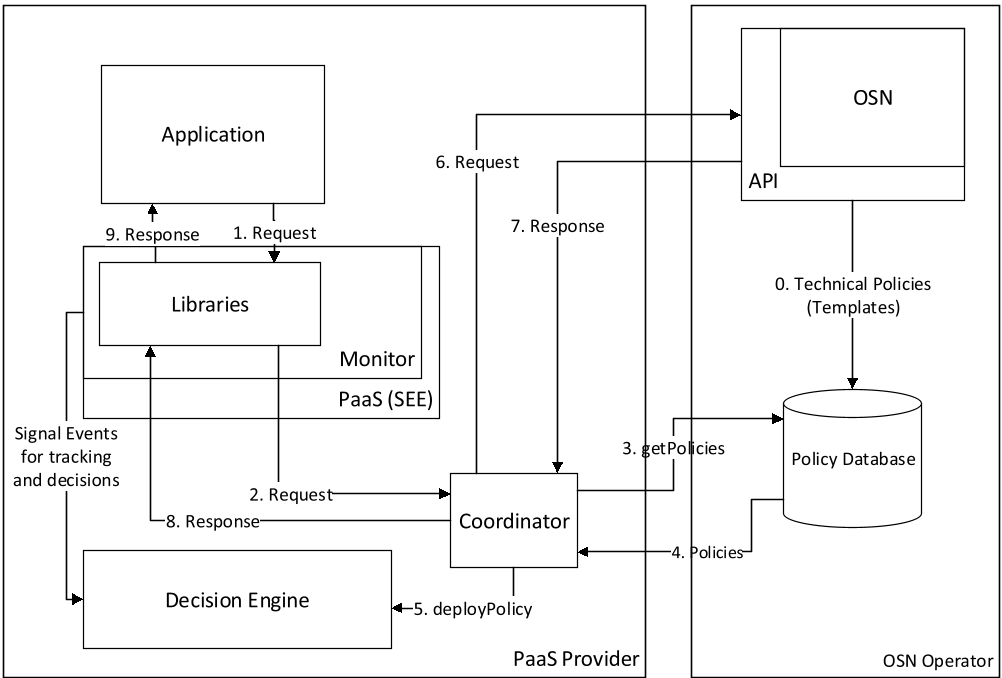
The researchers propose moving TPAs to a trusted Platform-as-a-Service (PaaS) model. In this ecosystem, the OSN provides machine-readable policies in a database.
1. The Architecture
The system sits between the application and the OSN. When an app requests data, a Coordinator identifies the data type, fetches the relevant policy (e.g., "cache limit"), and tells a Decision Engine to watch that specific data bit.
2. Hybrid Enforcement
How do you track data without slowing the app to a crawl?
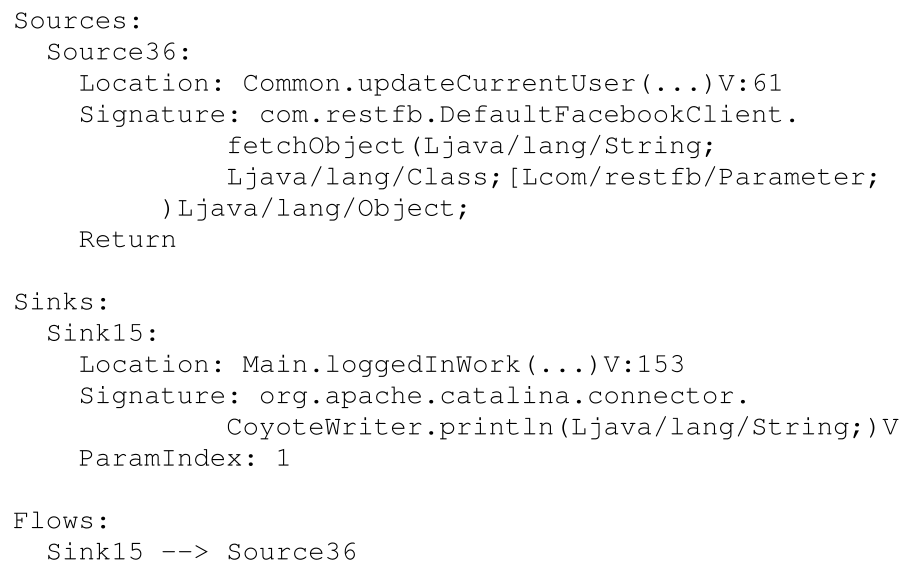
- Static Analysis: Before the app runs, the tool Joana maps out all possible paths data can take (sources to sinks).
- Dynamic Instrumentation: The system only injects monitoring code at the "critical points" identified during the static phase.
If an app tries to perform a "forbidden" action (like writing expired data to a file), the system intercepts the bytecode instruction and inhibits the execution.
Experimental Battleground: Facebook & Java
To prove this isn't just theory, the authors built a prototype for the Java Runtime. They used the "BirthdayCalendar" app as a test case, enforcing the 24-hour caching rule.
Quantifying the Cost of Security:
- For high-latency tasks (like authentication via the Facebook API), the overhead was a manageable 15%.
- For simple rendering tasks, the overhead spiked to 41%.
- The bottleneck was identified as "Event Creation"—the time taken to wrap a security check into a message for the Decision Engine.
Expert Insight: Why This Matters
The genius of this work lies in its transparency. By applying Usage Control (UCON) and Information Flow Control (IFC) at the execution layer (the SEE), the authors solve the "Incentive Problem." TPA developers get to use their preferred tools (Java, PHP, etc.), while OSN operators get a "Seal of Compliance" they can actually prove to users and regulators.
Limitations & Future Work
The system currently struggles with Java Reflection and Native Interfaces (JNI), common hurdles for static analysis tools. Future iterations aim to reduce signaling latency by using shared memory instead of socket-based communication between the monitor and the Decision Engine.
Conclusion
This paper paves the way for a more accountable social ecosystem. It shifts the burden of privacy from "legal promises" to "enforceable code," ensuring that once your data leaves the OSN, the rules of the house follow it wherever it goes.