
Beyond the Big Six: Mastering the Asymmetry of Contempt in Facial Expression Recognition
A component based approach for classifying the seven universal facial expressions of emotion
This paper introduces a component-based approach for classifying the seven universal facial expressions, specifically highlighting the inclusion of the rarely studied "contempt" expression. By utilizing a Pairwise Adaptive SVM (pa-SVM) and a precise 60-point feature model, the authors achieve a State-of-the-Art (SOTA) classification accuracy of 98.57%.
TL;DR
While most AI models focus on the six "basic" emotions, this research dives into the "Universal Seven" by including Contempt—the only asymmetric facial expression. By shifting from holistic pixel-based analysis to a specialized Component Action model powered by a Pairwise Adaptive SVM, the authors achieved a staggering 98.57% accuracy, proving that how individual facial parts move is far more informative than the face as a whole.
The Problem: The "Mean" Face is Not Enough
Most facial expression recognition (FER) systems are "holistic"—they feed the entire face image into a classifier. The authors argue this is a hangover from Face Recognition (identifying who someone is), where global structure matters. However, for expressions, global methods are noisy.
The specific challenge addressed here is the contemptuous expression. Unlike happiness or anger, contempt is asymmetrical (e.g., a one-sided lip curl). Standard models often confuse it with disgust or ignore it entirely. Furthermore, many studies "cheat" by excluding neutral faces, which real-world systems cannot afford to do.
Methodology: Components over Pixels
The core innovation lies in the Proposed Face Model, which treats the face as a collection of 60 geometry-driven points rather than a grid of pixels.
1. The Geometry of Emotion
The points are divided into three functional categories:
- Stable: Points like the inner eye corners (lacrimal caruncle) used for rigid alignment.
- Active: High-movement areas (lip endpoints, brow peaks) that define the emotion.
- Passive: Points that fill the gaps to maintain the silhouette.
2. From Points to "Actions"
Instead of just looking at the coordinates, the "Component Action" approach calculates the delta between a neutral face and an expressive one. This isolates the muscle movement from the person's underlying bone structure.
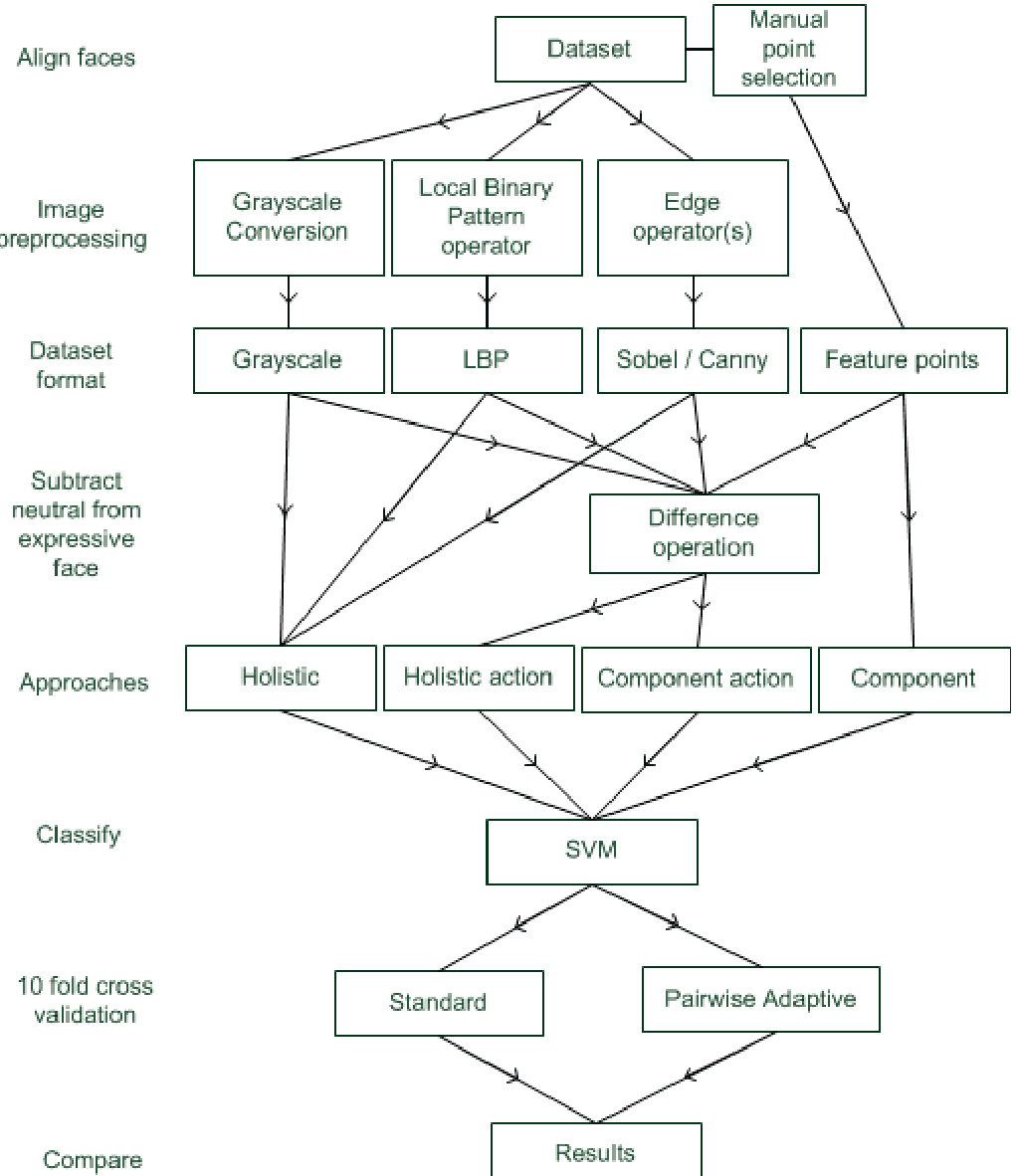 Fig 1: The workflow from manual feature insertion to the "Component Action" dataset construction.
3. Pairwise Adaptive SVM (pa-SVM)
Standard SVMs use one set of hyperparameters for all classes. The authors used a pa-SVM, which optimizes the parameters for every specific pair of expressions (e.g., one setting for Happy vs. Sad, another for Contempt vs. Angry).
Experimental Insights: A Non-Equidistant Space
The results confirm a long-standing psychological theory: emotional space is not equidistant. Some emotions are mathematically "closer" together than others.
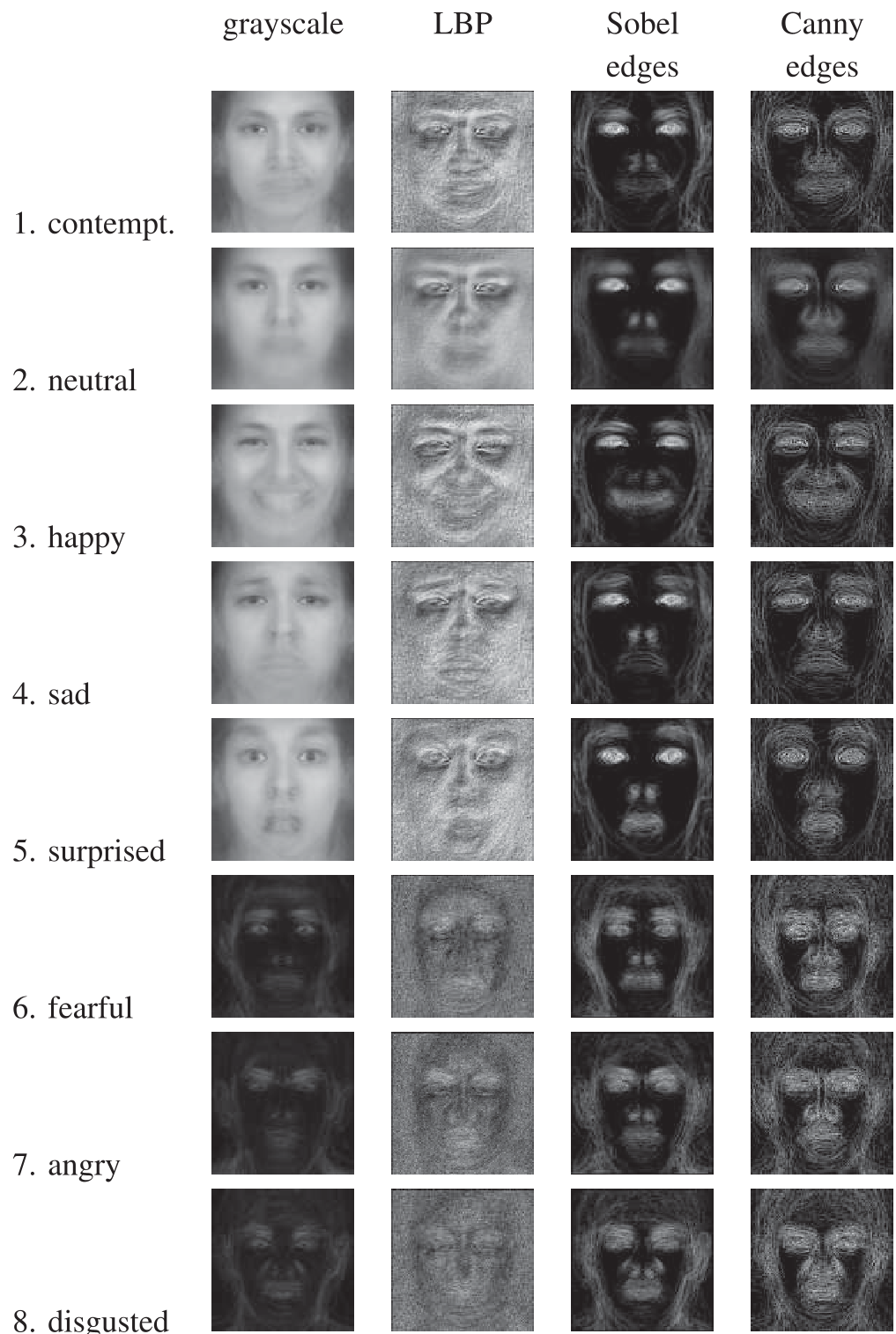 Fig 2: The 60-point model. Blue/Green points indicate active/passive regions that drive the classification accuracy.
- The Hardest Pair: Fear vs. Surprise (74.11%). These are often confused even by humans because both involve wide eyes and open mouths.
- The Easiest Pair: Happy vs. Surprise (96.88%).
- The Contempt Factor: Contempt was most easily distinguished from Surprise but frequently confused with Anger, likely due to similar brow tension.
SOTA Comparison
Compared to famous benchmarks like Cohn-Kanade and MMI, this approach's 98.57% accuracy sets a high bar. The authors attribute this to the denoising effect of using feature points; while pixel-based (holistic) methods struggle with lighting and skin tone, coordinates remain pure.
Critical Analysis & Future Outlook
Takeaway: This paper proves that for facial expressions, "Less is More." 60 well-placed points contain more signal than 10,000 pixels.
Limitations: The reliance on manually inserted feature points is the clear bottleneck. For this to work in real-time Human-Computer Interaction (HCI), a robust, high-precison automated landmark detector must be integrated.
Future Work: The data suggests that as we move toward "literate culture" applications, AI must account for the subtle asymmetric "micro-expressions" like contempt which play a vital role in social hierarchy and interaction.