
Computational Cultural Dynamics: Decoding the Fabric of Society through AI
18515_Computational Cultural Dynamics.
This paper formally introduces "Computational Cultural Dynamics" (CCD), an interdisciplinary framework designed to model, analyze, and predict the behaviors of cultural groups by integrating AI, game theory, and social sciences. It highlights the inauguration of the ICCCD conference and explores methodologies for sentiment analysis, agent-based social modeling, and behavioral forecasting.
TL;DR
Computational Cultural Dynamics (CCD) is an emerging interdisciplinary field that bridges the gap between AI and the social sciences. By leveraging computational linguistics, agent-based modeling, and game theory, CCD enables researchers to quantify cultural intensity, predict group behaviors, and model complex social phenomena like politeness and identity at scale.
Problem & Motivation: The Silo of Social Science
Historically, understanding culture was the exclusive domain of qualitative research—anthropology, sociology, and political science. These fields suffered from two major bottlenecks:
- Scalability: Data collection was manual and labor-intensive (interviews, field notes).
- Predictive Power: Traditional models lacked the formal mathematical rigor to forecast how a group might react to external stimuli or conflict.
The authors argue that just as computing revolutionized biology in the early 2000s, AI can provide the "computational lens" necessary to solve pressing global issues like disease spread, multi-ethnic social integration, and conflict recovery.
Methodology: The Core Pillars of CCD
The paper outlines a multi-faceted approach to modeling culture, moving from raw data to behavioral prediction.
1. Sentiment and Opinion Mining (The AVA Algorithm)
One of the technical highlights is the AVA (Adjective-Verb-Adverb) combination algorithm. Unlike traditional sentiment analysis that might only look at keywords, AVA analyzes the intensity of opinions by examining how modifiers change the weight of actions and attributes.
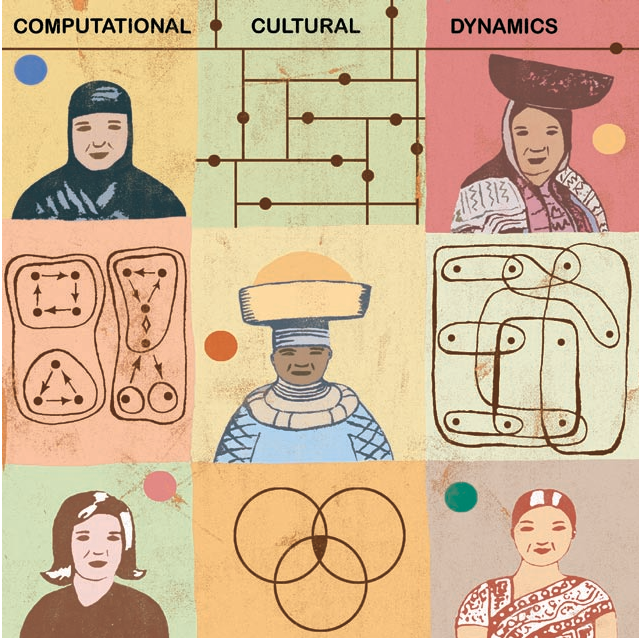 Figure 1: The interdisciplinary intersection of the ICCCD community, bridging Computer Science and Social Science.
2. Operationalizing Anthropology
The framework doesn't just invent new rules; it "computationalizes" existing social theories. For instance, the Brown and Levinson Politeness Model—a staple of anthropology—is translated into code to allow agents in a simulation to exhibit culturally appropriate "etiquette."
3. Behavioral Forecasting (CONVEX)
The CONVEX algorithm uses similarity-based logic to build predictive models. By analyzing past group actions under specific circumstances, the algorithm can forecast future behavior with a higher degree of accuracy than traditional qualitative assessments.
Experiments & Results: Real-World Utility
The effectiveness of these methods is demonstrated through high-impact applications:
- The World Bank: The AVA sentiment system is actively used to gauge public opinion on global economic policies.
- Mobility Data: Using cell-phone usage patterns as a "cultural lens" to gather large-scale behavioral data without manual intervention.
- Agent-Based Modeling (ABM): Simulating multi-scale social processes to understand how individual identities coalesce into group movements.
 Figure 2: Dana Nau and Jonathan Wilkenfeld, the pioneers leading the Laboratory for Computational Cultural Dynamics at the University of Maryland.
Critical Analysis & Conclusion
Takeaway
Computational Cultural Dynamics is not just a branch of AI; it is a vital tool for the 21st century. It transforms "culture" from an abstract concept into a set of measurable, modelable variables. This allows for Evidence-Based Policy Making where cultural sensitivity is baked into the algorithm.
Limitations & Future Work
While the framework is robust, it faces the "Ground Truth" challenge. Human behavior is notoriously stochastic. Future work must integrate more diverse datasets beyond Western-centric models and address the ethical implications of using mobile data for "cultural sensing."
The inauguration of ICCCD marks a new era where the "hard" sciences of algorithms and the "soft" sciences of human behavior finally share a common language.