
C19HCC: Orchestrating an Ensemble of AI and Simulation for Global Crisis Support
Computational Decision Support for the COVID-19 Healthcare Coalition
The paper introduces the computational framework developed by the COVID-19 Healthcare Coalition (C19HCC), a private-sector-led response using an ensemble of AI/ML models and theory-based simulations. It establishes a multi-criteria decision support dashboard (DSD) to provide real-time, data-driven insights for US healthcare sustainability and policy-making.
TL;DR
The COVID-19 Healthcare Coalition (C19HCC) leveraged a massive private-public partnership to transform heterogeneous medical data into a "Command Center" for decision-makers. By combining the predictive power of AI/ML with the explanatory depth of Agent-Based Simulations, they created a framework capable of navigating the "Deep Uncertainty" of a novel global pandemic.
Background Positioning
In the early months of 2020, decision-makers were flying blind. This work represents a landmark effort in Computational Decision Support, moving from simple epidemiological curve-fitting to high-fidelity "Artificial Societies" that model individual human behavior and social networks.
The "Broken Trend" Motivation
The authors identify a fundamental paradox in using pure AI for policy-making:
- Data Poverty: Novel viruses lack historical training data.
- Reflexivity: AI forecasts assume current trends continue. However, the goal of a decision-maker is to change behavior to break an undesirable trend.
When a population changes its behavior in response to a forecast, the AI’s underlying assumptions become obsolete. To solve this, the coalition turned to Simulation as Executable Theory.
Methodology: From SEIR to Artificial Societies
1. The Data Normalization Engine
Before any modeling could occur, the team had to solve the "tower of Babel" problem. They implemented geocoding techniques to align disparate datasets to the Federal Information Processing Standard (FIPS), creating a common controlled vocabulary across 1,000+ member organizations.
2. The Modeling Ensemble
The paper critiques traditional SEIR (Susceptible-Exposed-Infectious-Recovered) models for being overly sensitive to initial conditions and assuming "even mixing" of populations.
Instead, they advanced toward:
- Agent-Based Models (ABM): Modeling "Super Spreader" events and social networks.
- Artificial Societies: High-performance computing environments (e.g., The Artificial University) that simulate malls, workplaces, and schools.
- Exploratory Analysis: Running thousands of scenarios to find policies that work across a range of "Deep Uncertainties."
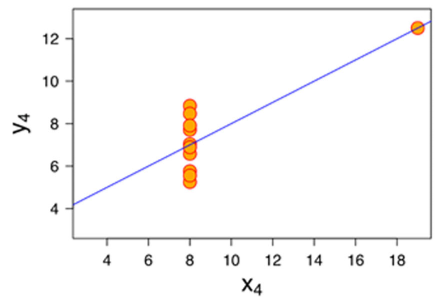 Figure 1: The authors use Anscombe’s Quartet to illustrate why standard statistics are insufficient; identical means and variances can hide drastically different localized distributions, requiring higher-resolution modeling.
Visualizing Intelligence: The DSD Dashboard
The Decision Support Dashboard (DSD) served as the final interface. It utilized a Red/Yellow/Green (RYG) risk indicator system based on metrics from the National Governor’s Association.
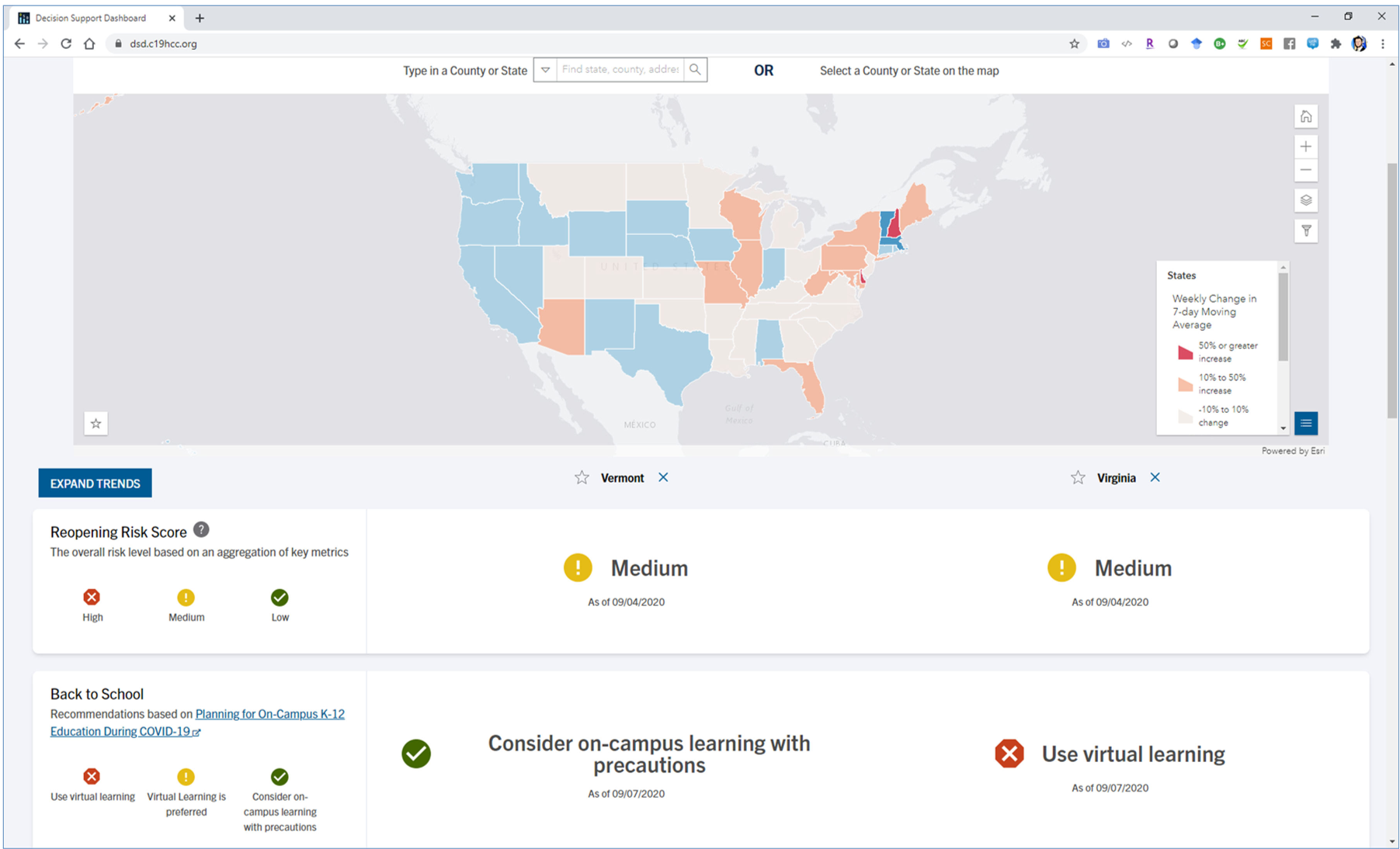 Figure 2: The C19HCC Dashboard interface, integrating data-driven AI trends with knowledge-based simulation prognoses side-by-side.
Critical Analysis & Conclusion
The SOTA Transition
The real breakthrough here wasn't a single algorithm, but the integration of multi-source data. The paper argues that for future crises, we must move from multidisciplinary (working in parallel) to transdisciplinary (systematic integration of knowledge) teams.
Limitations
- Epistemological Gaps: Models cannot reflect parameters they don't know exist (e.g., unknown transmission vectors).
- Hermeneutical Risks: Decision-makers might read "certainty" into models that are inherently probabilistic.
- Computational Cost: High-fidelity artificial societies require supercomputing resources, limiting real-time local deployment.
Future Outlook
The authors conclude that while we cannot predict exactly what will happen in a complex social system, we can use computational ensembles to exclude bad policies and identify those that are robust across the greatest number of foreseeable constraints. The future of crisis management lies in "standardized computational infrastructures" that can be activated the moment a new threat emerges.