
Hire Me: Cracking the Code of Job Interview Success with AI
Hire me: Computational Inference of Hirability in Employment Interviews Based on Nonverbal Behavior
This paper presents a computational framework for the automatic prediction of hirability in job interviews based on nonverbal behavioral cues. Utilizing a specialized audio-visual dataset of 62 marketing job interviews, the authors employ Ridge Regression and Random Forests to achieve a state-of-the-art explained variance () of 36.2% for hiring decisions.
TL;DR
Can an algorithm predict if you'll get the job? This study explores the "hidden layer" of employment interviews—nonverbal communication. By analyzing 11 hours of real-world marketing interviews, researchers built a model that predicts hiring decisions with surprising accuracy (), revealing that your interviewer's body language might be as telling as your own voice.
The "Zero-Acquaintance" Problem
In organizational psychology, a job interview is a "zero-acquaintance" interaction. Within minutes, recruiters forge stable impressions based on thin slices of behavior. Historically, studying this required psychologists to spend hundreds of hours manually coding head nods and smiles. This paper shifts the paradigm into Social Computing, asking: Can we automate this process, and more importantly, is it actually more reliable than the psychometric tests (like the Big-Five or IQ tests) we’ve used for decades?
Methodology: Beyond the Applicant
One of the paper's most profound insights is that an interview is a dyad, not a monologue. The researchers didn't just track the applicant; they tracked the interviewer too.
The Feature Pipeline
- Audio: Extraction of speaking time, turn-taking patterns, pitch, and "voiced rate" (fluency).
- Visual: Automated detection of head nods and "Motion Energy Images" (WMEI) to quantify kinetic expressiveness.
- Relational: Measuring "Back-channeling" (e.g., the interviewer nodding while the applicant speaks) and mutual interruptions.
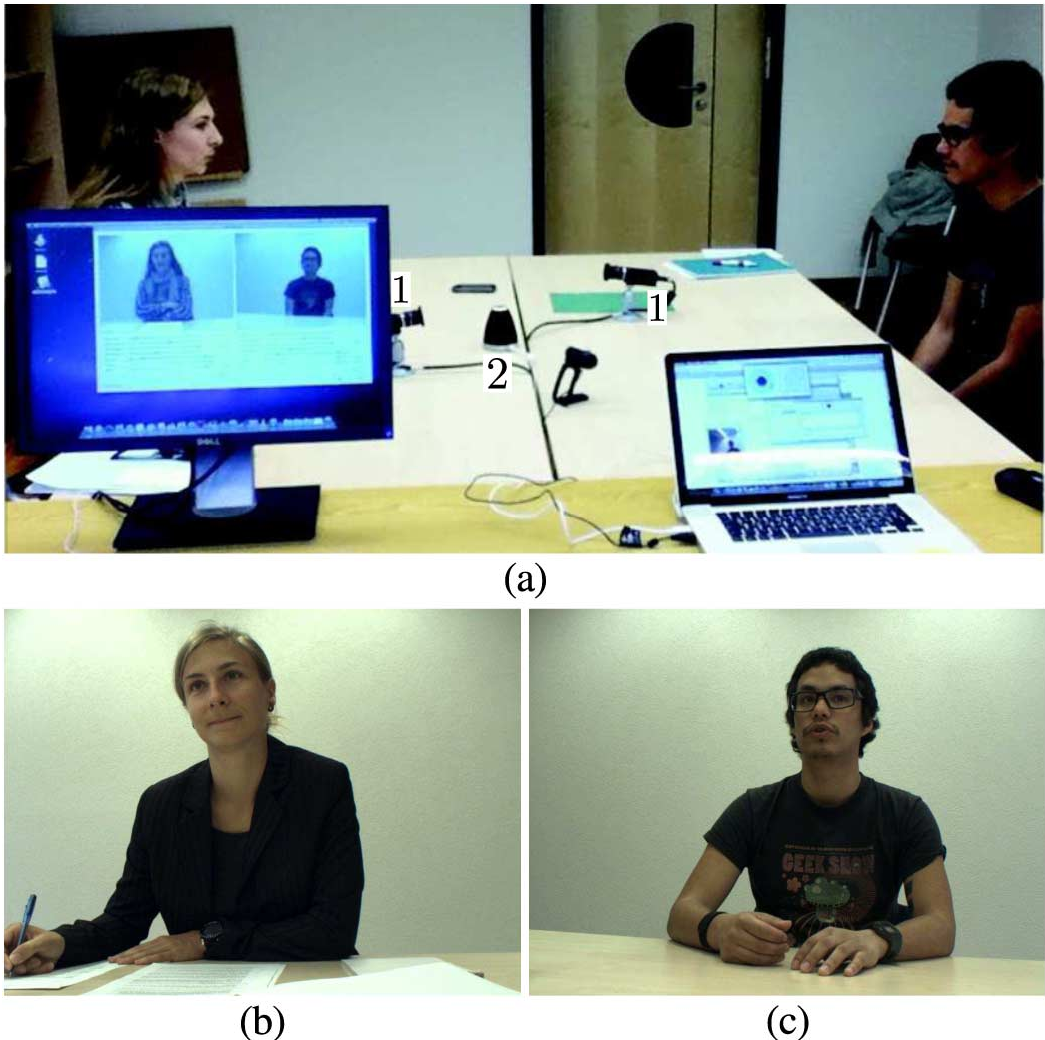 Figure 1: The computational framework from sensing to inference.
Key Findings: The "Social Mirror"
The results provide a fascinating look at what actually drives a "Hire" decision:
- Fluency is King: Applicants who spoke longer, faster (higher voiced rate), and with fewer hesitations were consistently rated higher.
- The Interviewer’s "Tell": The single best predictor of a high hirability score was interviewer visual cues. When recruiters like a candidate, they move more, nod more, and provide more visual back-channels. Essentially, you can predict the outcome just by looking at the person behind the desk.
- Questionnaires Fail: In a striking blow to tradition, psychometric questionnaires (Personality/Intelligence) failed to predict hirability when subjected to rigorous machine learning cross-validation.
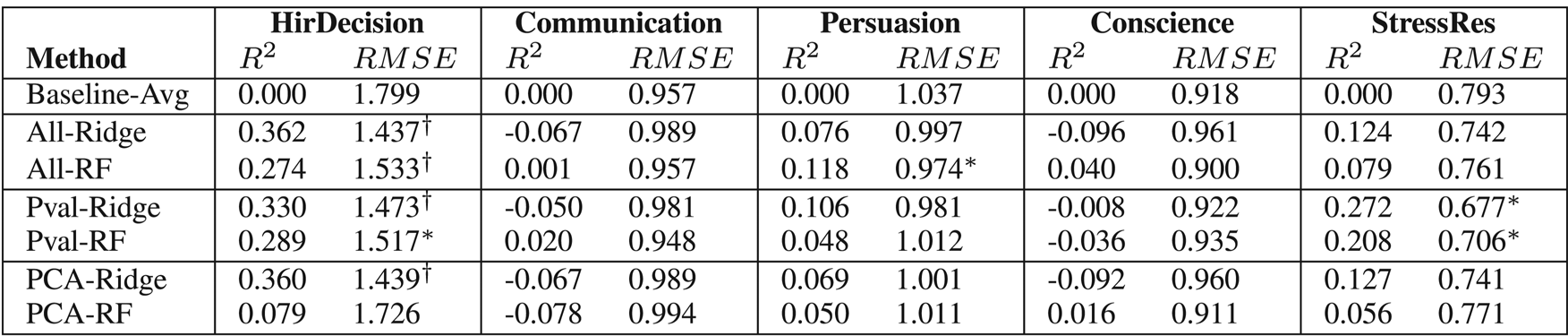 Table 1: Performance comparison. Ridge Regression on all features achieved the highest .
Why It Works: The Intuition
The success of Ridge Regression over complex models like Random Forests suggests that the relationship between nonverbal cues and hirability is largely linear. The model acts as a "fluency and engagement" detector. The regularization in Ridge Regression effectively prunes uninformative signals (like some applicant visual cues which proved noisy) to focus on the core "Immediacy" behaviors.
Critical Analysis & Future Outlook
While the study successfully predicts the recruiter's decision, it does not necessarily predict job performance. A "hirable" person isn't always a "capable" worker.
Limitations:
- Context Specificity: The dataset focused on marketing roles where social skills are paramount. A technical interview for a coder might yield different behavioral weights.
- Visual Gap: Surprisingly, applicant visual cues (smiles/gaze) did not add much predictive power. This might be due to the current limitation of sensors in catching "micro-expressions" compared to human eyes.
Future Work: The authors suggest that the next frontier is the Verbal Channel. Integrating what was said (NLP) with how it was said (Nonverbal) could potentially push the much higher.
Takeaway for the Industry
For HR Tech and AI-startups, this research identifies a massive opportunity: building training tools that provide real-time feedback to job seekers on their fluency and the "dyadic rhythm" of their interactions. It serves as a reminder that in the human-centric world of hiring, the vibe—quantified through micro-behaviors—often trumps the resume.