
Decoding the Digital Divide: Semantic Patterns of Political Trolling
Using Computational Linguistics to Extract Semantic Patterns from Trolling Data
This study presents a computational framework to identify and distinguish "LeftTroll" and "RightTroll" behaviors on Twitter using Word2Vec embeddings, SentiStrength analysis, and PCA visualization. By analyzing a dataset of 34,000 tweets, the researchers extracted semantic patterns that reveal how different political troll groups weaponize specific social issues and linguistic styles to manipulate public opinion.
TL;DR
As social media becomes the primary battlefield for political discourse, distinguishing between organic opinion and coordinated "trolling" is vital. This paper leverages Word2Vec embeddings and SentiStrength analysis to dissect the behavior of Left and Right-leaning trolls. By mapping 34,000 tweets into a semantic vector space, the researchers demonstrate that trolls from different ideological camps leave unique linguistic "fingerprints" even when discussing the same subjects.
Problem & Motivation: Beyond Simple Abuse
For years, "trolling" was equated simply with cyberbullying or abusive language. However, modern political trolling—exemplified by the interference in the 2016 U.S. elections—is far more strategic. The authors argue that monitoring these conversations manually is unsustainable. The core challenge lies in the semantic overlap: both Left-wing and Right-wing trolls might use the same keywords, but their intent, sentiment, and the "company" their words keep differ fundamentally.
The goal of this study is to move from detecting trolls to understanding their patterns through high-dimensional feature extraction.
Methodology: The Semantic Toolbox
The authors employed a three-tier analysis pipeline:
- Word Embeddings (Word2Vec) & PCA: To visualize high-dimensional data, the authors used Word2Vec to convert words into vectors. Principal Component Analysis (PCA) was then applied to project these vectors into a 2D space, revealing how words like "Patriot" or "Cops" cluster differently depending on whether the account is a LeftTroll or RightTroll.
- SentiStrength Modeling: Instead of simple "Positive/Negative" labels, the study uses a mathematical approach to measure sentiment strength.
- Here, is the weighted TF-IDF score and is the Vader sentiment polarity. This mapping allows for a spatial representation of emotional intensity.
- Linguistic Features: Categorizing tweets by N-grams and 24 categories of Part-of-Speech (PoS) tags to identify structural differences in how trolls construct their messages.
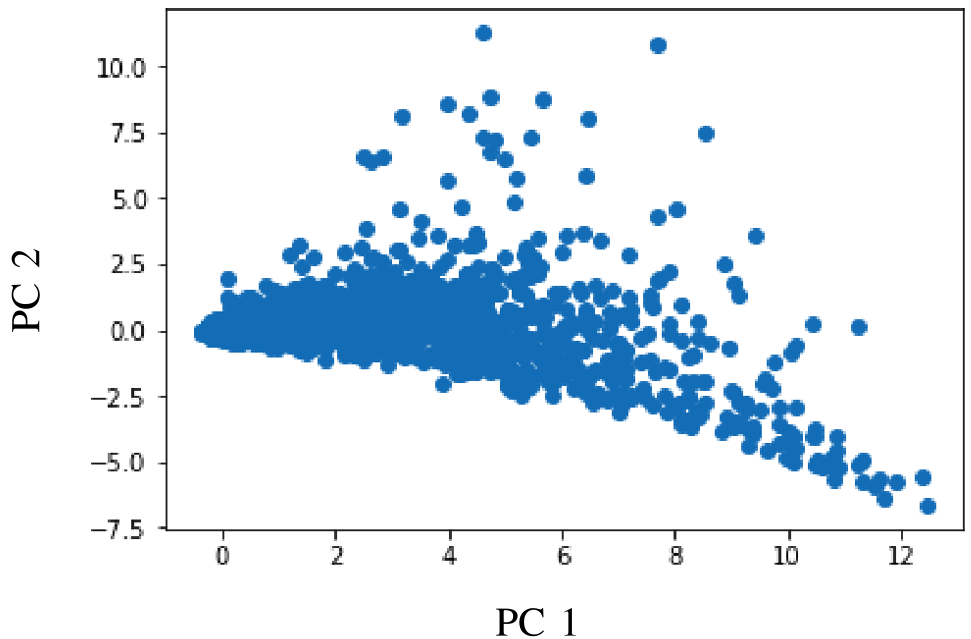
Insights from the Latent Space
The findings offer a fascinating glimpse into the mechanics of digital polarization:
- The LeftTroll Strategy: Predominantly focused on social justice and systemic issues. Keywords like
blacklivesmatter(frequency 1442) andpolicebrutality(frequency 626) dominate. Their content is often directed as a critique of government and law enforcement. - The RightTroll Strategy: Centered on nationalism and support for the leadership. Terms like
patriot(1766),army(1984), andamerica(924) are the primary anchors. While they also use the wordtrumpfrequently, it is clustered with themes of "National Empowerment" rather than critique. - Emotional Polarization: The SentiStrength analysis revealed that while tweets were split across positive and negative polarities, they were consistently around 50% "effective" in their strength, suggesting a calculated, moderate level of provocation designed to sound plausible rather than outright hysterical.
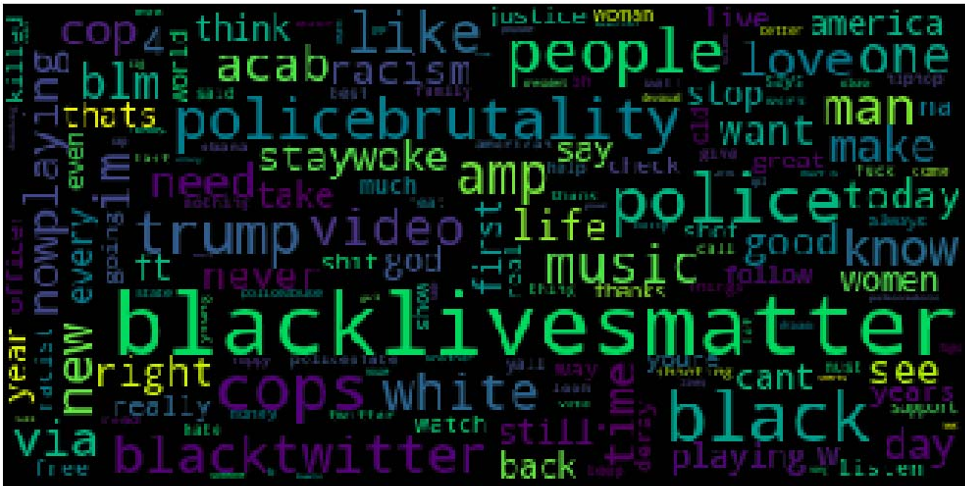 Figure: Word Cloud for LeftTroll (Left) vs RightTroll (Right) showcasing thematic divergence.
Critical Analysis & Conclusion
The study successfully moves the needle from "What is trolling?" to "How do different trolls operate?". By using PCA-mapped embeddings, the authors provide empirical evidence that political trolling is not a monolith; it is a mirrors-and-smoke game played with distinct grammars.
Limitations: The study primarily focuses on English-language tweets, yet the dataset contained Russian and Chinese messages that were excluded. Given that many of these accounts are state-sponsored, cross-lingual semantic patterns might reveal even deeper coordination.
Future Outlook: The next step in this research involves scaling this to real-time "Opinion Mining." By applying these semantic signatures to live streams, social media platforms could potentially identify coordinated "trolling attempts" before they go viral, effectively quarantining misinformation at the source.