
With a Little Help from My Friends: Decoding the Computational Logic of Social Support
With a little help from my friends: A computational model for the role of social support in mood regulation
The paper presents a computational multi-agent model exploring the "stress-buffering" mechanism of social support on mood regulation. Using a cognitive modeling approach, it distinguishes between perceived and received support within various social network structures, demonstrating how social integration mitigates depression risk and enhances coping skills (SOTA in behavioral informatics).
TL;DR
Can your social network actually "patch" your mental health? This paper introduces a sophisticated multi-agent computational model that explains how social support acts as a buffer against stress. By simulating agents with different personality types—Stable, Moderate, and Unstable—the researchers demonstrate that it’s not just about having friends, but about the perception of their availability that shifts the psychological appraisal of stressful events.
Motivation: Why Having Friends Isn't Just Good, It's "Functional"
In behavioral informatics, a persistent question remains: How does social support actually protect us? Psychologists suggest two main pathways:
- The Main Effect: Social relationships offer constant positive experiences.
- The Stress-Buffering Hypothesis: Support is a special resource that only activates during "taxing" periods to change how we judge a crisis.
The authors argue that existing AI models for mental health are too simplistic. They fail to distinguish between Received Support (a friend giving you money) and Perceived Support (the comfort of knowing you could ask for money). This paper bridges that gap by modeling these as distinct cognitive states.
Methodology: Building a Digital Human with a Social Heart
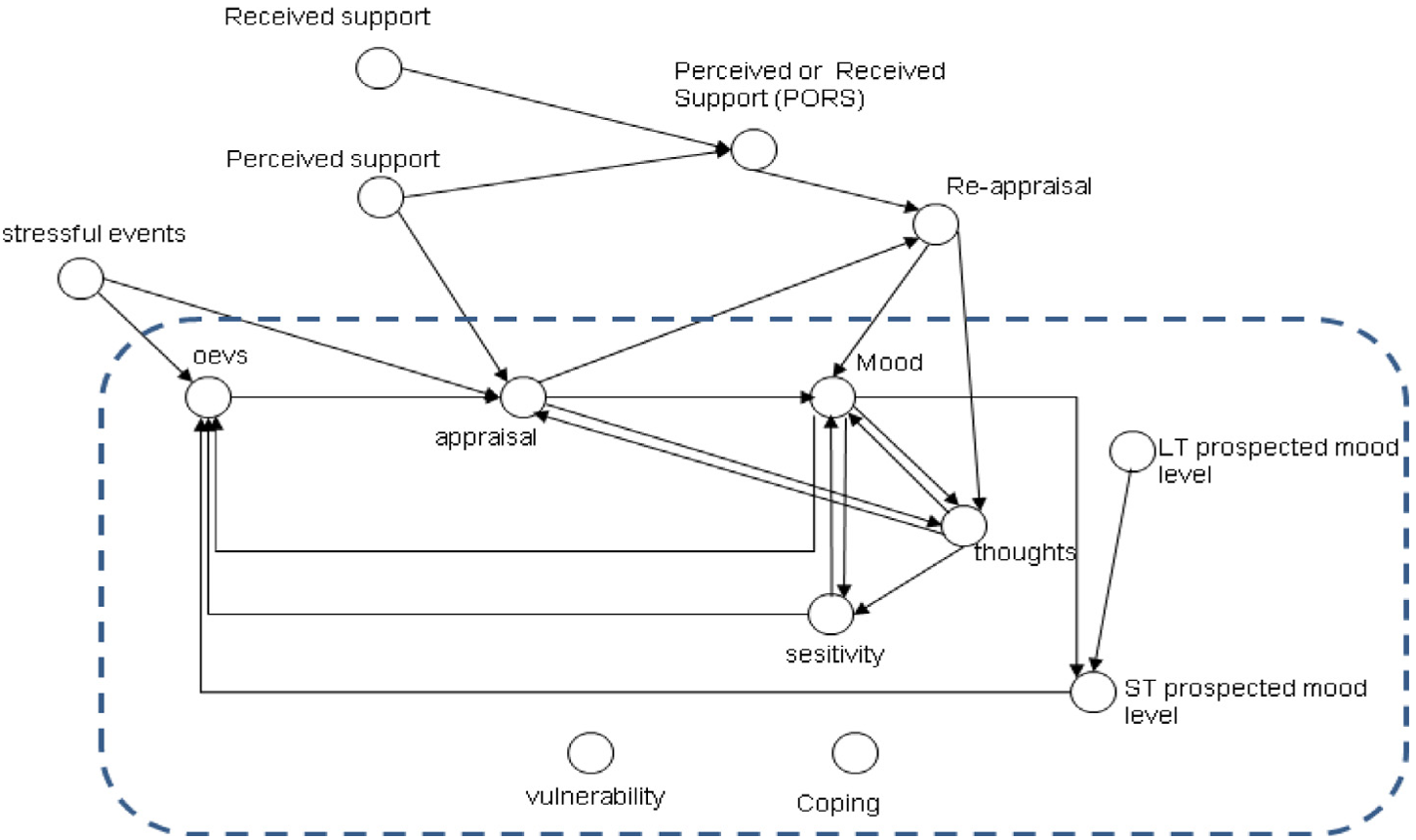
The core of the methodology is an extension of the Mood Dynamics Model. The authors represent an agent's internal state through a series of differential-like recurrence relations.
1. The Internal Architecture
The model tracks several interconnected nodes:
- OEVS (Objective Emotional Value of Situation): The raw "badness" of an event.
- Appraisal: The agent's subjective judgment.
- Coping: The skill to adapt and heal.
- Re-appraisal: The critical node where social support intervenes to "re-read" a bad situation as manageable.
2. The Multi-Agent Social Fabric
The researchers didn't just model one agent; they mapped them onto Zachary’s Karate Club Network, a classic social graph. This allowed them to test how "integration" (centrality) affects mood.
- Structural Support: The number of connections (Degree).
- Functional Support: The probability of a friend actually helping, which depends on that friend's own mood (the "Supporter's Mood" variable).
Experimental Insights: Who Benefits Most?
The study utilized 45 different simulation scenarios, leading to several high-value insights:
Perceived vs. Received: The Winner is... Perception!
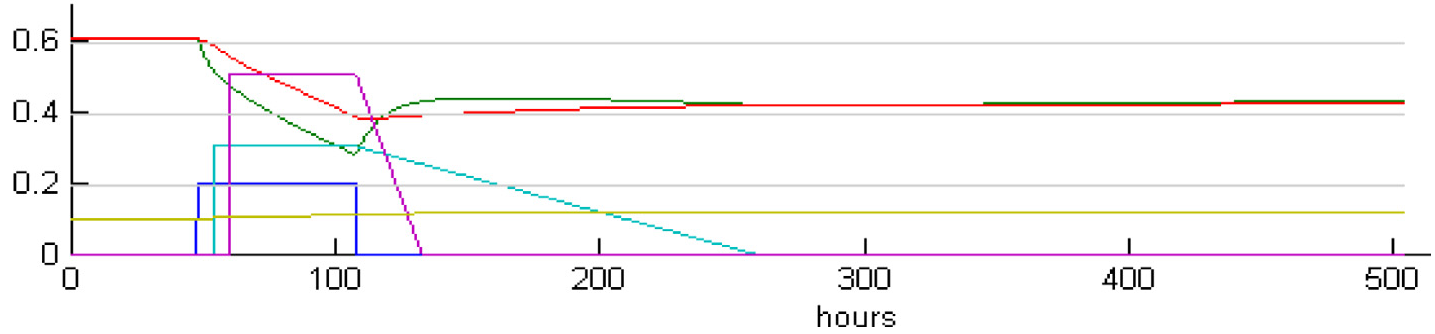
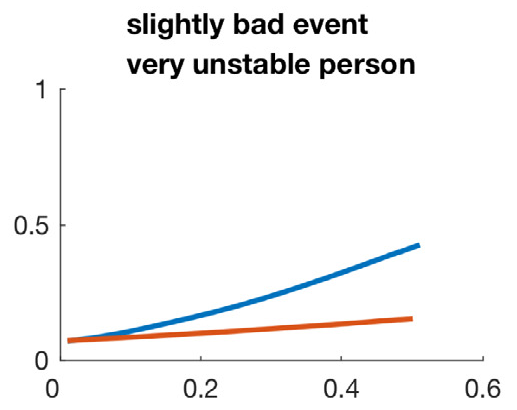
The simulations revealed that the Perceived Support line consistently stayed above the Actual Support line in terms of mood recovery. Knowing a friend is there is often more powerful than the actual help they provide because it prevents the initial "mental crash" during appraisal.
The "Moderate" Sweet Spot
A fascinating takeaway was that Stable personalities (the resilient) didn't need much support, and Very Unstable personalities (the highly vulnerable) were often too far "down" for standard social support to reach them effectively. It was the Moderate personalities—the average person—who saw the most dramatic mood improvements (up to 300% recovery speed increase) based on their network integration.
Critical Analysis & Future Outlook
This model provides a rigorous mathematical framework for what we intuitively know: social isolation is a health risk. However, it does have limitations. The current model assumes support is always positive, ignoring "toxic" social ties or the "stress contagion" that can happen when everyone in a network is concurrently depressed.
The Multi-Agent Takeaway: The "Centrality Effect" is real. Agents at the heart of the network who are "Stable" act as anchors for the entire group. Improving the mood of just one central figure can have a statistically significant ripple effect across the entire community.
Future Work: The researchers target the use of social media data (Facebook/Twitter) to feed these models. Imagine a "Human Ambient Agent" on your phone that notices your social interaction frequency is dropping and predicts a potential depressive episode before it happens, suggesting a "re-integration" intervention.
Conclusion
By quantifying the weight of a friend, this paper moves psychological theory into the realm of executable code. It proves that in the architecture of human happiness, social ties aren't just "nice to have"—they are critical safety buffers in the system's design.