
Deciphering the "Fun" Equation: A Computational Approach to Narrative Emotions in Games
Computational Modeling of Players’ Emotional Response Patterns to the Story Events of Video Games
2016-01-20
Summary
Problem
Method
Results
Takeaways
Abstract
This paper introduces the Dynamic Narrative Emotion Model (DNEM), a computational framework developed to analyze and predict player emotional response patterns in story-driven video games. By integrating the OCC cognitive emotion model with D. Price's emotional intensity equations, the researchers identified key metrics that distinguish commercially successful games from unsuccessful ones.
## TL;DR
Why do some story-driven games become legends while others fade into obscurity despite having similar mechanics? This research introduces the **Dynamic Narrative Emotion Model (DNEM)**, a framework that quantifies the "emotional rhythm" of a game. By comparing hits like *Tomb Raider* with commercial flops, the study proves that the secret sauce isn't just "feeling good"—it's the frequency and intensity of the emotional roller coaster that keeps players hooked.
## The Missing Link in Player Modeling
For decades, game analytics focused on the "What" (kill counts, login times) and the "Where" (heatmaps). However, the "How it feels" remained subjective. Previous research struggled with two issues:
1. **Static Analysis**: Evaluating emotions only *after* the game ends, missing the vital moment-to-moment experience.
2. **Lack of Predictability**: Designers couldn't scientifically predict if a story event would resonate or fall flat.
The authors argue that games are **procedural and dynamic**—the emotional state of a player is a moving target influenced by feedback loops of expectation and reward.
## Methodology: The DNEM Framework
The DNEM merges the **OCC Model** (a standard for cognitive emotion synthesis) with **D. Price's emotional intensity equations**.
### 1. Narrative Segmentation
Instead of treating a game as one long blob, the researchers used **Campbell & Vogler’s 18-stage "Hero’s Journey"** to segment the plot into discrete units. This allows for a "surgical" analysis of emotional triggers.
### 2. The Core Parameters
To turn subjective feelings into hard data, three dimensions were established:
* **FET (Frequency of Emotion Transition)**: How often a player flips from positive to negative (or vice versa).
* **NET (Number of Emotion Types)**: The variety of emotions experienced (Relief, Fear, Joy, etc.).
* **DET (Distance of Emotion Transition)**: The "leap" in intensity between consecutive emotional states.
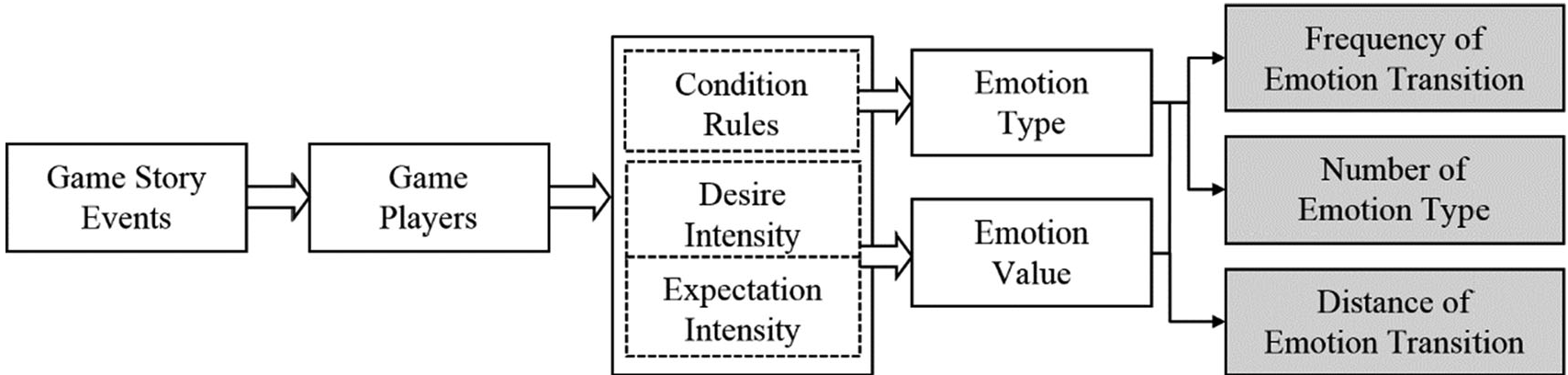
*Figure 1: The overarching Dynamic Narrative Emotion Model (DNEM) architecture.*
## Quantifying Success: Tomb Raider vs. The Matrix
The study compared *Tomb Raider* (a massive success) with *The Matrix: Path of Neo* (a commercial failure). Despite both being action-adventure titles, the data told two very different stories.
### Key Findings:
* **Dynamic Volatility wins**: *Tomb Raider* had an FET **3.3x higher** than the Matrix game. Successful games don't let you sit in one emotional state for too long.
* **Intensity matters**: The distance (DET) of emotional shifts was **twice as high** in the successful game. It’s not just about switching emotions; it’s about making those switches feel impactful.
* **Breadth is secondary**: While *Tomb Raider* had more emotion types, it wasn't the deciding factor.

*Table 1: Quantified emotional determinants showing the stark contrast in FET and DET between the two games.*
## Visualizing the "Emotion Curve"
The researchers introduced the **Emotion Transition Pattern Graph (ETPG)**. In successful games, the graph shows a "diffused" pattern across various emotional sectors. In unsuccessful games, the data points were "lopsided" or concentrated in a single, stagnant domain.
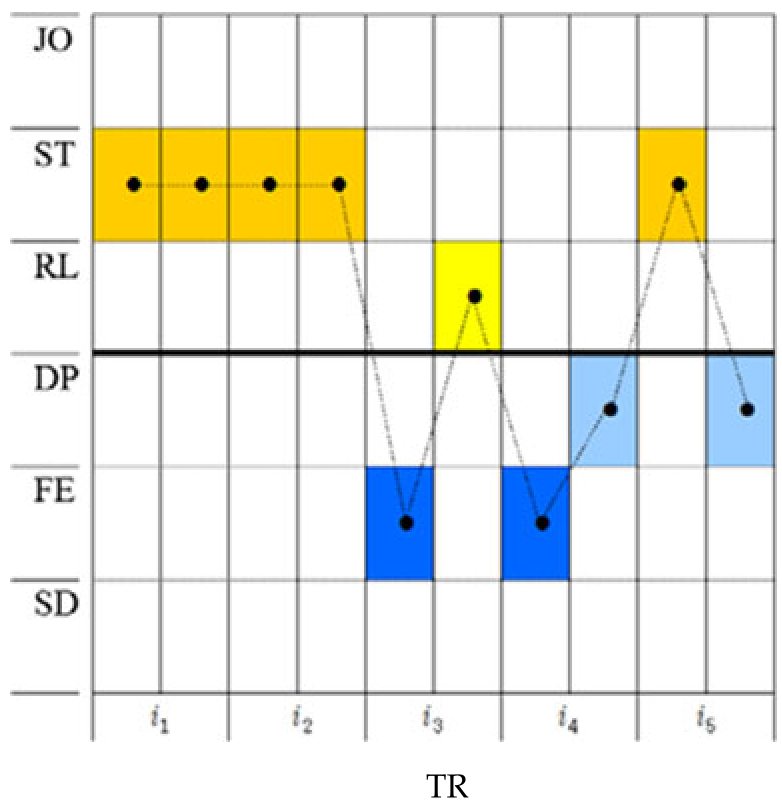
*Figure 2: Comparison of emotional dispersion. Successful narratives manifest as a widely distributed network of shifts.*
## Critical Insights & Takeaways
The primary insight is that **emotional stagnation is the death of engagement**. A game that is "pretty good" but stays at the same level of contentment is ultimately less successful than one that swings between fear and relief.
### Industry Implications:
1. **Iterative Design**: Designers can use DNEM during playtesting to see if a specific quest is failing to trigger the intended emotional "jump."
2. **Strategy-Driven Events**: Instead of just adding "content," developers should look at the **emotional transition distance** they are targeting.
### Limitations:
The study used a small sample of 10 players and focused on traditional adventure games. Future research will need to validate these findings in non-linear, open-world environments where player agency might disrupt the "intended" narrative arc.
## Final Thought
Narrative in games isn't just about the script; it's about the **mathematical rhythm of the player's internal state**. This paper provides the first step toward a CAD (Computer-Aided Design) tool for emotional resonance.