
Decoding the Invisible: The Evolution of Computational Personality Assessment
Computational personality traits assessment: A review
This paper provides a comprehensive review of Computational Personality Traits Assessment (CPTA), focusing on the transition from traditional psychological theories (like the Big Five model) to modern machine learning approaches. It categorizes methods based on input modalities—face, video, audio, handwriting, and social media—and highlights how Deep Learning (DL) architectures like ResNet and CNNs are reaching SOTA performance in apparent personality analysis.
Executive Summary
TL;DR: This review traces the trajectory of personality assessment from the ancient science of Physiognomy to modern Deep Learning. By leveraging the Big Five personality schema (Extraversion, Agreeableness, Openness, Conscientiousness, and Neuroticism), researchers are now able to predict internal traits from external cues—faces, handwriting, and social media—with over 90% accuracy using architectures like ResNet and bimodal regression.
Context: This work serves as a foundational survey in the field of Affective Computing. It positions personality detection not just as a psychological exercise, but as a critical tool for HR, criminal forensics, and human-robot interaction (HRI).
The Core Motivation: Moving Beyond Self-Reporting
The fundamental problem with traditional personality tests is their subjectivity. Whether it's a job interview or a medical diagnostic, candidates "perform" a version of themselves. Computational assessment aims to find the "Kernel of Truth"—the involuntary signals in our facial structure, the pressure of our pens, or the patterns of our digital footprints.
The authors argue that "Face is a mirror of the mind." However, mapping this mirror to a set of discrete traits requires moving past the limitations of shallow machine learning models (like traditional SVMs) which struggle with the high-dimensional complexity of human appearance.
Methodology: From Physiognomy to Deep Learning
1. The Psychological Foundation
The research aligns computational efforts with the Big Five Inventory. To map these to physical features, three primary methods are discussed:
- Physiognomy: Analyzing relatively unchanging facial features (forehead, nose, mouth).
- Phase Facial Portrait: Calculating angles and directions of facial lines.
- Ophthalmogeometry: A specialized biometric approach focusing on 22 parameters of the eyes.
2. The Deep Learning Leap
The paper emphasizes why Deep Learning (DL) is a "game changer." Unlike shallow ANN or SVM models that require manual feature extraction (e.g., explicitly measuring the distance between eyes), DL architectures learn these features automatically through non-linear transformations.
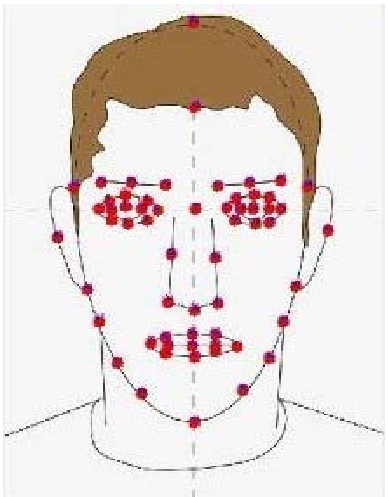 Fig 1. Traditional Physiognomy requires manual feature quantification, a process prone to human error.
3. Modalities Analyzed
- Face/Video: Utilizing DCNNs and transfer learning.
- Handwriting: Applying Graphology theories through ANNs to study "neurological patterns" in writing pressure and strokes.
- Social Media: Analyzing Facebook/Twitter interaction styles and profile picture choices using multivariate regression.
Experimental Results and SOTA Performance
The paper presents a meta-comparison of results across different modalities:
| Algorithm / Study | Feature Set | Key Outcome |
|---|---|---|
| Zhang et al. (2016) | Bimodal (Visual + Audio) | 91.30% Accuracy (ChaLearn Winner) |
| Gurpınar et al. (2016) | Deep CNN (Fine-tuned) | 90.94% Accuracy |
| Qin et al. (2016) | Face + Fingerprint | Found female traits more predictable than male |
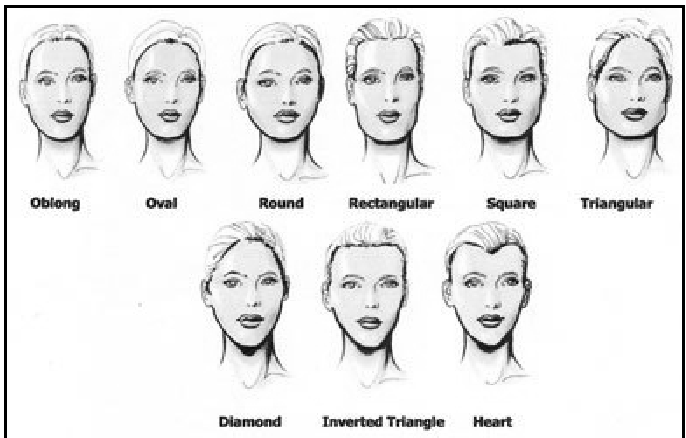 Fig 2. The relationship between psychological profiles (e.g., caring vs. practical) and face shapes is a key inductive bias in these models.
Critical Insight: The Significance of "Deconvnet"
A unique contribution of the discussion is the mention of Deconvolutional Networks. Because CNNs are often criticized as "Black Boxes," Deconvnets allow researchers to map activations back to the pixel space. This allows us to see which specific facial features (e.g., the curve of the eyebrow) the model is using to predict "Neuroticism," potentially validating or debunking 18th-century psychological theories with modern data.
Conclusion & Future Outlook
While Computational Personality Assessment has reached impressive accuracy, two major hurdles remain:
- Data Scarcity: Unlike ImageNet, high-quality labeled personality data is scarce. Data Augmentation and Transfer Learning are practical stop-gaps mentioned by the author.
- Theoretical Gap: There is still a lack of "computational proof" linking specific facial pixels to psychological states.
Takeaway: The future of this field lies in Explainable AI (XAI)—not just predicting that a person is conscientious, but explaining how their physical and behavioral markers lead to that conclusion.