
Computational Social Network Management: Bridging Humans and Services in the Crowd
Computational Social Network Management in Crowdsourcing Environments
2011-04-01
Summary
Problem
Method
Results
Takeaways
Abstract
The paper introduces a computational model for the autonomous management of social network structures in service-oriented crowdsourcing environments. It utilizes an adaptation concept called the MAPE cycle to manage the emergence, update, and aging of social trust relations based on real-time interaction mining of SOAP logs.
## TL;DR
Static social networks are dying. In the volatile world of crowdsourcing, trust must be earned, not just declared. This paper presents an autonomous framework for managing social relations by mining interaction data (SOAP logs). By utilizing a smart adaptive sampling technique, the system drastically reduces computational overhead by 70% while keeping trust models synchronized with real-world behavior.
## The Problem: Static Models in a Dynamic Crowd
Crowdsourcing environments like Amazon Mechanical Turk or enterprise-level collaboration systems are chaotic. Actors (both humans and software agents) enter and leave, and their reliability fluctuates based on workload and incentives.
Current social network tools rely on manual declarations—"I trust person X." This is insufficient because:
1. **Dynamics**: Real trust grows through interaction but decays with silence.
2. **Sparsity**: Many actors interact rarely, making it hard to form a baseline.
3. **Scalability**: For a network of thousands, recalculating every link's strength every second wastes massive CPU cycles.
## Methodology: The Life Cycle of a Social Link
The authors treat a social network as a directed graph where edges represent trust. They split the management into three distinct lifecycle phases:
### 1. Emergence
Links aren't formed at random. The model uses "Triadic Closures" and delegations to introduce previously unconnected actors. Trust is only inferred once a specific interaction threshold ($\vartheta_s$) is met.
### 2. Adaptive Update (The Core Innovation)
Instead of a "one-size-fits-all" update interval, the authors use **Adaptive Sampling**.
* **Stable Behavior**: If an actor's metrics (Availability, Reciprocity) remain consistent, the system increments the update interval.
* **Erratic Behavior**: If a "Trigger" (like a sudden drop in response rate) is detected, an immediate update is forced.
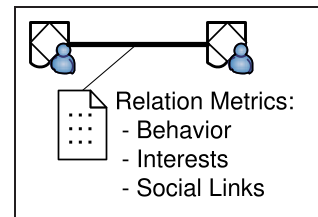
*Fig 1: The flow from SOAP interaction logs to rule-based trust inference.*
### 3. Aging
If interactions stop, trust shouldn't stay high forever. The authors apply an exponential decay function:
$$ au_{n}^{s} = au_{i}^{s} \cdot e^{-( au_{n-1}^{s} \cdot \Delta t)^{2\gamma}}$$
This ensures that long-term, consolidated relations mature slower than fragile, short-term ones.
## Experiments and Evidence
The researchers tested their model using scale-free networks (Barabasi-Albert model) to simulate realistic "hub and spoke" social structures. They measured two conflicting variables: **Global Error** (how much the model deviates from reality) and **Computational Effort** (number of updates).
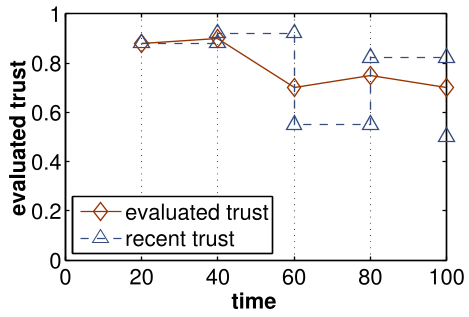
*Fig 2: Visualization of how interaction metrics like Availability and Reciprocity feed into long-term trust evolution.*
**Key Findings:**
* **Efficiency gains**: By increasing the maximum update interval ($\lambda_2$), they reduced the average number of updates per cycle from 20,000 to just 4,000 for a 10k-node network.
* **Accuracy maintenance**: Even with significantly fewer updates, the "Trigger" mechanism ensured that sudden behavior shifts were captured, keeping the total error below 5%.
## Critical Analysis & Conclusion
This work is a significant step toward **Self-Regulating Collaboration Networks**. It moves trust from a subjective manual input to an objective computational metric.
**Takeaways:**
* **Selective Attention**: In any large system, you don't need to watch everyone all the time. Watch the "deviants" and let the "stable" actors be.
* **Socio-Technical Convergence**: By treating Human-Provided Services (HPS) and Software-Based Services (SBS) identically under a WSDL/SOAP framework, the authors provide a unified path for crowdsourcing automation.
**Limitations**: The aging model configuration ($\gamma$ parameter) remains somewhat heuristic. Future work could benefit from using Machine Learning to predict an actor's optimal decay rate based on historical "re-entry" patterns.
---
*The research was supported by the EU projects COIN and SM4ALL, highlighting its relevance to future European enterprise infrastructure.*