
Flexible Twitter Analytics: Balancing Architecture Complexity and Real-Time Insights
Model of computer architecture for online social networks flexible data analysis: The case of Twitter data
The paper introduces a scalable, partially distributed computer architecture designed for flexible longitudinal analysis of Twitter data. By utilizing the Elasticsearch NoSQL engine and the Twitter Streaming API, the system achieves near real-time ingestion and analysis of millions of tweets, facilitating trend detection and socioeconomic categorization.
TL;DR
This paper addresses the "impatience problem" in social media analytics—where researchers often have to wait days to collect data before starting an analysis. The authors propose a distributed architecture leveraging the Twitter Streaming API and Elasticsearch to build a "data reservoir" that allows analysts to query historical and real-time trends spontaneously, reducing the friction between hypothesis and insight.
Problem & Motivation: The Static Data Trap
Most academic research on social networks follows a linear, static path: define a keyword (e.g., "#iPhone"), wait for a week to collect enough tweets via REST APIs, and then analyze. If the researcher realizes they also need data on "#Android" to compare, they must start the waiting process over.
The authors identify two primary technical hurdles:
- Analyst Spontaneity: The need for "flexible analysis" where data on related topics is already available for immediate comparison.
- Scalability Bottlenecks: Relational databases like MySQL struggle with the high write-load of the Twitter "Firehose" and the evolving schema of social media metadata.
Methodology: The Core Architecture
To solve the flexibility issue, the authors designed a platform that doesn't just collect what is requested, but uses associative networks (semantically linked words) to broaden the collection scope.
The Power of Elasticsearch
Instead of a traditional SQL approach, the team opted for Elasticsearch, a distributed NoSQL search engine.
- JSON-Native: Since tweets are native JSON objects, indexing is seamless.
- Tokenization: Data is tokenized upon entry, enabling near real-time full-text search.
- Sharding & Replication: Distributed nodes ensure that if one hardware component fails, data remains accessible—a critical requirement for longitudinal studies.
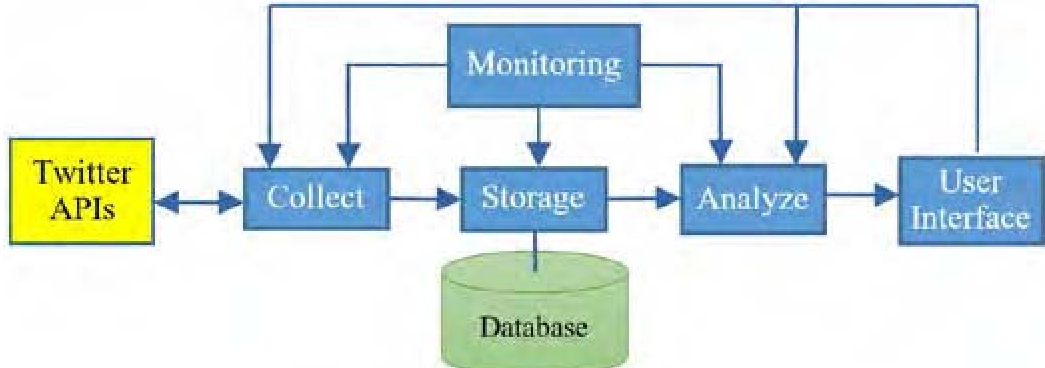 Fig 1: The proposed workflow from Streaming API ingestion to the front-end SaaS interface.
Data Processing Pipeline
The backend, written in Python (Tweepy) and Node.js, includes internal services for:
- Gender Detection: Inferring author demographics.
- Polarity Analysis: Sentiment analysis of the 140-character snippets.
- Buzz Observation: Identification of "bursty" keywords that deviate from the historical norm.
Experiments & Results
The authors evaluated their SaaS platform by querying terms like "USA" and "Paris" over various timeframes (up to 197 days).
Key Performance Insights:
- Insertion Speed: Elasticsearch outperformed MySQL, crucial for not missing packets in the high-speed Streaming API.
- Scale Limits: While the system is fast, the loading time is primarily influenced by the total volume of stored data rather than the number of hits returned.
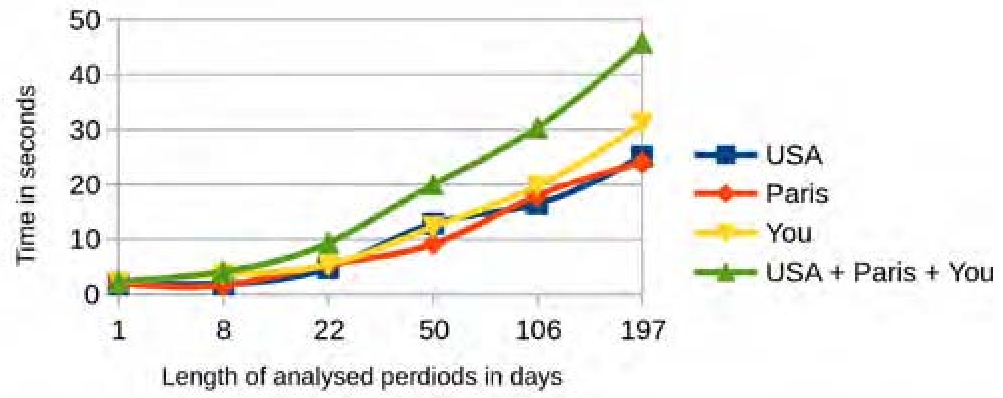 Fig 2: Comparison of loading times across different keyword volumes.
A surprising bottleneck identified was the Web Browser: Concurrent Ajax request limits in browsers (e.g., 6 in Chrome) can slow down the user interface even when the server-side architecture is capable of higher throughput.
Critical Analysis & Conclusion
Takeaway
The shift from a "pull-on-demand" model to a "persistent-stream" model is the only way to satisfy the needs of modern policymakers and marketers who require instant comparative data.
Limitations
- API Fragility: The system is highly dependent on Twitter's API policies. Changes in the API (like the removal of "Rivers" in Elasticsearch 2.0 or the end of the DataSift partnership) can break the architecture.
- Performance Decay: As the database grows into the terabyte range, the indexing overhead increases query latency.
Future Work
The authors pose a provocative question for future research: Should data have an expiration date? To maintain the ultra-high speeds required for real-time "buzz" detection, a strategy for archiving or purging "cold" data may be necessary to balance storage costs with analysis flexibility.