
Simple is Better: A Critical Analysis of Change Point Detection in Social Networks
Computer science review
This paper provides a critical review and experimental comparison of change point detection (CPD) methods in dynamic social networks using global graph metrics and generative models. By evaluating Bayesian CPD on datasets like Enron and MIT, the authors demonstrate that simple metrics often outperform or match complex probabilistic models.
TL;DR
In the quest to detect pivotal moments in dynamic social networks (like the collapse of Enron), researchers often default to complex generative models. However, this study reveals a surprising "Occam's Razor" in network science: basic metrics like Node Count and Edge Count are often just as effective as—and thousands of times faster than—sophisticated Bayesian Hierarchical models for detecting global structural shifts.
Background: The Dynamic Shift
For decades, social network analysis was a static snapshot. Today, the focus has shifted to Change Point Detection (CPD)—identifying the exact moment a network's behavior fundamentally alters. This is critical for predicting system failures, organizational shifts, or security anomalies. But as the field grows, so does its complexity. Are we over-engineering the solution?
The Contenders: Global Metrics vs. Generative Models
The authors pit two schools of thought against each other:
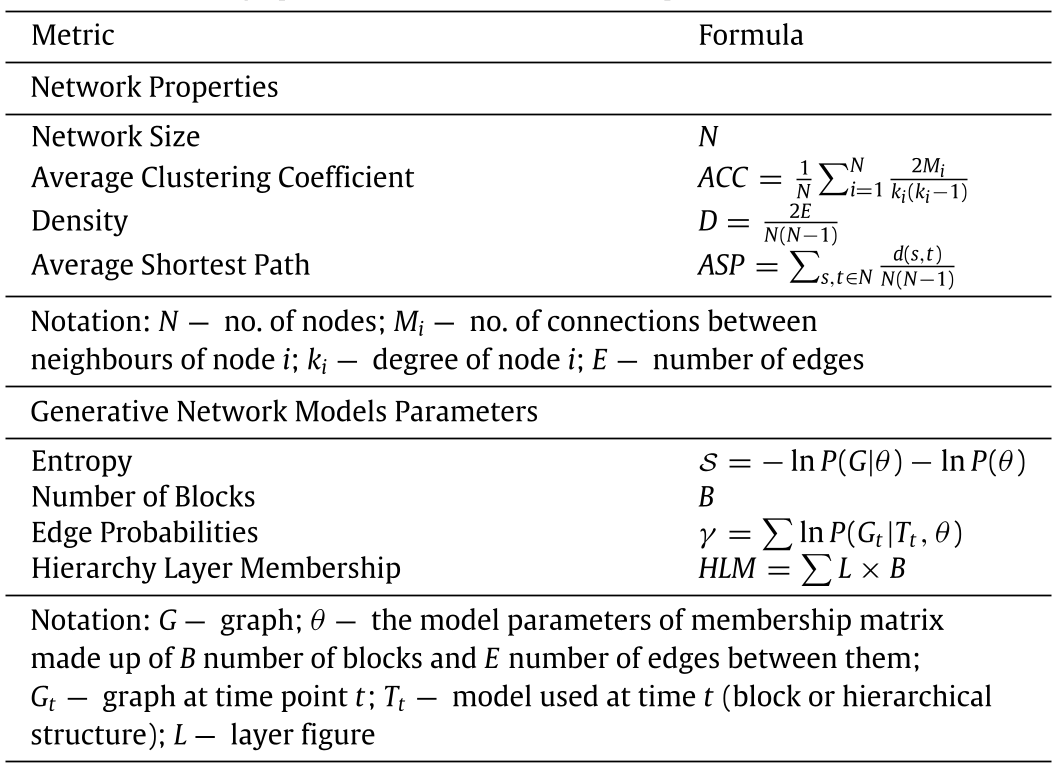
- Global Topological Metrics: Traditional measures like Density, Average Clustering Coefficient (ACC), and Average Shortest Path (ASP).
- Generative Models: Advanced probabilistic frameworks like the Stochastic Block Model (SBM) and Hierarchical Random Graph (HRG). These models attempt to represent the network as a "dendrogram" or a set of community blocks, using parameters like Entropy and Edge Probability Sums to signal change.
Theoretical Insight
The core hypothesis behind using generative models is their ability to capture "mesoscale" changes—subtle shifts in how groups interact that might not show up in the total edge count.
Methodology: Testing Against Reality
The research utilized two iconic datasets:
- MIT Reality Mining: 100 students' social proximity (9 known events like Christmas break).
- Enron Email Network: Over 600,000 emails leading up to the infamous bankruptcy (31 major external events).
By applying Bayesian Change Point (BCP) analysis, the team calculated the posterior probability of a change for each metric at weekly intervals and compared them to ground-truth timelines.
Key Findings: The Efficiency Trap
The results provide a sobering reality check for the "complex model" enthusiasts:
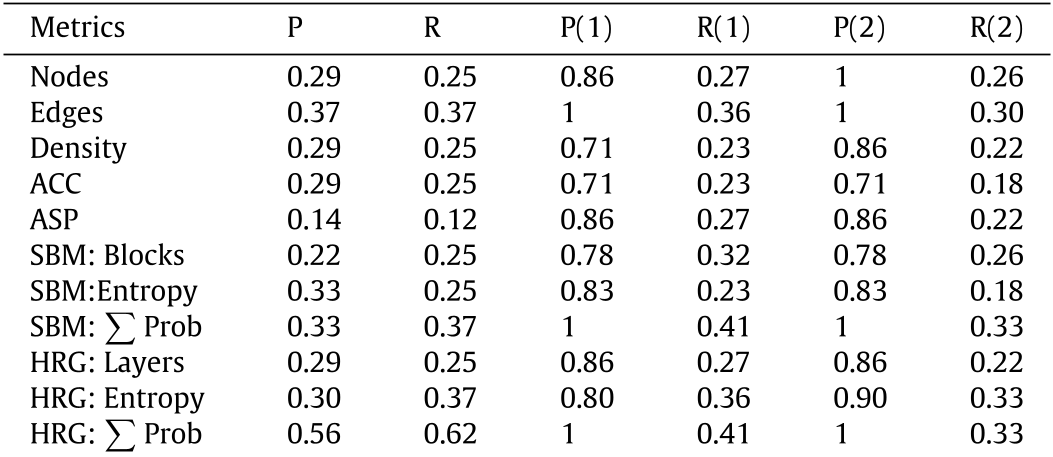
- High Redundancy: Generative metrics like Entropy and Edge Probability were found to be almost perfectly correlated with the simple count of Nodes and Edges. Basically, these expensive models were mostly just tracking network size.
- Stability of Global Metrics: Metrics like Density and ACC proved to be too stable, failing to catch significant one-off events because they are designed to describe general network types, not temporal shocks.
- The Performance Gap:
- Enron (Computational Cost): Running the Hierarchical model took 6.4 days, with some weekly snapshots taking over an hour.
- Baseline (Computational Cost): Counting nodes and edges took seconds.
- Accuracy: The baseline metrics achieved precision and recall scores comparable to (and in the case of MIT, sometimes better than) the HRG/SBM metrics.
Critical Insight: When Should You Use Generative Models?
While the paper highlights that simple counts are best for overall structural changes, it doesn't dismiss generative models entirely. They remain the preferred tool for subtle group-level drift—changes that happen within community structures even when the total number of links remains constant. However, for "macro" detection, the juice is rarely worth the squeeze.
Conclusion & Future Look
The takeaway for technical leads and researchers is clear: Baseline first. Before deploying a week-long Bayesian inference pipeline, check if your "anomalies" can be seen simply by looking at the fluctuations in active users and message volume.
The future of this field lies in Online Detection—translating these findings into real-time algorithms that can alert administrators to network shifts the moment they happen, without the luxury of retrospective (off-line) analysis.
Final Takeaway
If you are building a monitoring system for social networks, start with the node/edge count. It’s the "ground truth" that complex models spend days trying to approximate.