
PP-OCQ: Bridging Social Closeness and Privacy via Distributed Homomorphic Encryption
Computer Standards & Interfaces
The paper introduces PP-OCQ, a Privacy-Preserving Optimal Closeness Query scheme for distributed social networks. It leverages the ElGamal cryptosystem with additive homomorphic properties and a distributed Bellman-Ford variant to compute the shortest social distance between users without exposing sensitive personal attributes or relationship weights.
TL;DR
Calculating how "close" you are to someone in a social network usually requires a centralized server to peek at your private life. PP-OCQ changes this paradigm by allowing users to collaboratively find the shortest social distance using a distributed routing protocol and homomorphic encryption. It keeps your attributes (like income and hobbies) encrypted while still allowing the network to "math out" the most efficient social path to a target user.
The Conflict: Recommendation vs. Privacy
In modern social apps, "closeness" is a metric derived from overlapping attributes—education, location, and mutual friends. To help you find the "optimal" path to a new contact, a system typically needs to know everything about everyone.
The problem is twofold:
- Privacy: Social data is sensitive. A leak of attributes like sexual orientation or income status can have real-world consequences.
- Scalability: Standard algorithms like Dijkstra require a global view of the graph. In a decentralized world, no one has the "whole map."
Methodology: The "Secret" Social Map
The authors propose a three-stage solution: Initialization, Construction, and Query.
1. Constructing the Equivalent Cost Graph
Instead of raw data, users represent their attributes through one-hot encoding. These vectors are encrypted using the ElGamal cryptosystem. The magic happens in the weight calculation: Using the additive homomorphic property of ElGamal, a neighbor can calculate the "closeness weight" () while it remains inside a ciphertext. No one ever sees the raw similarity score.
2. The Distributed Bellman-Ford Query
To find the optimal path without a central server, the paper adapts the Bellman-Ford routing protocol. They introduce three critical indicators:
- (Source/Target ID): Controls the intent.
- (Direction): Indicates if the message is moving forward (searching) or backward (returning results).
- (Path History): A product of hash values that prevents loops and ensures the message returns along the exact path it originated from.
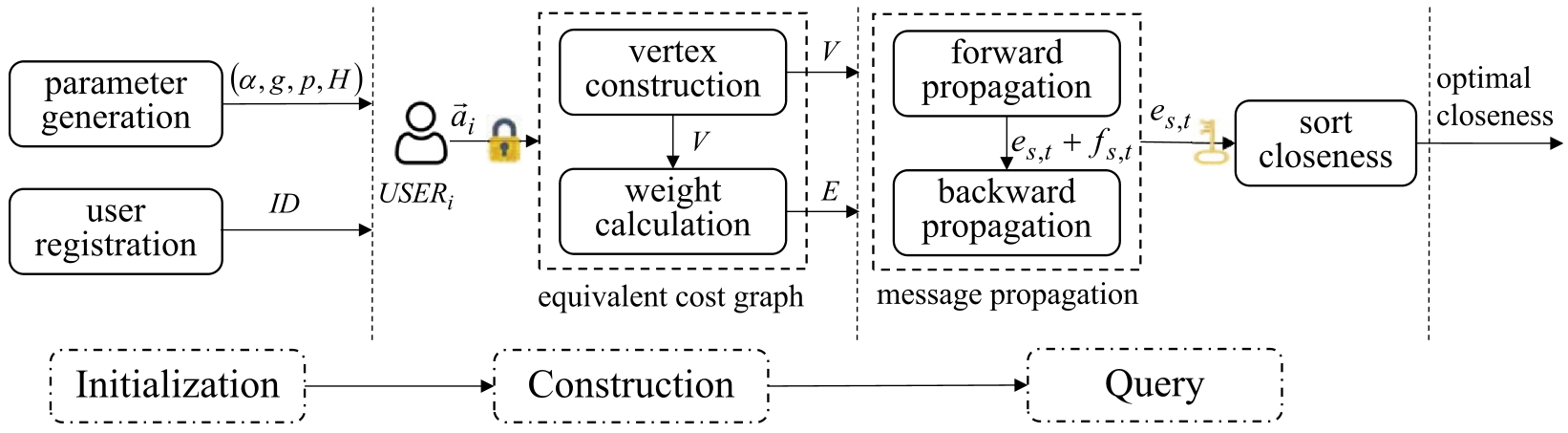 Figure 1: The PP-OCQ Workflow - from attribute encryption to iterative query propagation.
Experiments: Efficiency in Chaos
The researchers tested the system on networks of varying sizes. A key insight is the utilization of the "Four Degrees of Separation" theory, which suggests most users are connected within small hops. This limits the iterations () required for the protocol to converge.
Scalability Insights
Unlike centralized databases where query time spikes with , PP-OCQ's cost is primarily bound by the number of neighbors ().
- Initialization Cost: Scales with user count but remains low.
- Construction Cost: Influenced by the length of attribute vectors.
- Query Performance: Distributed agents process messages in parallel, preventing any single node from becoming a bottleneck.
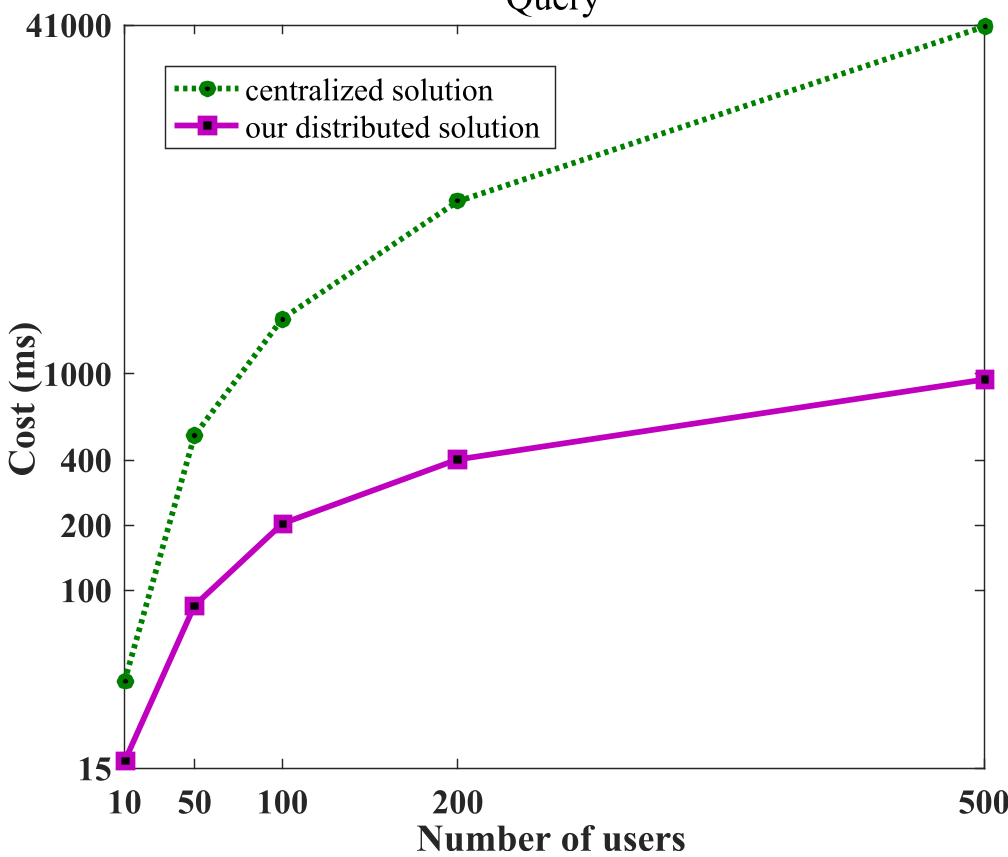 Figure 2: Performance comparison showing the distributed method's stability versus centralized overhead.
Critical Analysis & Conclusion
Takeaway: PP-OCQ effectively masks the "who" and "what" while revealing the "how far." By using random masking offsets in the backward propagation, even the intermediate nodes handling the "closeness" packets cannot deduce the actual weights of their neighbors.
Limitations:
- The protocol assumes semi-honest users. If a node intentionally provides false weights or drops packets (Denial of Service), the "optimal" path might be lost.
- While the attributes are encrypted, the network topology (who is neighbors with whom) is partially visible to local nodes during propagation.
Future Work: The next frontier is Anonymity. While the data is encrypted, hiding the identity of the source and target during the query would provide the ultimate layer of social privacy.