
Intelligent Precision Agriculture: A Low-Cost Robotic Approach to Real-Time Weed Control
Computer vision based robotic weed control system for precision agriculture
The paper introduces a Computer Vision-based Robotic Weed Control System (WCS) specifically designed for onion fields. It leverages a Raspberry Pi-driven mobile robot that combines RGB histogram feature extraction with an Artificial Neural Network (ANN) to achieve real-time, site-specific herbicide spraying.
TL;DR
Agriculture is evolving from broad-acre management to plant-level precision. This paper presents an autonomous robotic system designed to tackle weeds in onion fields—a crop particularly sensitive to competition—using a synergistic blend of IoT, Computer Vision, and Artificial Neural Networks (ANN). By achieving a 98.6% detection accuracy at a hardware cost of roughly $200, it bridges the gap between high-tech research and affordable field implementation.
Problem & Motivation: The "Intra-Row" Challenge
Weeds are not just an aesthetic nuisance; they are biological competitors that steal nutrients, water, and space from crops. In onion farming, where the crop is shallow-rooted and slow-growing, weed competition can lead to catastrophic yield loss.
The authors identify two critical failures in current agricultural tech:
- Lack of Discrimination: Many commercial sensors (e.g., Weedseeker) detect chlorophyll but cannot distinguish between a valuable crop and a parasitic weed.
- Cost and Accessibility: Complex machine vision systems are often too expensive for small-scale farmers in developing economies like India.
- The "Human" Factor: Manual labor is increasingly scarce and expensive, creating a vacuum that only "Human-Lite" automated solutions can fill.
Methodology: Feature Engineering Over Brute Force
Instead of relying on heavy Deep Learning models that require massive GPU power, the researchers opt for a "Lite" approach suitable for the Raspberry Pi edge computing node.
1. The Architecture
The system is a distributed IoT network where an ATMEGA8 handles low-level sensing (battery, herbicide levels), and the Raspberry Pi acts as the "brain," processing visual data.
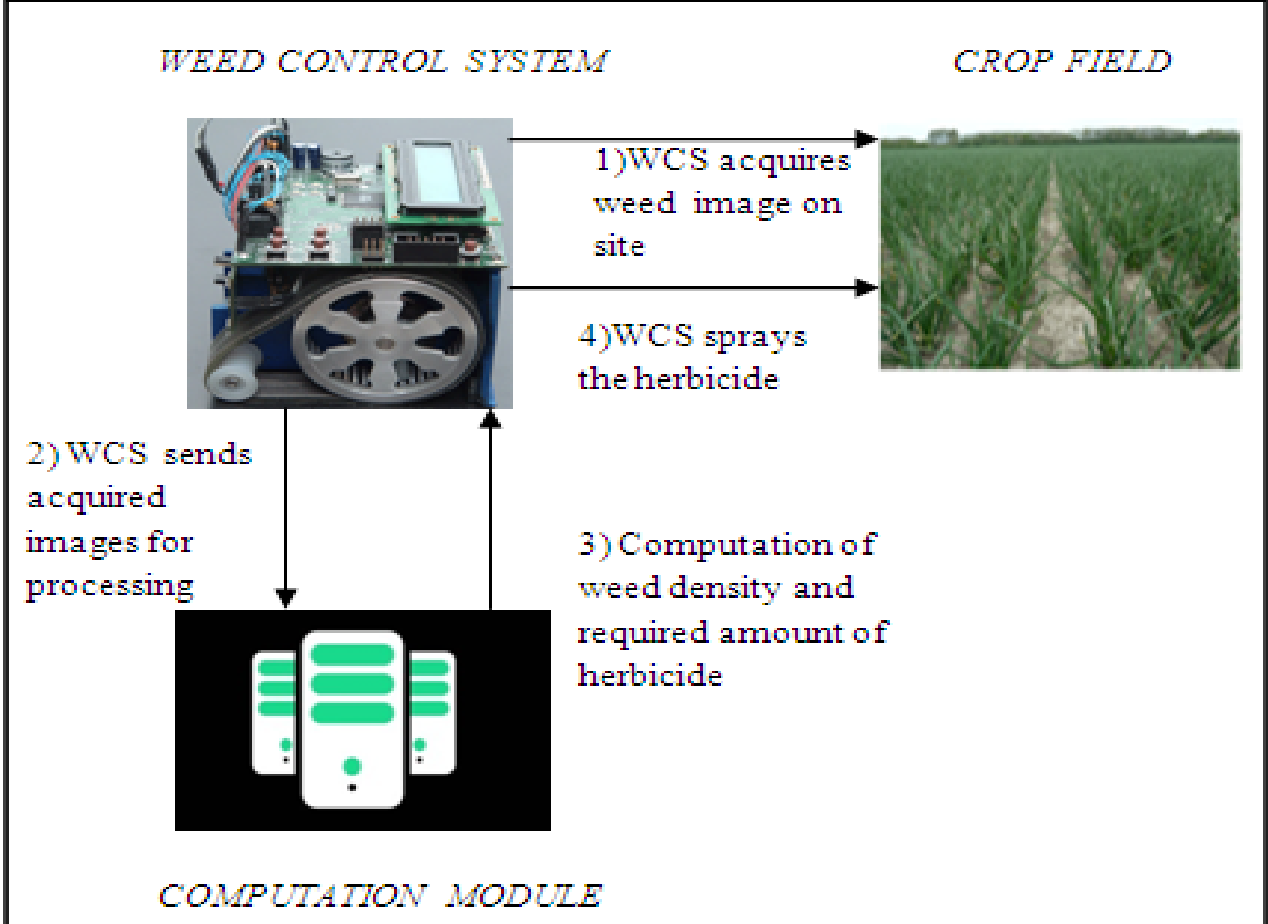
2. The Vision Pipeline
The detection logic is built on "Sub-frame Histogram Analysis":
- Image Division: Each captured frame is split into 15 sub-images.
- Feature Extraction: For each sub-frame, RGB histograms are computed. By merging intensity levels into 21 bins per channel, they create a 63-dimensional feature vector.
- Neural Classification: These features are fed into an ANN. If a weed is confirmed, the system calculates "Weed Density" by counting affected sub-frames.
3. Smart Actuation
Rather than a simple ON/OFF switch, the robot uses a calibrated response:
- High Density (avg > 0.3): Sprayer activated for 5 seconds.
- Low Density: Sprayer activated for 3 seconds. This granular control is the essence of Precision Agriculture.
Experiments and Field Results
The system was tested against a dataset of over 5,000 images, meticulously balancing for lighting and wind conditions in a fabricated artificial field.
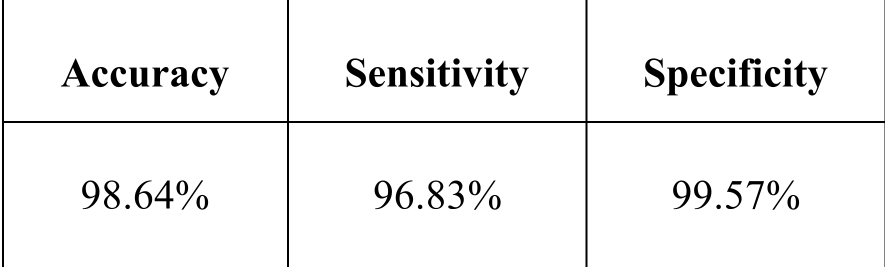
The results were impressive:
- Accuracy: 98.64%
- Sensitivity (Recall): 96.83%
- Specificity: 99.57%
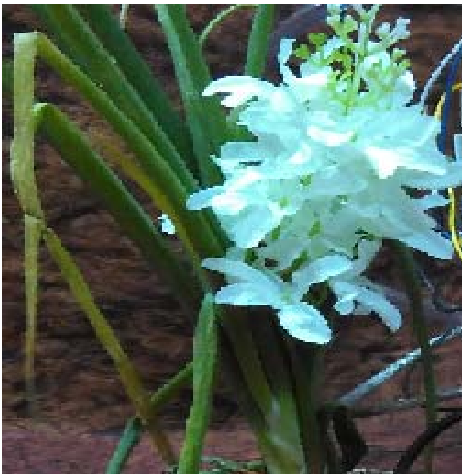
The primary limitation identified was lighting volatility. As seen in the figure below, harsh shadows or extreme sunlight can obscure the color features that the histogram relies on, leading to occasional misclassifications.
Deep Insight & Conclusion
This work highlights a significant trend in "Edge AI": you don't always need a Transformer or a 50-layer CNN to solve a real-world problem. By utilizing domain-specific feature engineering (RGB histograms tailored to the green hues of weeds vs. onion stalks), the authors achieved SOTA-level precision on inexpensive hardware.
Future Outlook: For this to scale, moving beyond RGB to multi-spectral imaging or incorporating "Attention" mechanisms (even simplified ones) could help the system ignore the lighting noise that currently hinders its 100% accuracy goal. As it stands, this WCS is a powerful blueprint for affordable, autonomous crop maintenance.