
Breaking 100% Accuracy: A Gender-Based Deep Learning Approach to Parkinson’s Severity
A computerized method to assess Parkinson’s disease severity from gait variability based on gender
This paper presents a computerized diagnostic system that utilizes Fuzzy Recurrence Plots (FRP) and deep feature extraction (AlexNet) to assess Parkinson’s Disease (PD) severity from gait variability. By combining signal-to-image conversion with machine learning classifiers like SVM and KNN, the method achieves SOTA performance, particularly through gender-based multiclass classification.
TL;DR
Early detection of Parkinson’s Disease (PD) remains a clinical bottleneck. This paper introduces a novel framework that converts physical gait signals into Fuzzy Recurrence Plots (FRP), extracts deep features via AlexNet, and applies gender-specific classification. The result? A staggering 1.00 accuracy for female severity prediction and 0.99 for males, setting a new benchmark for remote monitoring technology.
The Motivation: Why Gait and Why Gender?
Parkinson's is fundamentally a progressive loss of dopaminergic neurons. By the time a patient shows obvious tremors, the damage is often extensive. Gait variability (stride time, swing rhythm) serves as a "digital biomarker" that manifests early.
However, previous research often treated all patients as a monolithic group. The author hypothesized that gender-based differences in physiology and gait patterns are not just noise—they are essential features. By splitting the analysis, the model could learn more refined boundaries for the Hoehn & Yahr stages (the gold standard for measuring PD progression).
Methodology: From Footsteps to Textures
The core innovation lies in the Signal-to-Image transformation.
- Preprocessing: Gait signals from 8 sub-foot sensors are aggregated.
- Fuzzy Recurrence Plots (FRP): Instead of analyzing 1D time series, the authors use FRP to create matrices representing the "recurrence" of states in phase space. This captures the hidden non-linear rhythmicity of the walk.
- Deep Feature Extraction: Using AlexNet, the system extracts 4096 features from these textural images.
- Dimensionality Reduction: Since 4096 is high, Lasso and Relief algorithms are used to prune the feature set down to the most significant ~30 features.
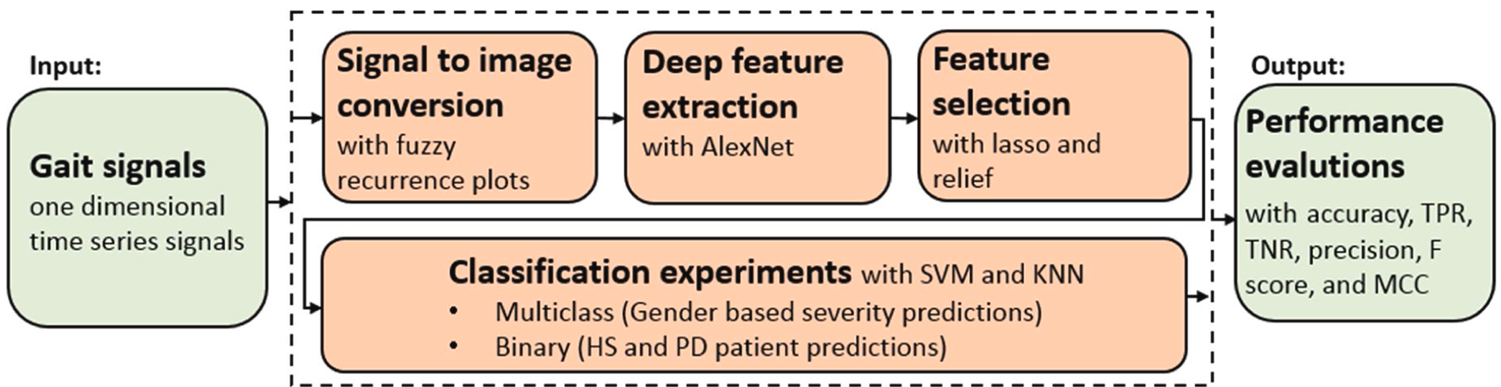 Figure 1: The architecture of the proposed system, moving from gait signals to machine learning classification.
SOTA Results: Precision is in the Details
The study utilized a public dataset of 93 PD patients and 73 healthy subjects. The experimental results were categorized into binary (PD vs. Healthy) and multiclass (Severity Levels 1-4).
Key findings include:
- Female Accuracy: 1.00 (Perfect classification across all stages).
- Male Accuracy: 0.99.
- Combined Accuracy: 0.98.
This drop from 1.00/0.99 down to 0.98 when combining genders proves the author's primary thesis: PD manifests differently enough across genders that a "one size fits all" model actually introduces error.
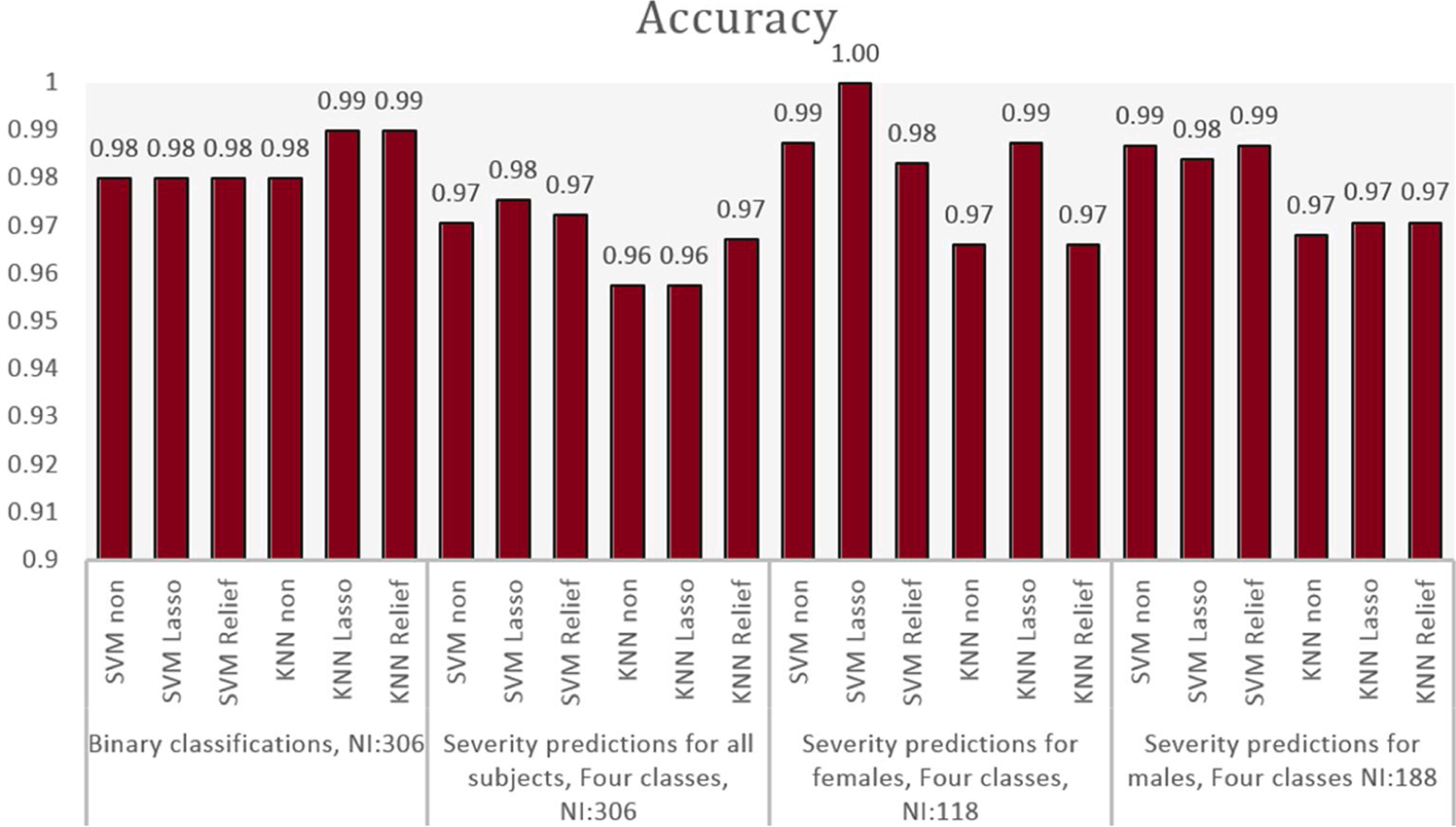 Figure 2: The performance gain confirmed: Gender-based models outperform the general model.
The Power of Feature Selection
Interestingly, the Lasso algorithm performed exceptionally well, reducing feature counts from 4096 to just about 30 while maintaining higher accuracy than the broader Relief method. This suggests that only a handful of textural markers in the recurrence plots are necessary to identify disease severity.
Critical Analysis & Conclusion
Takeaways
- Interpretability through Visualization: Transforming 1D signals into FRPs allows for textural analysis that might be invisible to traditional statistical tests.
- Gender Matters: The physiological differences in gait between men and women are significant enough to be a primary variable in clinical ML models.
Limitations
While the accuracy is impressive, it is important to note the sample size. With 306 instances from 166 participants, the model is highly effective on the known dataset, but real-world "in-the-wild" testing with wearable sensors is the next logical step to ensure these accuracies hold outside of controlled walking paths.
Future Work
The author suggests exploring other signal-to-image methods and expanding the multiclass labels to more granular rating scales. For practitioners, this paper is a clear signal: If you are modeling biological signals, check your gender bias—it might be the key to your next SOTA result.