
Beyond Optimization: Using Participatory Modeling to Unlock Stagnant Supply Chains
Computers and Chemical Engineering
This paper introduces a novel participative modeling framework that cross-pollinates the Socio-Environmental Systems (SES) PARDI method with Process System Engineering (PSE) practices. The core methodology develops an Agent-Based Model (ABM) through multi-stakeholder collaboration to solve complex, decentralized supply chain design problems, specifically applied to the chestnut wood industry in France.
TL;DR
Process System Engineering (PSE) is excellent at optimizing logistics but often fails at the "human factor." This paper imports the PARDI method from socio-environmental sciences to create a participatory Agent-Based Model (ABM). In a real-world French chestnut wood study, this approach identified social and economic levers that recovered forest management activities where traditional optimization failed.
The "Social Gap" in Process Engineering
In the world of Process System Engineering, we have mastered the art of "What" and "Where." We can calculate the optimal location of a factory or the most efficient route for a truck. However, we often fail at the "Who."
Real-world supply chains are not governed by a single, all-powerful optimizer. They are composed of individual stakeholders—farmers, transporters, and owners—each with their own "hidden" objectives, cultural values, and resistance to change. When PSE research treats these social dynamics as simple constraints, the resulting "optimal" solutions often fail to be implemented locally.
Methodology: The PARDI Framework meets ABM
The authors propose a bridge between the rationalist PSE community and the collaborative Socio-Environmental Systems (SES) community. The core of this bridge is a four-step workflow:
- Stakeholder Mapping: Identifying the "Actors" and their influence across different scales (Internal, Meso, Macro).
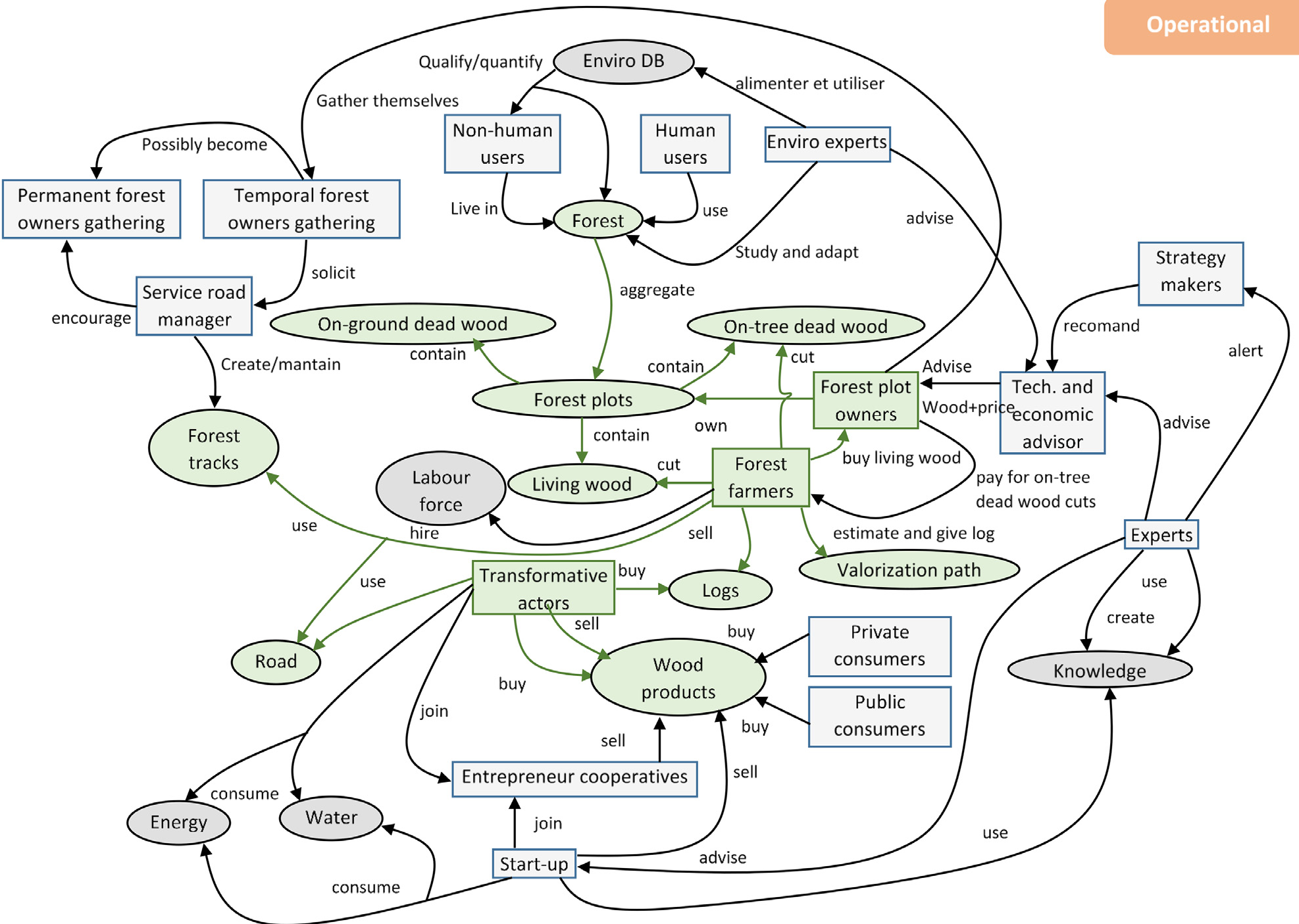
- PARDI (Problematic, Actors, Resources, Dynamics, Interactions): A series of workshops where stakeholders co-construct the "superstructure" of the model.
- Problem Formulation (ABM): Translating the qualitative "Interactions Diagram" into a quantitative Agent-Based Model.
- Scenario Analysis: Using the model as a "boundary object" to discuss trade-offs and find compromises.
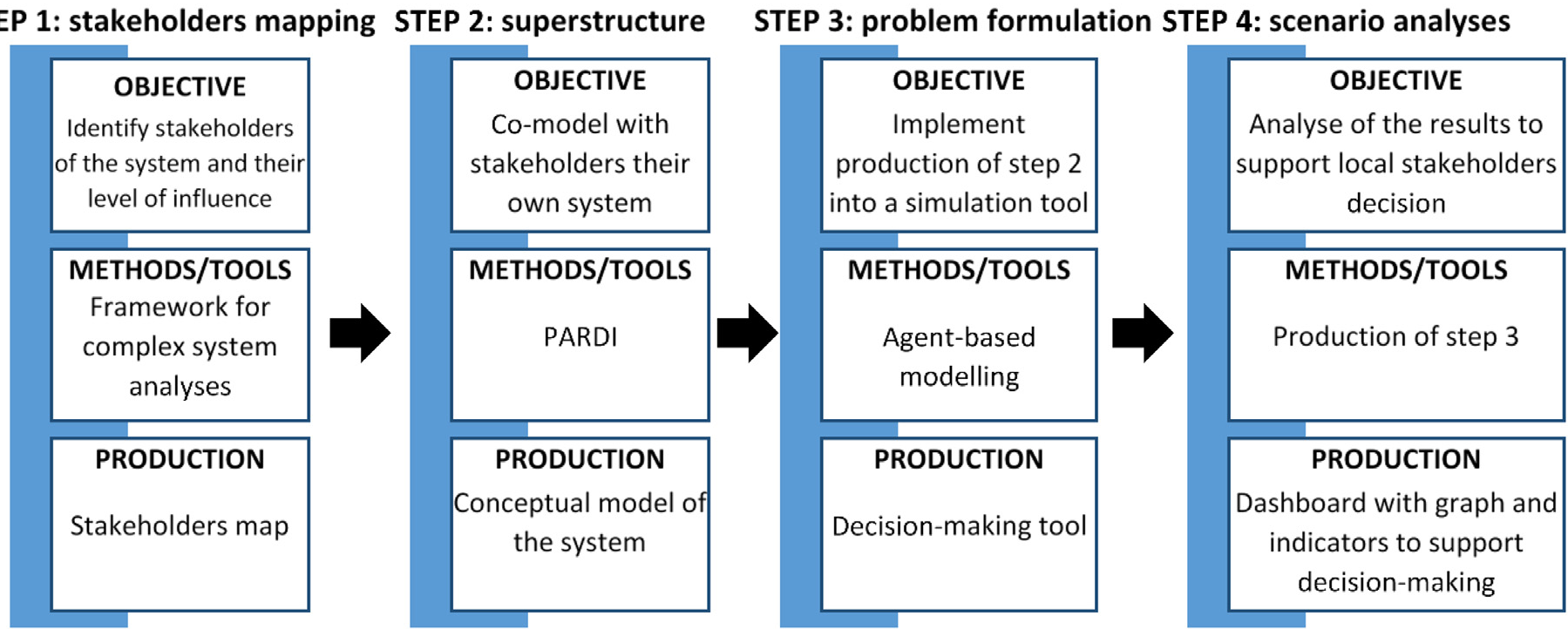
The beauty of using an Agent-Based Model here is that it naturally reflects the decentralized nature of the PARDI findings. Every "Actor" defined in the workshop becomes an "Agent" in the code, complete with their specific logic for accepting or rejecting a deal.
Case Study: Rejuvenating the Cévennes Forests
The researchers applied this to the chestnut wood sector in France. The forest was declining because owners refused to harvest dead wood—a problem that threatened both the economy and fire safety.
By building a model with the stakeholders, they discovered that the primary barrier wasn't technical; it was a mix of site accessibility and negotiation profitability. The ABM allowed them to simulate "what if" scenarios that resonate with local policy:
- Awareness Campaigns: Increasing the "probability of volunteering" among owners significantly increased the total harvested area by allowing the forest ranger to group smaller, adjacent plots into one profitable site.
- Subsidies: The model quantified that a direct subsidy to the owner of just €1/m³ was more effective than subsidizing the harvester, as it directly lowered the resistance to entry for small plot owners.
Critical Analysis: Why This Matters
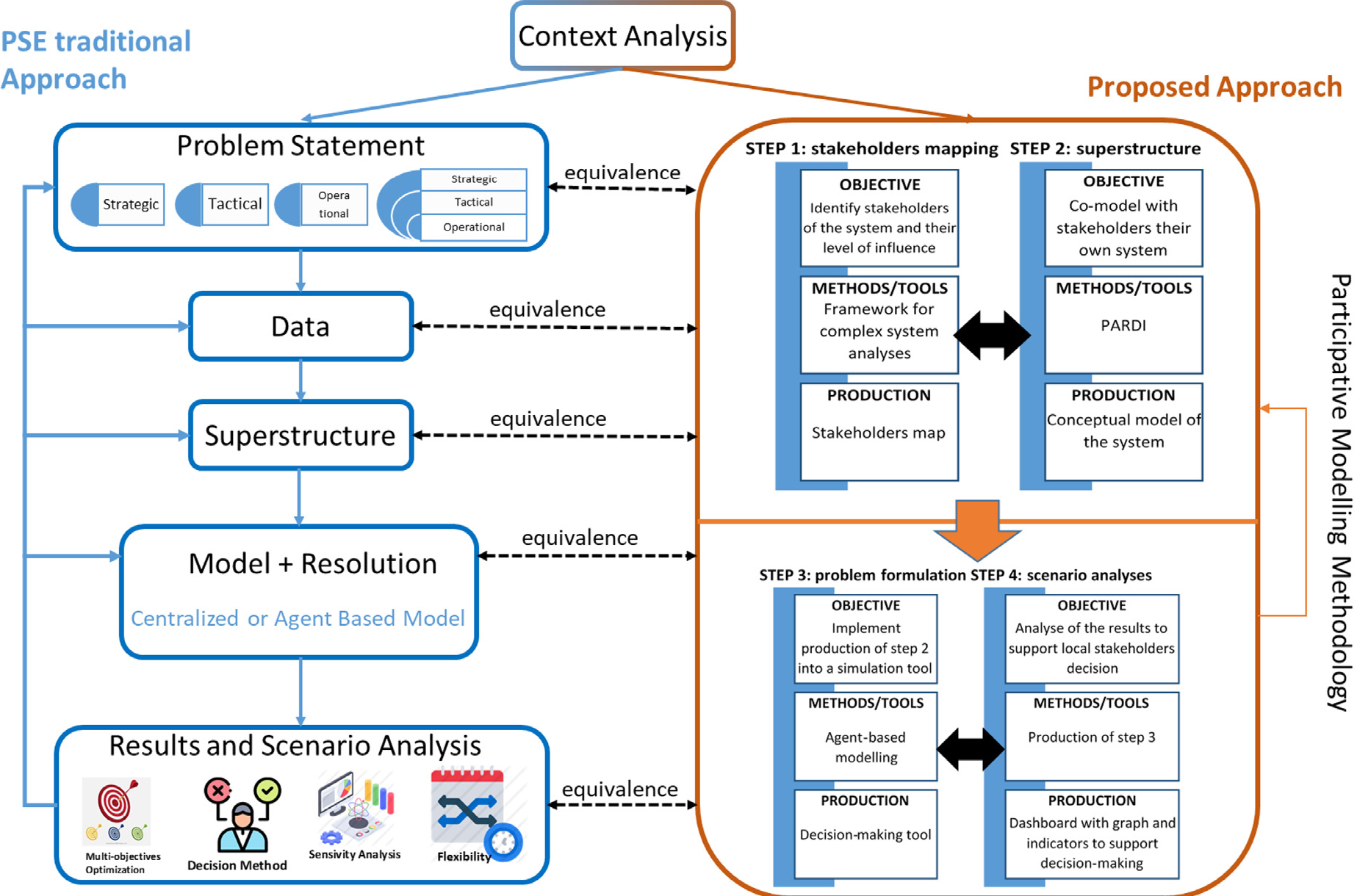
The most striking insight from this work is the comparison between traditional PSE and the Participatory approach. Traditional PSE seeks a mathematical "global optimum" (A priori compromise), while Participatory modeling creates a "negotiated compromise" (A posteriori).
Strengths:
- Legitimacy: Because stakeholders helped build the model, they trust the results.
- Consensus: It identifies the "bottleneck" actor—the one person or entity that can block the entire chain.
Limitations:
- Time-Consuming: Conducting multi-day workshops is far more intensive than running a linear solver.
- Subjectivity: The model is only as good as the representatives chosen for the workshops.
Conclusion
This paper serves as a roadmap for the future of supply chain design. Engineering is no longer just about math; it is about facilitating a shared understanding of complex systems. By integrating the PARDI method with simulation, we can solve "locked" social systems and build supply chains that are not just efficient on paper, but sustainable in reality.