
From Sensors to Insights: Bridging IoT and Data Mining for Smart Agriculture
Computers and Electronics in Agriculture
This paper proposes an integrated Smart Farm system leveraging Wireless Sensor Networks (WSN) and IoT to optimize crop irrigation and management. The core method combines real-time sensor monitoring (soil moisture, temperature, humidity) with data mining techniques (Apriori and Linear Regression) to predict optimal environmental conditions, achieving enhanced productivity and cost reduction in mixed-crop environments.
Executive Summary
TL;DR: This paper presents a comprehensive Smart Farm solution that doesn't just "collect data," but "understands" it. By integrating a Wireless Sensor Network (WSN) with data mining algorithms like Apriori and Linear Regression, the researchers developed a system that optimizes irrigation and predicts crop productivity. Tested in real-world Thai farms, it proved that a modest investment in digital innovation can yield a 2-month payback period.
Academic Context: This work moves beyond the "Control & Command" phase of IoT. It positions itself in the Knowledge Discovery in Databases (KDD) domain, treating a farm not just as a field, but as a data-generating ecosystem where environmental variables are mathematically linked to economic output.
The Problem: The Gap Between Data and Action
Modern agriculture faces a paradox: we have more sensors than ever, yet many farmers still struggle with "when" and "how much" to water. Prior work often focused on the plumbing of IoT—connectivity, battery life, and data transmission—while neglecting the intelligence. Without analyzing the hidden correlations between temperature, humidity, and actual yield, IoT remains a high-tech remote control rather than a decision-support system.
Methodology: The Three-Tier Intelligence
The authors proposed a robust architecture designed for durability and insight:
- Environmental Data Acquisition Layer: Utilizing NodeMCU and sensors (DHT22 for humidity, ultrasonic for water levels, and soil moisture probes) housed in waterproof control boxes.
- Data and Communication Layer: The bridge that transports data to a centralized server, ensuring "anytime, anywhere" connectivity.
- Application Layer (The Core): This is where the magic happens. A web application handles the Data Mining process—preprocessing "dirty" sensor data, reducing its volume via histograms, and identifying patterns.
The Analytical Engines
The paper employs two distinct mathematical approaches:
- Apriori Algorithm: Used to find "Association Rules." For instance, it discovered the specific temperature and humidity brackets that "trigger" high productivity.
- Linear Regression: Formulating a predictive equation for yield ( and ) based on input variables like Temperature and Soil Moisture ().
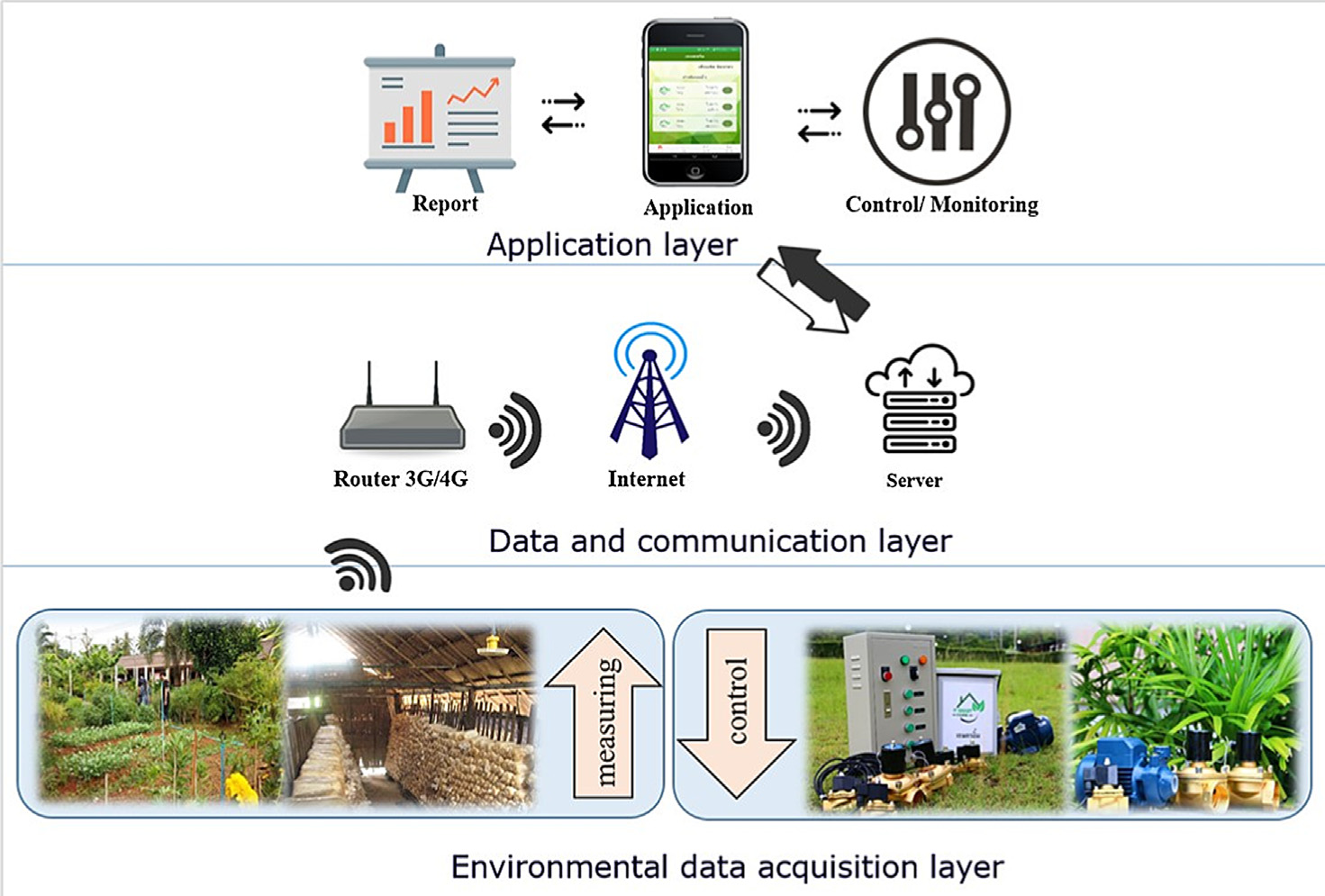 Figure 1: The three-layer architecture connecting the crop field to the user interface.
Experimental Results: Proving the Value
The system was deployed across three different village models, covering tasks from lime cultivation to integrated herbal and chicken farming.
- Productivity Sweet Spots: Data mining revealed that homegrown vegetables and lemons thrive when temperatures are maintained between 29°C and 32°C.
- Economic Viability: At a hardware cost of only $93.27, the system is accessible. For lime farmers, the increase in productivity was so significant that the system paid for itself in 60 days.
- Automation Efficiency: The hybrid control (Automatic via sensors + Manual via Smartphone/LINE API) allowed farmers to reclaim time for other income-generating activities.
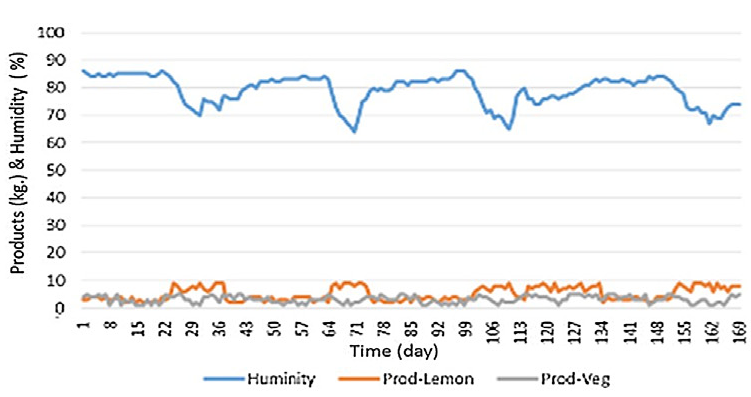 Figure 2: Comparison of IoT data (Temp/Humidity) against actual productivity outputs.
Critical Analysis & Takeaways
Why it Works
The success of this paper lies in its Inductive Bias. Instead of assuming a generic watering schedule, it "listens" to the field for five months before setting the rules. The inclusion of the LINE API for notifications is a brilliant move in user experience (UX), meeting farmers where they already spend their digital time.
Limitations
While the linear regression models provide a good baseline, they may struggle with the highly non-linear nature of biological growth over longer periods or under extreme weather anomalies. Furthermore, the system relies on WiFi, which might be a bottleneck for extremely remote, large-scale plantations compared to LoRa or NB-IoT solutions.
Conclusion
This study serves as a blueprint for frugal innovation. It demonstrates that sophisticated data mining doesn't require a supercomputer; it requires the right data pipeline. As we move toward Agriculture 4.0, the "Smart Farm" will be defined not by the sensors in the dirt, but by the algorithms that interpret the dirt's needs.