
Hydra: Harmonizing Low-Cost IoT Sensors for Precision Smart Agriculture
Computers and Electronics in Agriculture
The paper introduces Hydra, a multilevel data fusion architecture designed for Smart Agriculture IoT systems. It integrates low-level sensor filtering, medium-level event detection, and high-level decision fusion to achieve SOTA accuracy in irrigation management using low-cost, imprecise sensors.
TL;DR
Hydra is a multilevel data fusion architecture that transforms noisy, "low-quality" data from cheap IoT sensors into high-precision agricultural decisions. By combining statistical outlier detection (Generalized ESD) with robust signal filtering (WRKF) and machine learning (SVM), it achieves irrigation accuracy comparable to expensive industrial weather stations while slashing hardware costs and energy consumption.
Context & Motivation: The Paradox of Cheap Sensors
In the world of Smart Agriculture, the dream is to blanket fields with sensors to monitor soil and weather. However, the reality of "deploy and forget" IoT involves a trade-off: low-cost sensors are plagued by short battery lives, signal drift, and frequent outliers caused by environmental harshness.
Current solutions often treat data fusion as a simplified averaging task. The authors of "Hydra" argue that accuracy is not just about averaging, but about architectural hierarchy. They address the fundamental question: How can we trust a high-level decision (like "turn on the sprinklers") when the low-level inputs (soil voltage) are inherently unreliable?
Methodology: The Three Layers of Hydra
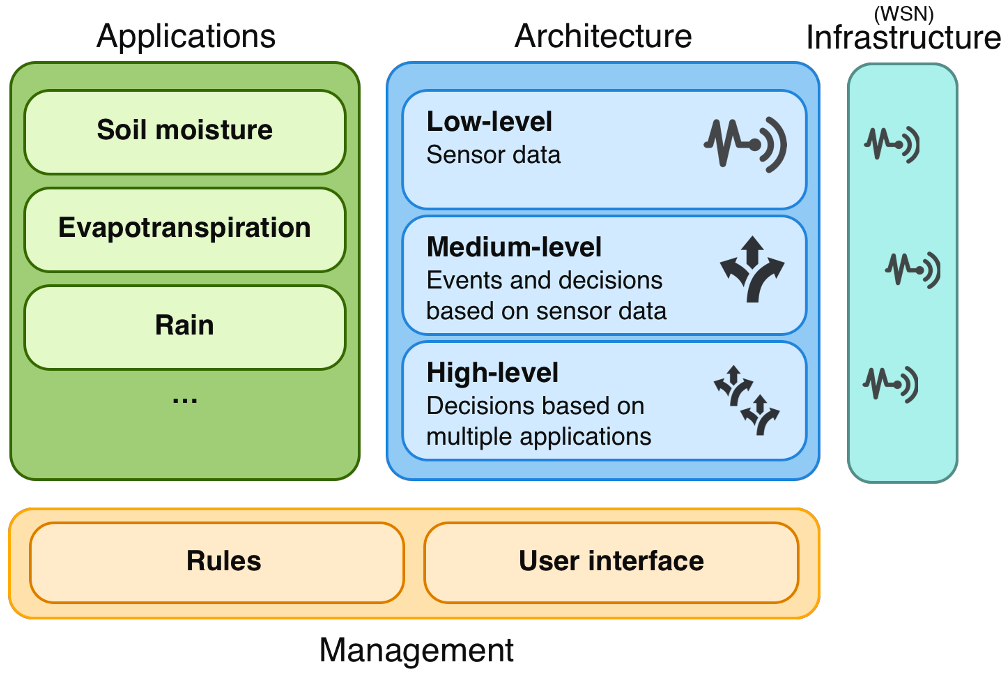
The core innovation of Hydra lies in its structured abstraction of data, following the Dasarathy classification (Data -> Feature -> Decision).
1. Low-Level: Cleaning the Noise
This layer focuses on DAI-DAO (Data In, Data Out) and DAI-FEO (Data In, Feature Out). It doesn't just pass raw data; it evaluates it against nominal working scopes and filters using:
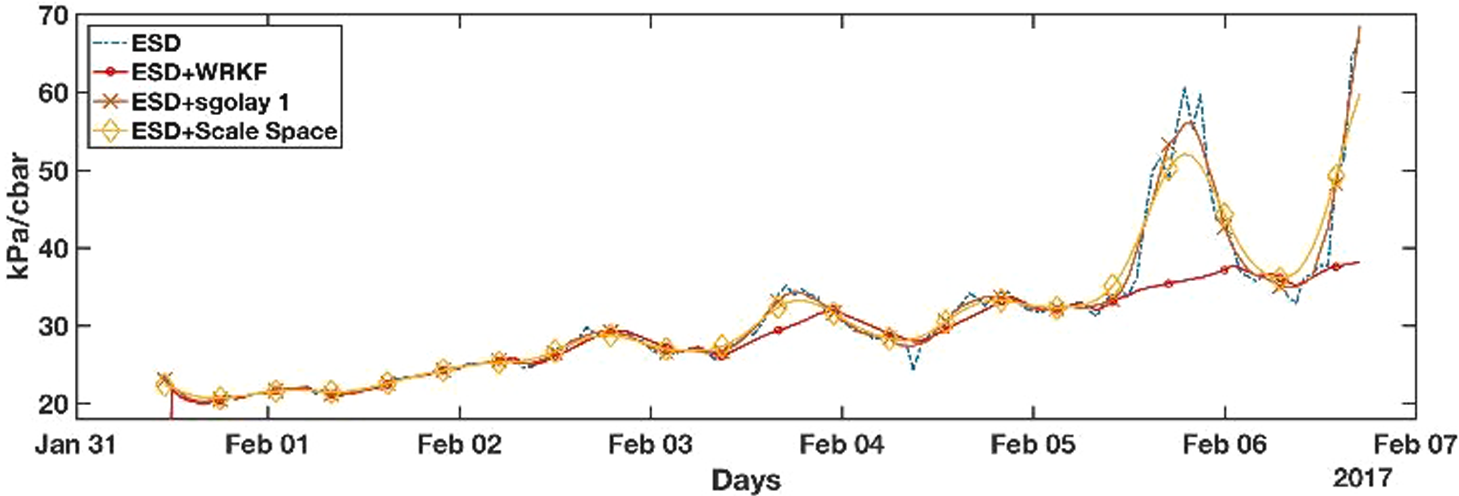
- Generalized Extreme Studentized Deviate (ESD): To identify outliers without needing a precise count beforehand.
- Weighted Outlier-Robust Kalman Filter (WRKF): To smooth signals while giving less "weight" to suspicious peaks.
2. Medium-Level: Contextual Interpretation
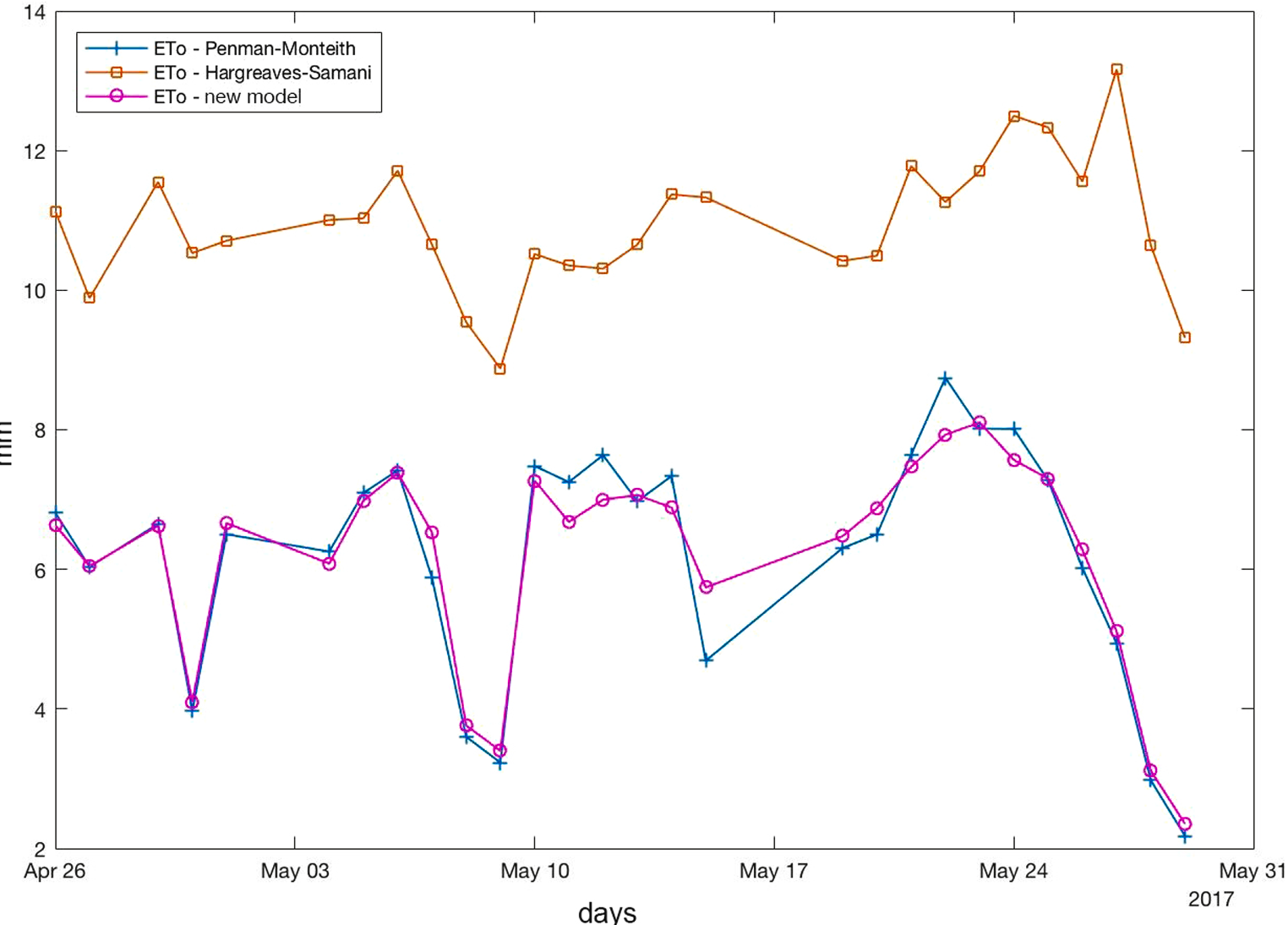
Here, cleaned data is fused to create agricultural metrics. One standout application is the estimation of Evapotranspiration (ETo). While the standard Penman-Monteith method requires a vast array of expensive sensors, Hydra uses an SVM Quadratic model to estimate ETo using fewer variables, maintaining high accuracy (R² = 0.74).
3. High-Level: The Final Verdict
This layer handles Decision Fusion (DEI-DEO). It resolves conflicts between applications—for instance, balancing the "need for water" from soil moisture sensors against "ideal timing" derived from weather-based ETo models.
Experimental Proof: Robustness in the Field
The researchers deployed Hydra in cashew and coconut crops in Brazil. Two critical findings stand out:
Outlier Resilience
The study compared multiple filtering methods. While standard Kalman filters were easily skewed by sensor malfunctions, the WRKF remained resilient to anomalous peaks, ensuring that a single faulty sensor wouldn't trigger unnecessary irrigation.
Energy and Cost Efficiency
By optimizing the hardware (removing status LEDs and tension controllers) and using the MQTT protocol, they reduced idle energy consumption by 99.67%. More importantly, the ML-driven ETo model allows farmers to bypass expensive full-scale weather stations, making precise irrigation accessible to smaller agribusinesses.
Critical Insight & Conclusion
The true value of Hydra is not in a single algorithm, but in its modularity. It recognizes that "quality" in data is relative to the application. By segregating sensor-level cleaning from application-level logic, Hydra creates a robust pipeline that can adapt to different crops or environmental conditions.
Limitations: While the SVM model performs excellently, the paper notes that results were gathered during a rainy period; further long-term validation in extreme drought conditions would solidify the model's reliability.
Takeaway: For IoT developers, Hydra proves that smart software (multilevel fusion) can effectively compensate for cheap hardware, providing a blueprint for sustainable, large-scale agricultural monitoring.