
Machine Learning: The Digital Backbone of Sustainable Agriculture Supply Chains
Computers and Operations Research
This paper presents a Systematic Literature Review (SLR) of 93 research articles investigating Machine Learning (ML) applications across the Agricultural Supply Chain (ASC). It categorizes ML interventions into four phases—pre-production, production, processing, and distribution—and proposes a framework to achieve sustainability in food security, safety, and ecological stewardship using algorithms like ANN, SVM, and Genetic Algorithms.
TL;DR
Agriculture is at a breaking point, caught between a rising global population and depleting natural resources. This technical note systematically reviews 93 key papers to show how Machine Learning (ML) is transforming the Agriculture Supply Chain (ASC) from a reactive, waste-heavy model into a data-driven, sustainable ecosystem. By mapping ML algorithms to specific supply chain phases, the authors provide a blueprint for "Smart Farming" that balances economic profit with environmental stewardship.
The "Why": Beyond Productivity to Sustainability
Historically, agriculture focused solely on yield. However, the modern paradigm requires Sustainable Intensification. The challenge is three-fold:
- Complexity: ASCs involve high perishability and seasonal demand fluctuations.
- Data Overload: While IoT sensors collect massive data, it remains "dark data" without intelligent processing.
- Sustainability Gap: There is an urgent need to meet the UN’s Sustainable Development Goals (SDGs) by reducing water waste and carbon footprints.
The authors argue that ML is the only tool capable of handling the non-linear, stochastic nature of biological and logistical data in agriculture.
Methodology: Mapping the ML-ASC Landscape
The paper categorizes the application of ML into four logical clusters:
1. Pre-Production: Setting the Foundation
In this phase, ML is primarily used for Crop Yield Prediction and Soil Property Analysis.
- The Intuition: If we can predict soil moisture and nutrient levels with 90%+ accuracy using SVMs or ANN, we can optimize fertilizer use before the first seed is even planted.
- Key Algorithms: Artificial Neural Networks (ANN) and Regression Analysis dominate here.
2. Production: Real-time Precision
This is where "Smart Farming" happens. ML models process data from drones and sensors to detect weeds, diseases, and monitor livestock health.
- Insight: Automated weed detection using Machine Vision reduces the need for broad-spectrum herbicides, directly supporting environmental sustainability.
3. Processing & Distribution: The Logistics of Freshness
Processing focuses on reducing food waste and CO2 emissions, while distribution utilizes Genetic Algorithms (GA) to solve the "Vehicle Routing Problem."
- The Goal: Minimizing the travel time for perishable goods to maximize shelf life and customer satisfaction.
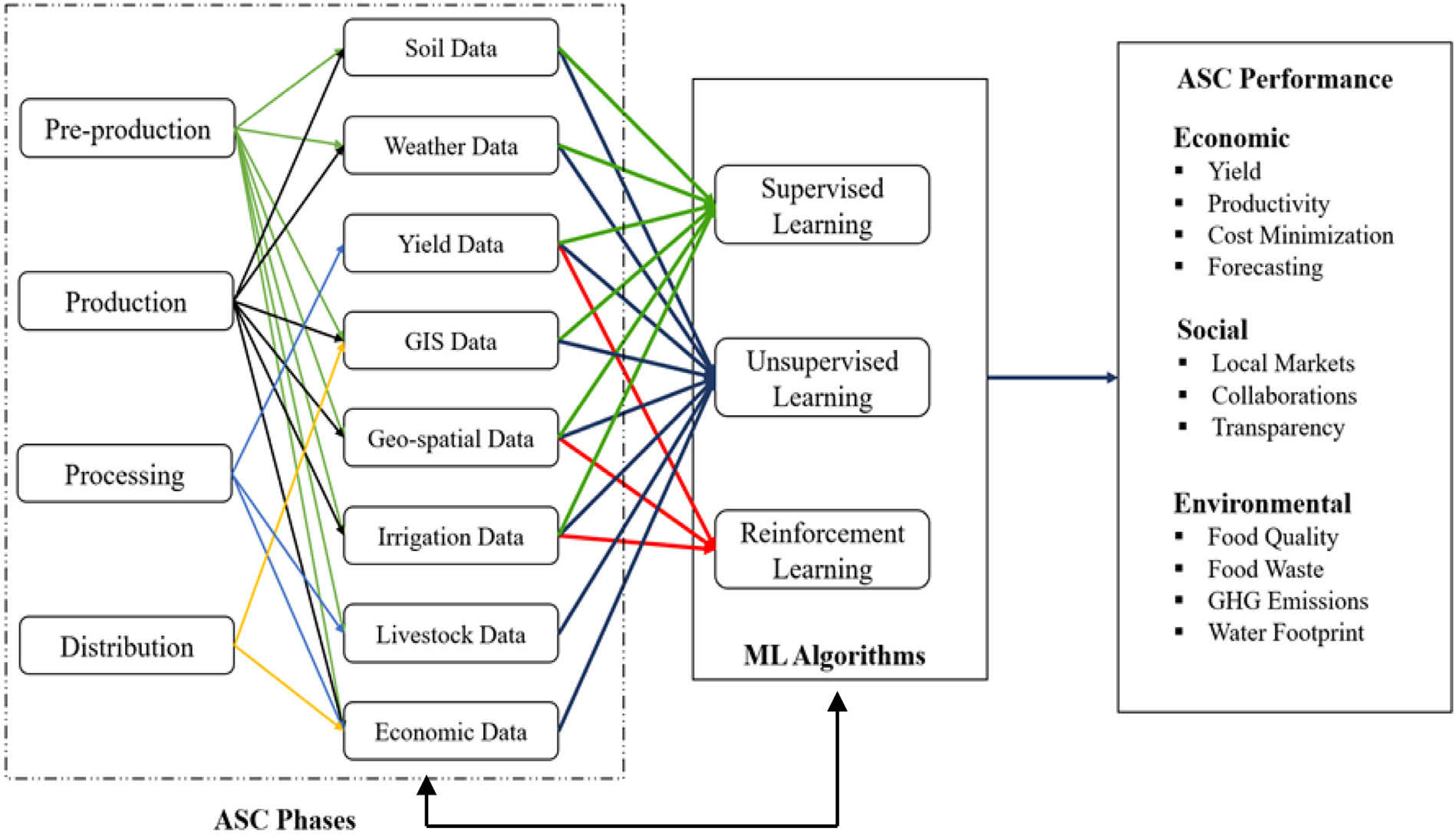 Figure 1: The proposed ML-ASC performance framework linking chain phases to ML capabilities and sustainable outcomes.
Key Results & Experimental Evidence
The review highlights several "SOTA" (State-of-the-art) achievements in the field:
- Soil Accuracy: Methods like k-nearest-neighbor and boosted perceptrons achieved 91–94% accuracy in soil dryness estimates.
- Livestock Management: Deep Learning architectures are increasingly used for "Precision Livestock Farming," allowing for real-time welfare monitoring that was previously impossible.
- Algorithm Popularity: ANN remains the "workhorse" of the industry due to its ability to model complex, non-linear agricultural systems.
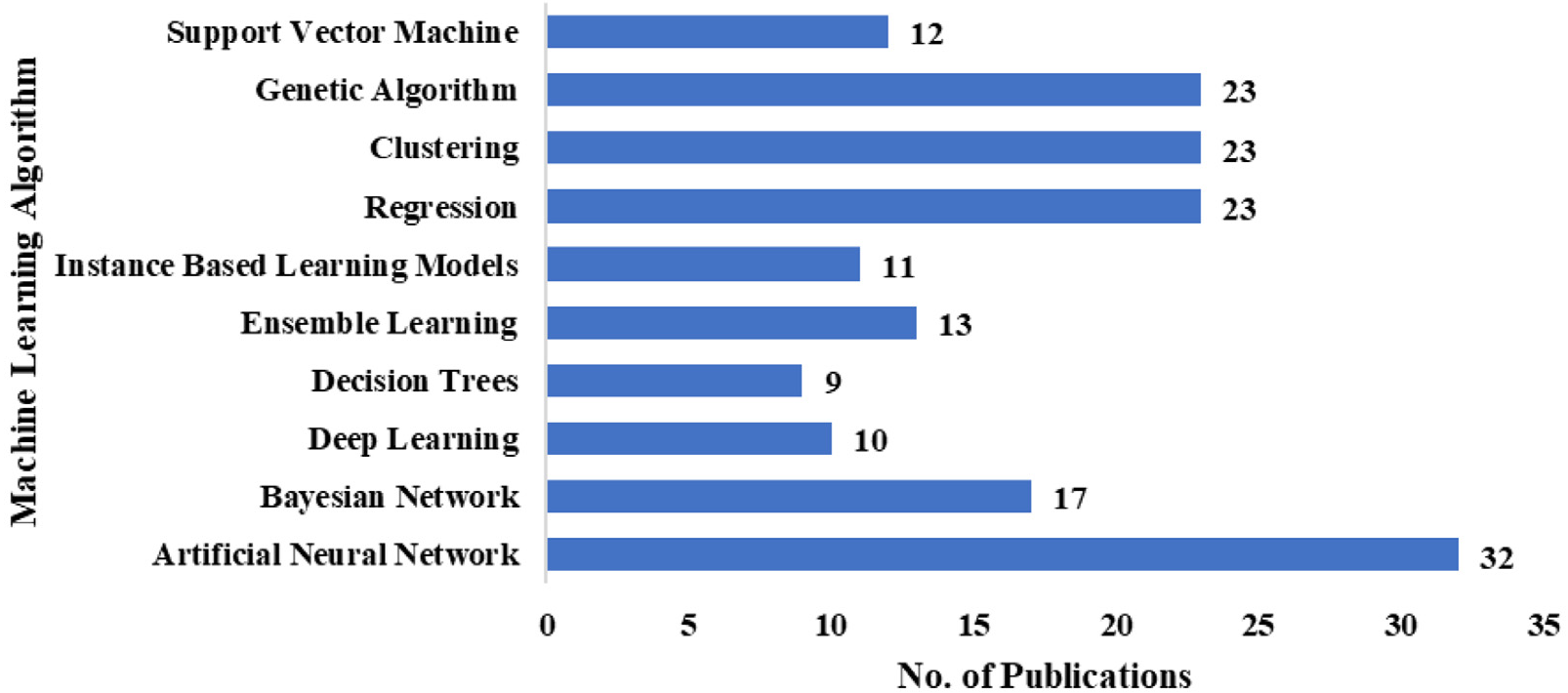 Figure 2: Distribution of ML algorithms used in ASC research, highlighting the dominance of ANN and Regression.
Critical Insight: The Barriers to Entry
Despite the potential, the paper honestly assesses why we aren't all "Smart Farming" yet:
- Data Security & Ownership: Who owns the data generated by a farmer's tractor—the farmer or the manufacturer?
- Interoperability: Different sensors use different protocols, making it hard to create a unified data stream for ML models.
- Infrastructure: In developing economies, the lack of internet connectivity remains a "Digital Divide."
Conclusion & Future Outlook
The paper concludes that the future of agriculture lies in interoperable intelligence. The next frontier is the integration of ML with other disruptive technologies like Blockchain (for provenance) and Drones (for high-resolution spatial data).
For researchers, the "Holy Grail" remains a unified, real-time feedback loop where the distribution phase (consumer demand) directly informs the pre-production phase (sowing patterns) in a perfectly optimized, waste-zero loop.