
Beyond Static Graphs: A Multi-Agent CNN Approach to Social Network Perception
Computers and Electrical Engineering
2022-01-01
Summary
Problem
Method
Results
Takeaways
Abstract
This paper proposes a novel social network search and perception framework that integrates a Multi-Agent System (MAS) with a Convolutional Neural Network (CNN). The method utilizes MAS for dynamic trust modeling and belief revision while leveraging CNN-based architectures to analyze complex social network topologies and connection awareness.
## TL;DR
This research introduces a hybrid framework that treats social networks not just as static graphs, but as dynamic ecosystems. By combining the **autonomous decision-making of Multi-Agent Systems (MAS)** with the **pattern recognition power of Convolutional Neural Networks (CNN)**, the author achieves superior performance in search efficiency and "connection awareness."
## Problem & Motivation: The Bottlenecks of Digital Connection
Despite the ubiquity of platforms like Facebook or LinkedIn, social network analysis faces two primary hurdles:
1. **Search Inefficiency**: Standard Hash-based partitioning for data centers often leads to "system paralysis" under high loads because it ignores the semantic relationships between users.
2. **Perception Gap**: Online interactions lack the "sensory richness" of face-to-face communication, leading to information overload and a difficulty in identifying trustworthy or influential nodes.
The author provides a unique insight: **Human relationships are dynamic subnets.** By decomposing a massive network into "feature rings" (smaller subnets), we can control and analyze complex cross-connections more effectively.
## Methodology: The Parallel Integration of MAS and CNN
The architecture is split into two specialized engines that share a common database:
### 1. The Multi-Agent System (MAS) Engine
This layer handles the "thinking" process. It uses **BDI (Belief-Desire-Intention) logic** to simulate how users (Agents) interact. A key innovation here is the use of **Gray Sequence Theory** to calculate trust.
* **Direct Trust (DT)**: Based on historical interaction weights.
* **Indirect Trust (TI)**: Based on recommendations from "witness" agents.
### 2. The CNN-Driven Perception Engine
The CNN is used for more than just image processing; it is applied to **unstructured social topologies**. By utilizing "receptive fields" for network nodes, the CNN identifies feature planes within the social graph.
* **Weight Sharing**: All neurons in a feature plane share the same weight, allowing the model to detect similar "social patterns" across different parts of the network.
* **Extension Transformation**: The framework uses "Matter-Element Theory" to calculate the distance between social objects, overcoming the "dimension disaster" often found in high-dimensional user data.
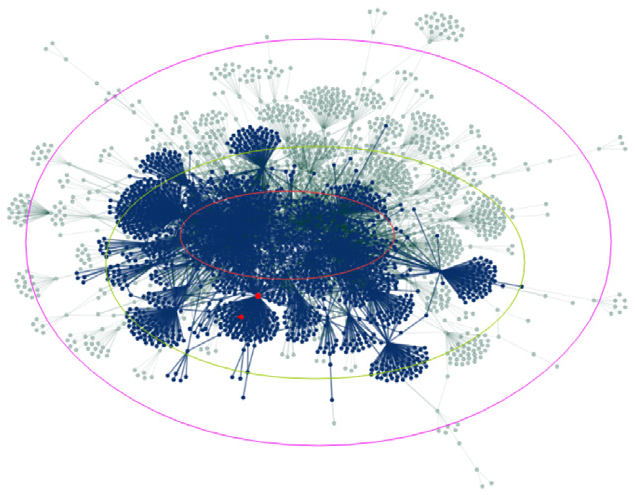
*Fig 1: The proposed parallel computing environment for social network search and perception.*
## Experiments & Results: Efficiency at Scale
The paper validates the model through four distinct experimental sets, comparing it against "Distributed Methods" and "Natural Models."
### Key Findings:
* **Latency & Complexity**: As the number of clues and network complexity increase, the proposed model maintains significantly lower delay compared to traditional distributed methods.
* **Throughput Efficiency**: The MAS-CNN framework maintains high throughput even as the environment becomes more "chaotic."
* **Convergence**: Using **Lyapunov stability functions**, the author proves that synchronization errors in heterogeneous networks converge to zero quickly, regardless of node count.
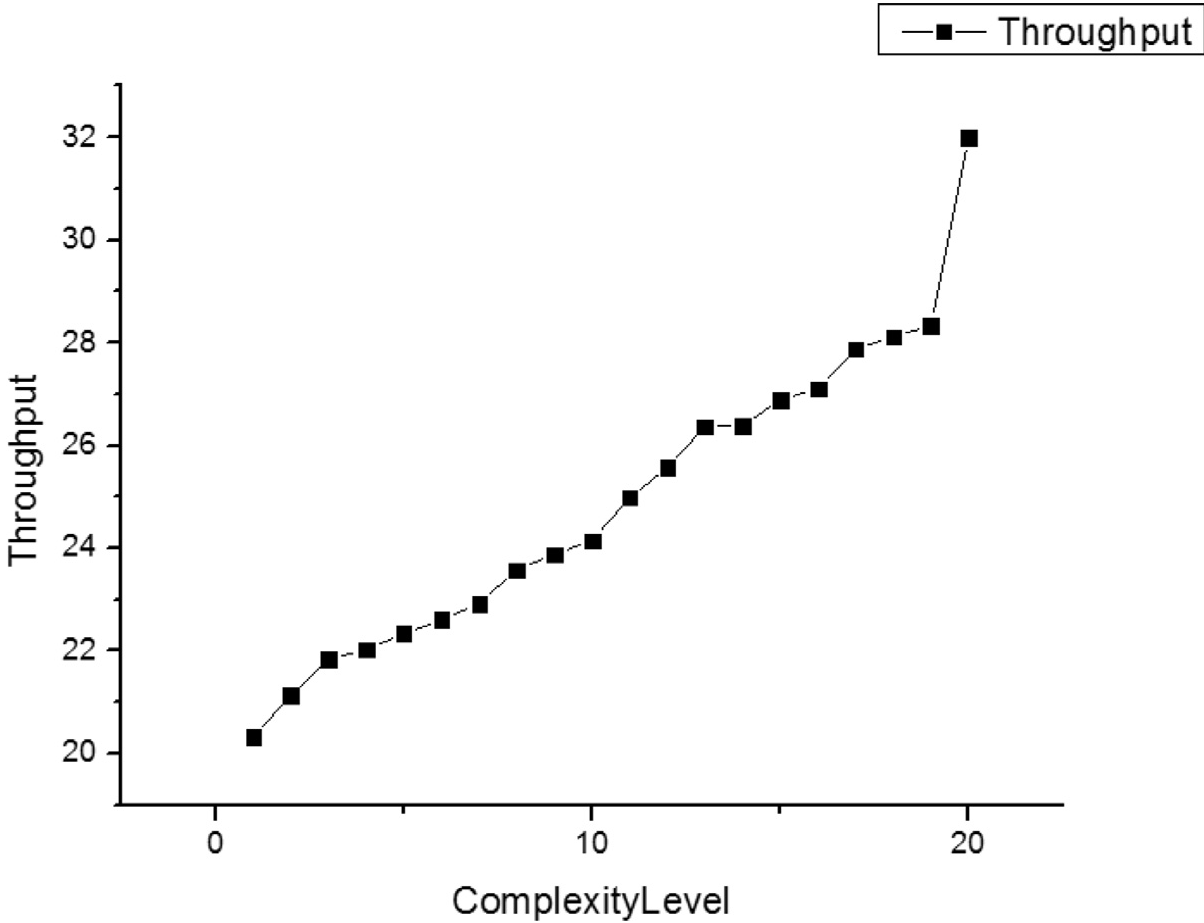
*Fig 2: Quantitative results demonstrating superior system throughput under increasing complexity.*
## Critical Analysis & Future Outlook
**Takeaway**: This work represents an early attempt to move beyond simple graph theory by injecting **cognitive psychology (MAS)** and **deep learning (CNN)** into social network measurement.
**Limitations**: While the theoretical framework is robust, the paper utilizes 2017-era CNN architectures. Modern Graph Convolutional Networks (GCNs) or Transformers might now offer more native ways to handle node-edge relationships than the "feature ring" decomposition used here.
**Future Work**: The concept of "gain sensory information" implicitly (via common interest search) remains a highly relevant topic in current AI, particularly for building more "human-centric" social algorithms that prioritize quality connections over simple engagement metrics.