
CRB-Model: Democratizing the Cloud through Facebook and Container Bartering
Computers and Electrical Engineering
The paper proposes a Cloud Resource Bartering (CRB) model, a social cloud framework that integrates Facebook accounts with Amazon EC2 to enable peer-to-peer resource sharing. By utilizing Linux Containers (LXC) for virtualization, it allows users to lease their spare cloud capacity to trusted social connections without monetary transactions, achieving a low-cost computational environment for developing countries.
TL;DR
Accessing high-performance computing is often prohibitively expensive in developing nations. This paper introduces the Cloud Resource Bartering (CRB) model, a system that turns Facebook into a marketplace for sharing Amazon EC2 instances. By using Linux Containers (LXC), the model allows "landlords" to sub-let their idle cloud capacity to their social network "tenants," creating a trust-based, zero-cost (bartering) computing ecosystem.
Problem & Motivation: The Digital Divide in Cloud Access
In many developing countries, the cost of a standard Virtual Machine (VM) from a provider like AWS or Azure represents a significant financial burden for students and researchers. However, many users who do have access often leave their resources idling.
The authors identified two major roadblocks:
- Economic Barrier: Public clouds are designed for enterprise billing, not peer-to-peer sharing.
- Trust Deficit: In typical decentralized or grid computing, users are reluctant to share resources with anonymous strangers.
By leveraging Facebook, the authors tap into an existing "Social Trust" layer, making it easier for users to share resources with people they already know.
Methodology: The Landlord-Tenant Architecture
The CRB model functions as a service-oriented architecture hosted on an application server that bridges Facebook and Amazon EC2.
Core Components:
- User Activity Manager (UAM): Tracks user behavior and monitors resource usage.
- Social Service Level Agreement (SSLA): A digital contract that ensures "tenants" respect the terms of use set by the "landlord."
- LXC Containerization: Instead of sharing the whole VM (which is costly and insecure), the system spins up lightweight Linux Containers. This provides resource isolation and ensures that the landlord’s primary tasks aren't crashed by a tenant's code.
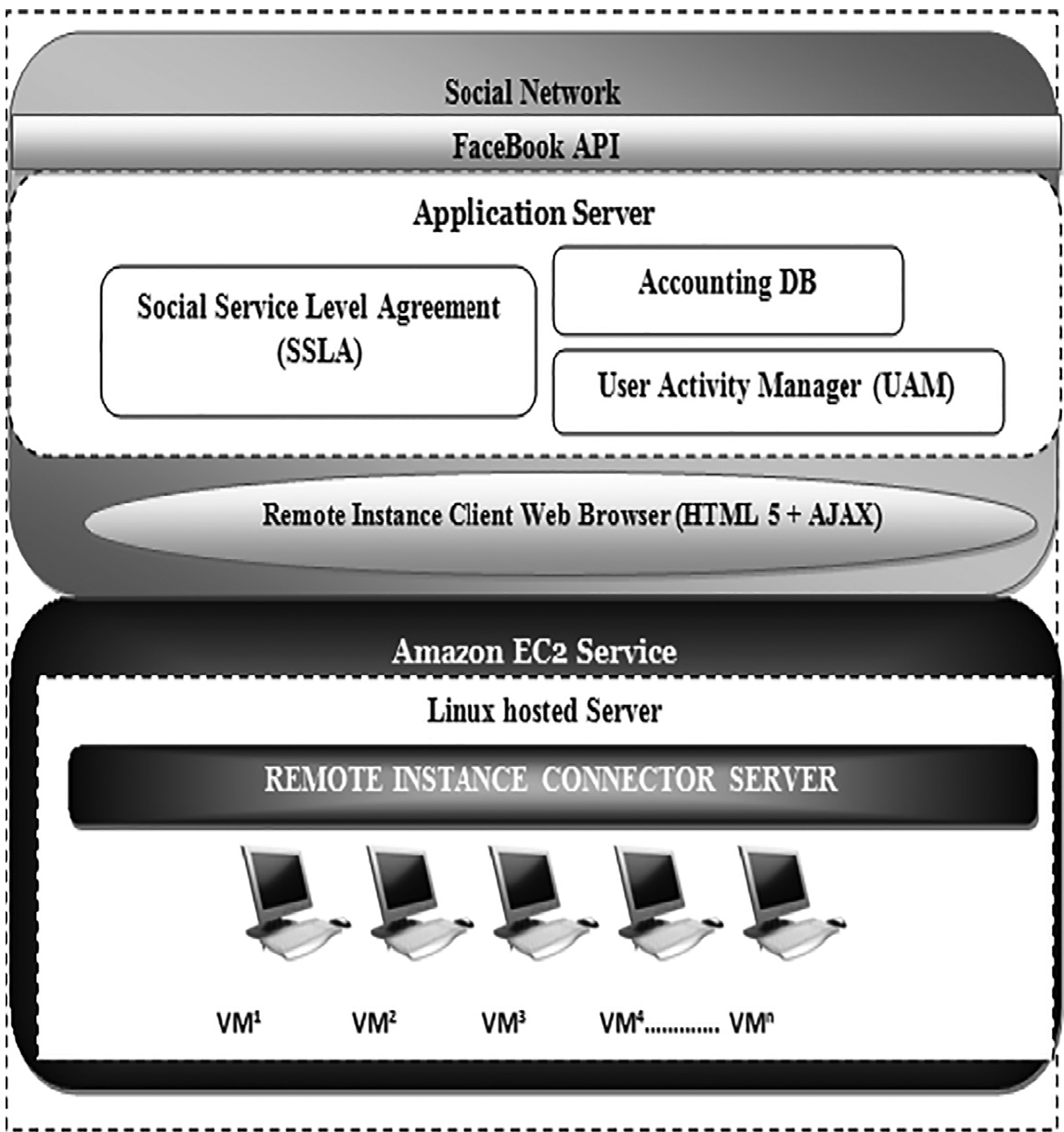 Figure 1: The layered architecture showing the integration between Facebook, the CRB App, and Amazon EC2.
Performance: Can It Handle the Load?
The authors conducted stress tests using PyBench to see how the host (Landlord) and the nested containers (Tenants) affected each other.
Key Findings:
- Host Stability: Even when containers were stressed to 100% capacity, the host machine's performance remained remarkably stable.
- Isolation Proficiency: The "Workload Weight" experiments demonstrated that if one tenant runs a heavy process, it significantly impacts the time of their own task execution (from ~4300ms to ~16800ms) but has a negligible effect on other tenants or the host.
- Low Overhead: LXC proved to be "lightweight" enough to run multiple nested environments inside a single Amazon M1.large instance without the massive overhead of full virtualization.
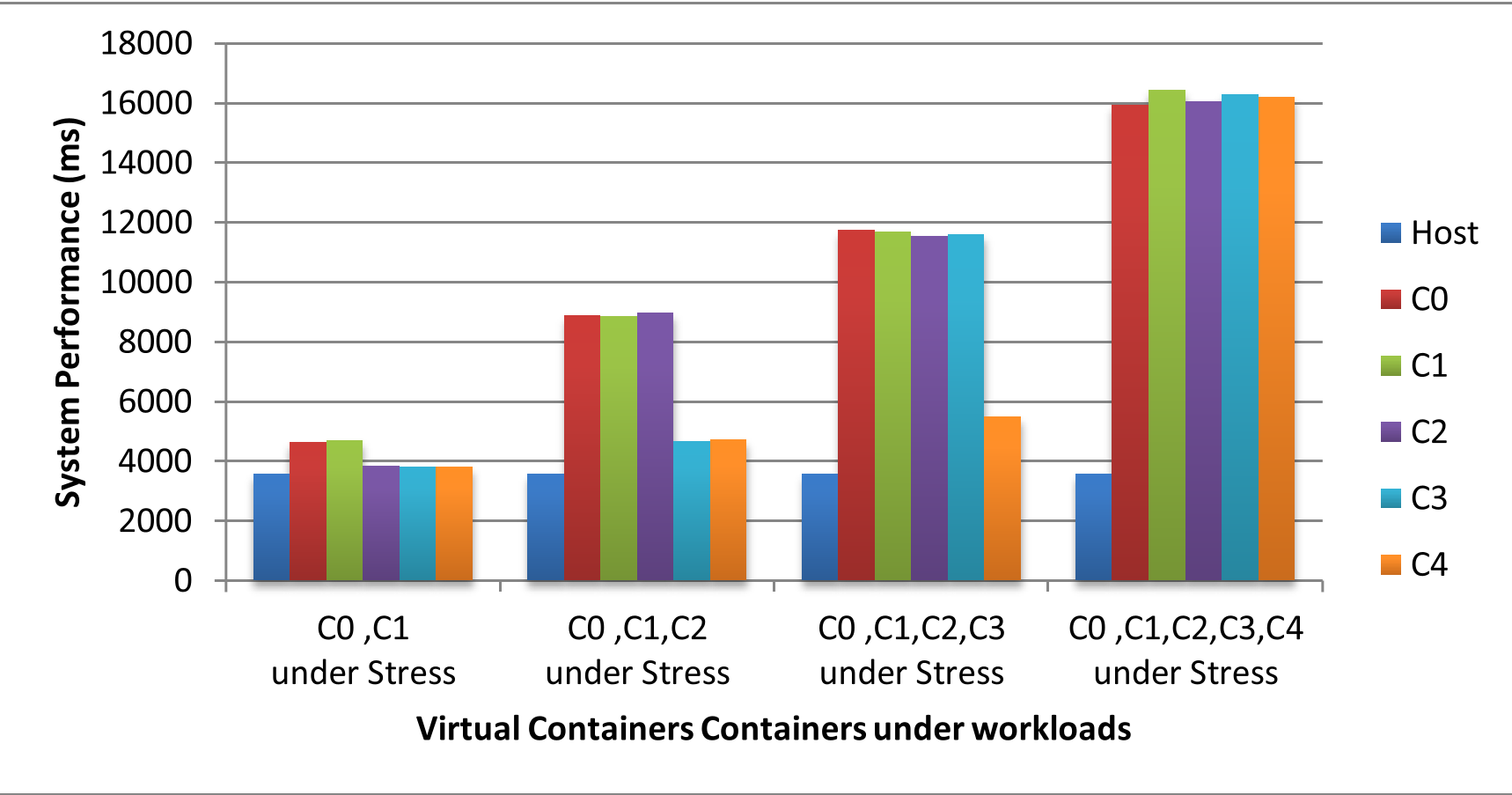 Figure 2: System performance relative to nested Linux containers under different workload weights.
Critical Insight & Conclusion
The true value of this paper isn't just in the use of LXC, but in the social engineering of the cloud. By moving from a "Market/Auction" model to a "Social Bartering" model, the authors solved the trust issue that plagued earlier Grid computing efforts.
Takeaways for the Future:
- Resource Efficiency: This model serves as a precursor to "Green Computing," where no CPU cycle is wasted.
- Limitations: The reliance on a single social platform (Facebook) creates a bottleneck. If a user’s social circle is small, their access to resources remains limited.
- Moving Forward: Future iterations could utilize decentralized protocols (like IPFS or Blockchain) to manage the SSLA and trust without needing a centralized social network API.
In conclusion, the CRB model proves that for developing countries, the "Social Cloud" is more than a technical novelty—it is a vital bridge to technological equity.