
ADDI: Beyond Textual Warnings to Machine-Readable Drug-Drug Interaction Intelligence
Computers and Electrical Engineering
The paper introduces the Advanced Drug-Drug Interaction (ADDI) system, an ontology-driven framework designed to automate the identification and analysis of drug-drug interactions. By integrating pharmaceutical semantics through OWL and SPARQL, it achieves a machine-readable representation of complex interaction details, surpassing traditional digital resources in clinical depth.
TL;DR
The pharmaceutical industry is drowning in data but starving for structured knowledge. This paper presents ADDI (Advanced Drug-Drug Interaction), an ontology-based system that replaces vague textual warnings with a rigorous, machine-readable framework. By mapping the complex "web of influence" between drugs, ADDI allows systems to automatically reason about interaction levels, mechanisms, and adverse effects with a granularity that current SOTA tools lack.
Problem & Motivation: The "Format" Barrier in Clinical Safety
In modern medicine, patients often suffer from "Polypharmacy"—the concurrent use of multiple drugs. While databases like DrugBank or Medscape exist, they suffer from two fatal flaws:
- Semantic Heterogeneity: Data is stored in different formats (text, tables, semi-structured logs), making it nearly impossible for software to "understand" the relationship without human intervention.
- Missing Dimensions: Most tools tell you that an interaction exists, but they fail to explain how (mechanism), how often (frequency), or how long (duration) the effect lasts.
The authors' insight was to move away from simple keyword matching toward a Domain Specific Ontology. By defining drugs and their interactions as a set of logical "Classes" and "Properties," they enable a computer to perform clinical reasoning just like a human pharmacist.
Methodology: The Architecture of Clinical Logic
The ADDI system is built on an OWL (Web Ontology Language) framework. The core of the method lies in its taxonomy and property definitions.
1. Taxonomy & OWL Classes
The system categorizes pharmaceutical knowledge into distinct hierarchies:
- DrugInteraction: Divided into Drug-Drug and Drug-Food interactions.
- DDIMechanism: Categorized into Pharmacokinetic (how the body moves the drug) and Pharmacodynamic (how the drug affects the body).
- AdverseEffects: A granular list ranging from "Headache" to "Asystole."
2. Semantic Relations (Object Properties)
The real power comes from the relationships (e.g., hasInteractionLevel, hasDrugMechanism). One standout feature is the use of Inverse Properties: if a drug mayTreat Angina, the system automatically infers that Angina is treatedBy that drug using a reasoner.
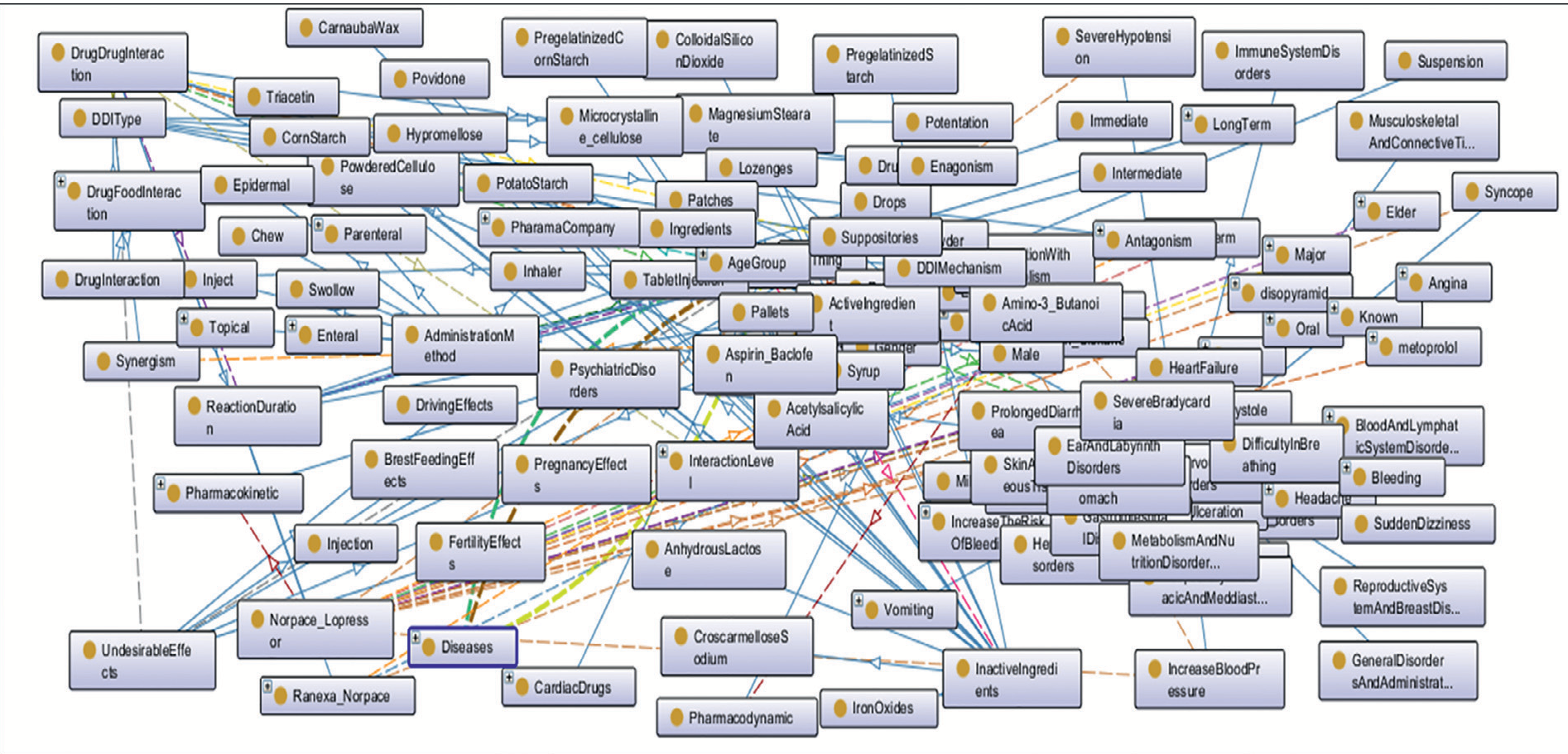 Figure 1: The web of semantic relationships in ADDI, showing how drug entities connect to administration methods and adverse effects.
Experiments: ADDI vs. The Giants (Medscape & Drugs.com)
To prove the system's efficacy, the authors conducted case studies on high-risk drug combinations like Ranexa (Ranolazine) and Norpace (Disopyramide)—a common scenario in cardiac care.
- Standard Tools: Flagged the interaction as "Major" but provided the explanation in a raw paragraph of text, which a machine cannot parse for automated hospital alerts.
- ADDI Results: Through SPARQL queries, ADDI retrieved structured data fields:
- Mechanism: Pharmacokinetic (Interaction with metabolism).
- Reaction Frequency: Common.
- Duration: Long-term.
- Adverse Effects: Prolonged diarrhea or vomiting.
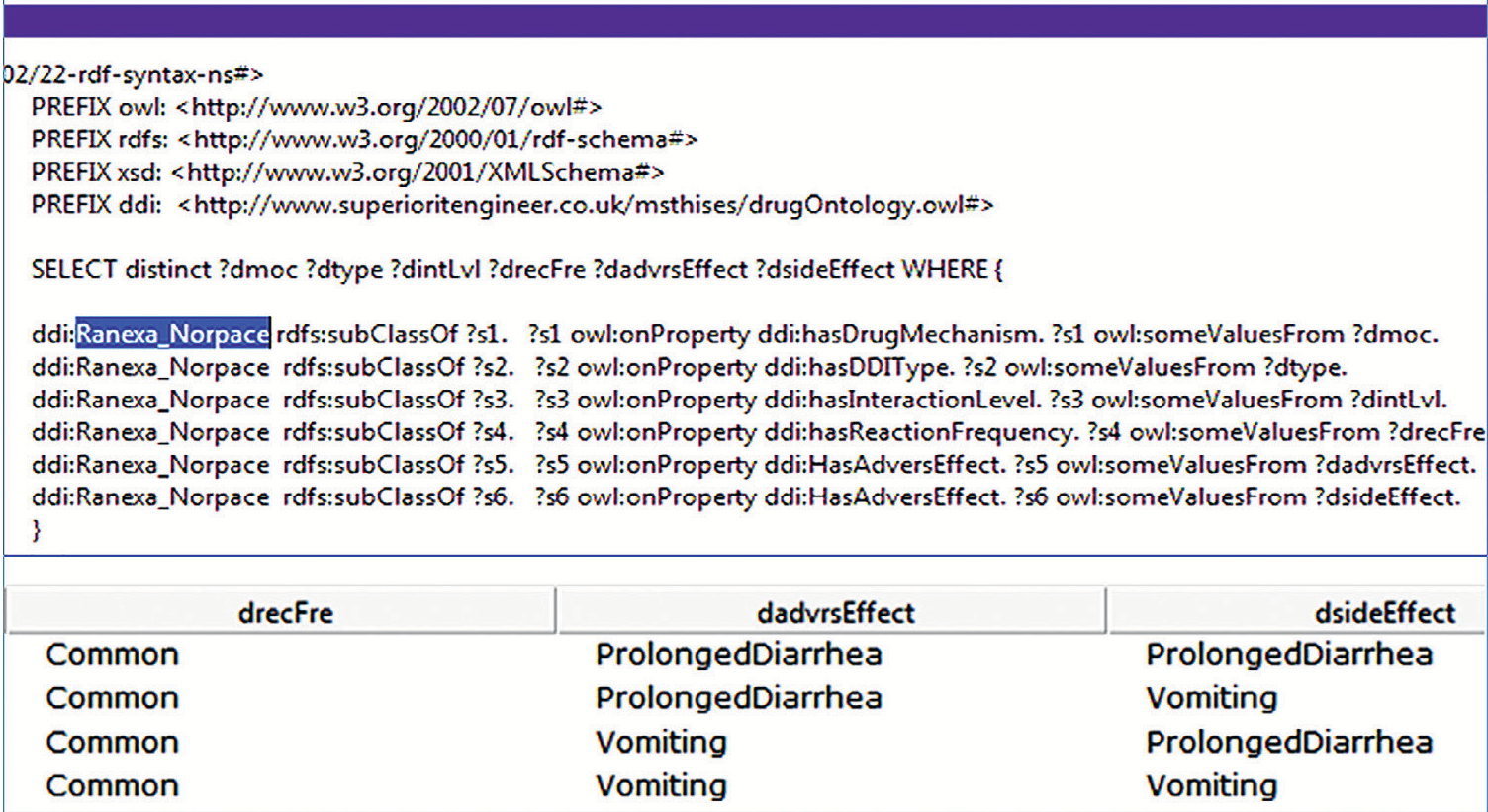 Figure 2: A snapshot of the structured output from the ADDI system, highlighting its ability to provide discrete clinical parameters.
Critical Analysis & Conclusion
The ADDI system represents a shift toward Semantic Interoperability. By using a Semantic Information Layer (SIL), it effectively removes the horizontal and vertical barriers to information sharing across different hospital EIS (Enterprise Information Systems).
Takeaways
- Automation is the goal: Moving DDI data into OWL/RDF format allows for "Smart Prescriptions" where the system can block dangerous drug combinations in real-time.
- Granularity matters: Knowing a reaction is "Pharmacokinetic" vs "Pharmacodynamic" changes how a doctor manages the risk (e.g., adjusting dosage vs. changing the drug entirely).
Limitations & Future Work
While ADDI is robust, its current instance population is manual. The next frontier, as the authors suggest, is the development of Automated Wrappers that can crawl medical corpuses and automatically populate the ontology, as well as extending the scope to Drug-Food Interactions.
In the era of AI-driven healthcare, ADDI provides the structured "ground truth" that Large Language Models (LLMs) and clinical systems need to remain grounded and safe.