
ADDI: Breaking the Semantic Barrier in Drug-Drug Interaction Analysis
Computers and Electrical Engineering
This paper introduces the Advanced Drug-Drug Interaction (ADDI) system, an ontology-driven framework designed to automate the identification and analysis of drug interactions. Developed using OWL and SPARQL, it provides machine-readable semantic relations between drugs, diseases, and physiological effects, achieving a more comprehensive data structure than existing tools like Medscape or Drugs.com.
TL;DR
The pharmaceutical industry is drowning in data, yet the tools we use to stay safe—Drug-Drug Interaction (DDI) checkers—are often surprisingly limited. This paper presents ADDI (Advanced Drug-Drug Interaction), an ontology-driven system that transforms flat, textual drug data into a rich, machine-readable web of knowledge. By capturing the "Why" and "How long" of drug reactions, ADDI outperforms industry standards in clinical depth and automation potential.
Background: Beyond the "Warning Label"
In modern medicine, patients with chronic conditions often take multiple medications simultaneously. When these drugs interact, the results range from minor nausea to life-threatening heart failure. While online databases exist, they suffer from a "semantic gap": a pharmacist can read a warning, but a computer system cannot easily process, link, or reason across that information to prevent errors automatically. ADDI fills this gap by positioning itself as a Semantic Information Layer (SIL).
Problem & Motivation: The Limitations of Prior Work
Existing solutions like Medscape or DrugBank primarily serve as digital encyclopedias. The authors identify three critical pain points:
- Lack of Machine Readability: Valuable information is trapped in descriptive paragraphs.
- Incomplete Dimensions: Most ontologies focus on the what but ignore the how (mechanism), the intensity (level), and the temporal aspect (duration).
- Heterogeneity: Different databases use different terminologies for the same disease or drug, leading to interoperability barriers.
Methodology: The Core Architecture of ADDI
The researchers developed the ADDI ontology using a rigorous engineering process, centering on OWL (Web Ontology Language) to define clear hierarchies and relationships.
1. The Taxonomy of Safety
ADDI doesn't just list drugs; it categorizes them through complex classes:
- DDI Mechanism: Distinguishes between Pharmacokinetic (how the body processes the drug) and Pharmacodynamic (how the drug affects the body).
- DDI Type: Precisely defines relations like Antagonism, Synergism, Potentiation, and Metabolism interactions.
- Contextual Data: Includes reaction frequency (e.g., "Rare" vs "Very Common") and target demographics (Age and Gender).
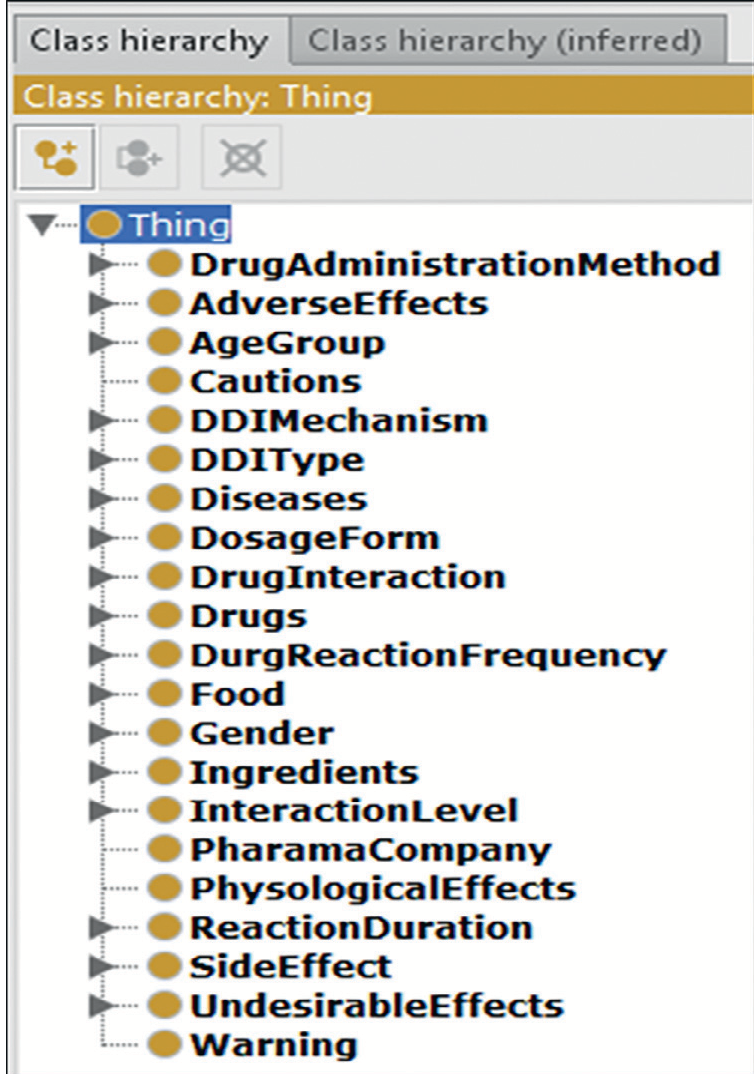 Fig 1: The Taxonomy for ADDI ontology, showcasing the rigorous classification of drug interactions.
2. Semantic Reasoning
One of the most powerful features of ADDI is Inference. By using the HermiT reasoner, the system can automatically deduce that if a drug "may treat" a disease, the disease is "treated by" that drug, even if not explicitly stated in the database.
Experiments & Results: Confronting the Giants
The authors validated ADDI through a case study involving Ranexa (for chest pain) and Norpace (for heart rhythm).
- Standard Tools (Medscape/Drugs.com): Provided a brief warning stating the combination should be avoided because it might increase side effects.
- ADDI System: Delivered a granular report identifying a Major Interaction Level, a Pharmacokinetic mechanism, and specific adverse effects like Prolonged Diarrhea/Vomiting.
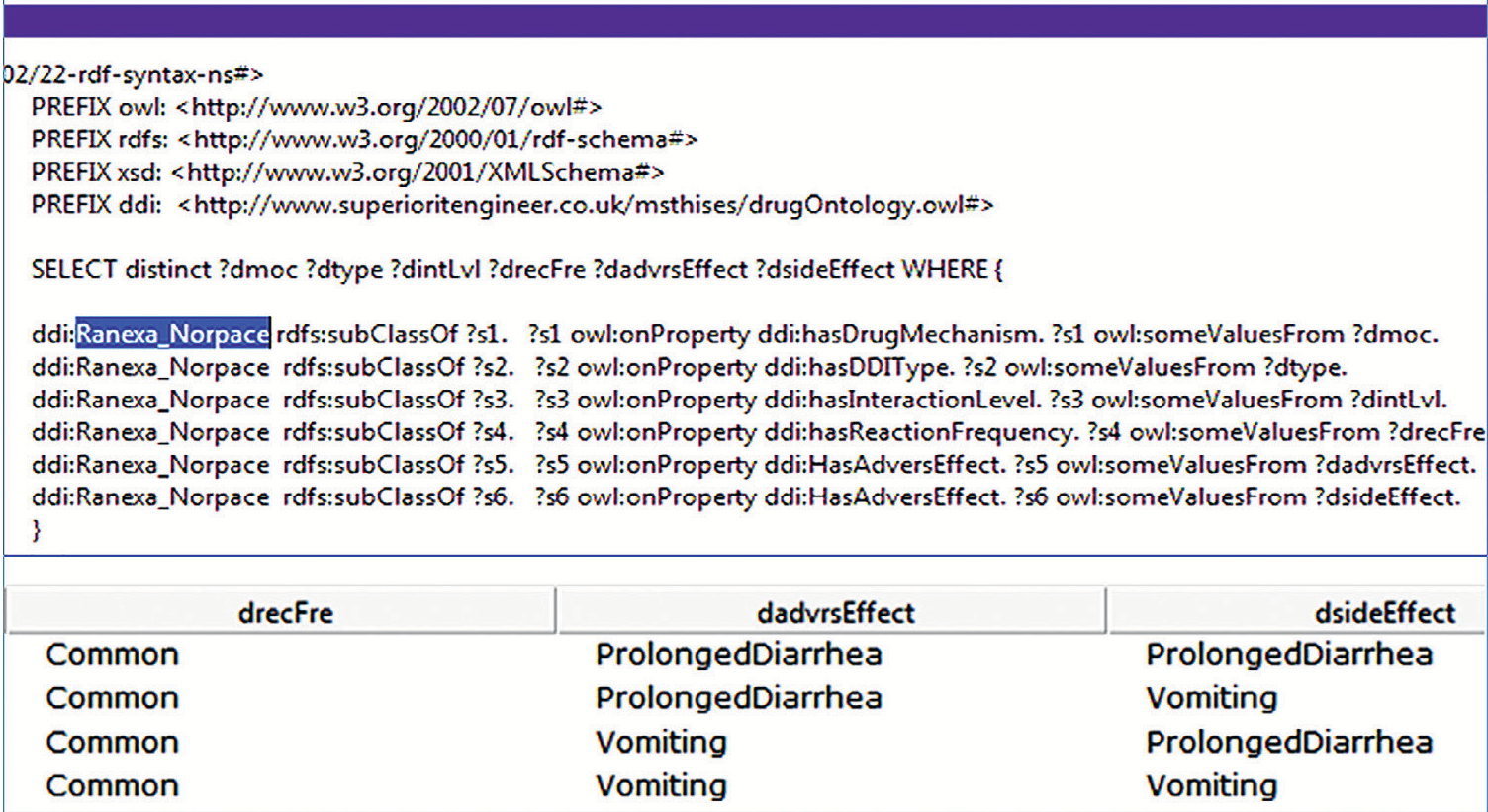 Fig 2: A detailed DDI report generated by ADDI for Ranexa and Norpace, showcasing metadata far exceeding standard textual alerts.
The use of SPARQL queries allows the system to answer 19 complex "Competency Questions," such as "Is Drug A suitable for an elderly female?"—a task that would require manual reading in current systems.
Critical Analysis & Conclusion
ADDI represents a significant shift from "Information Retrieval" to "Knowledge Discovery."
Key Takeaways:
- Interoperability: ADDI acts as a bridge between heterogeneous clinical systems.
- Automation: Machine-readable results mean these alerts can be integrated directly into Electronic Health Records (EHR) to flag dangerous prescriptions in real-time.
Limitations & Future Work: While ADDI is robust for drug-drug interactions, the authors acknowledge that Drug-Food interactions and Automatic Population (using web wrappers to automatically scrape new drug data into the ontology) are the next frontiers. As we move toward AI-driven healthcare, ontologies like ADDI will provide the "ground truth" logic that prevents AI hallucinations in clinical settings.
Summary: If Medscape is a dictionary, ADDI is a strategic advisor. It doesn't just tell you there's a problem; it explains the mechanism, the timeframe, and the severity in a language computers can finally understand.