
Agro-Vision Unlocked: A Deep Dive into Precision Agriculture Public Datasets
Computers and Electronics in Agriculture
This paper provides the first comprehensive survey of public image datasets for precision agriculture (Agro-vision), categorizing 34 datasets covering weed control, fruit detection, and specialized agricultural tasks. It establishes a benchmark for evaluating computer vision algorithms in real-world field conditions, highlighting the transition from laboratory settings to complex, uncontrolled environments.
TL;DR
As agriculture enters the 4.0 era, the "data bottleneck" remains the biggest hurdle for AI adoption. This survey systematically reviews 34 public field-condition datasets, providing a roadmap for researchers to find the right data for weed control, fruit harvesting, and crop monitoring. It bridges the gap between controlled lab experiments and the chaotic reality of the open field.
Background Positioning
While the computer vision community has been spoiled by massive datasets like COCO and ImageNet, the agricultural sector has historically operated in "silos," with private data and lab-only benchmarks. This paper is a cornerstone survey, the first of its kind to map the public landscape of field-acquired imagery, effectively serving as an "Index for Agro-Vision Research."
The "Real-World" Problem: Beyond the Lab
Most early datasets for plants were targeted at botanical taxonomy (e.g., Leafsnap) and collected under perfect lighting with white backgrounds. In precision agriculture, algorithms must deal with:
- Variable Lighting: Shadows under a soybean canopy or midday glare.
- Complex Backgrounds: Distinguishing a weed from a crop when both are green and overlapping.
- Platform Dynamics: The difference between a stable hand-held photo and a vibrating, moving UAV at 4 meters.
Methodology: Mapping the Landscape
The survey categorizes datasets into three primary domains:
- Weed Control: Focuses on discriminating crops from weeds for robotic spraying or mechanical removal.
- Fruit Detection: Targets robotic harvesting and yield estimation.
- Miscellaneous: Includes disease detection, biomass prediction, and 3D tree reconstruction.
Key Technical Modalities
- RGB: The king of accessibility, used in 24/34 datasets.
- Multispectral (RGB+NIR): Essential for calculating NDVI and seeing "biological" signatures invisible to the human eye.
- Active Sensing (LiDAR/Depth): Emerging for 3D localization (e.g., the KFuji RGB-DS dataset).
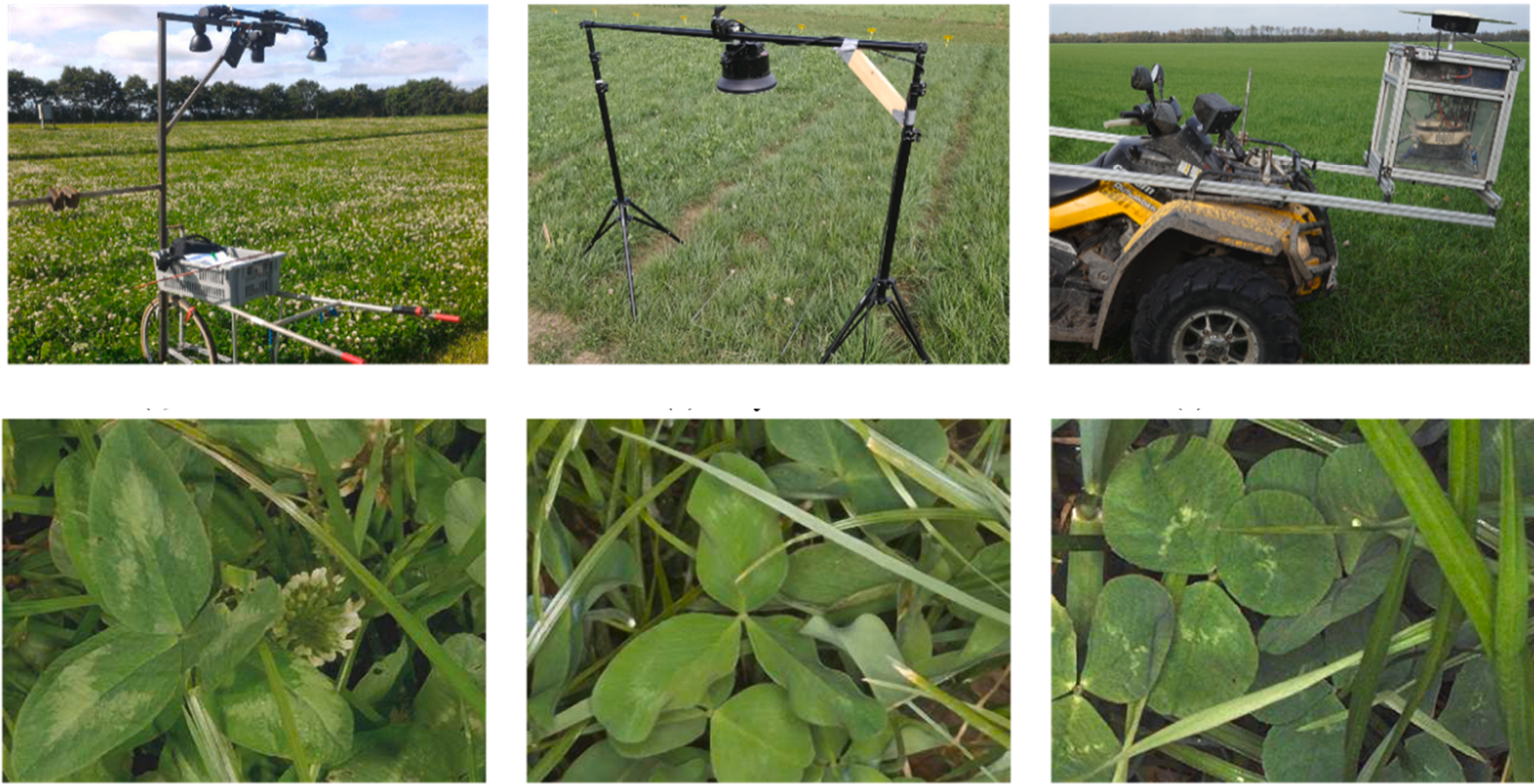 Figure 1: Diverse imaging platforms ranging from UAVs to ground robots and hand-held devices.
Highlights from the Tables
The paper provides granular tables that are a goldmine for ML engineers:
- Sugar Beets 2016: A massive, multi-modal dataset from the Bonirob robot, offering RGB+NIR with pixel-level annotations.
- DeepWeeds: A high-impact classification dataset with over 17,000 images representing 8 species in the Australian outback.
- MinneApple: A specialized apple detection benchmark using pixel-level fruit masks rather than just bounding boxes.
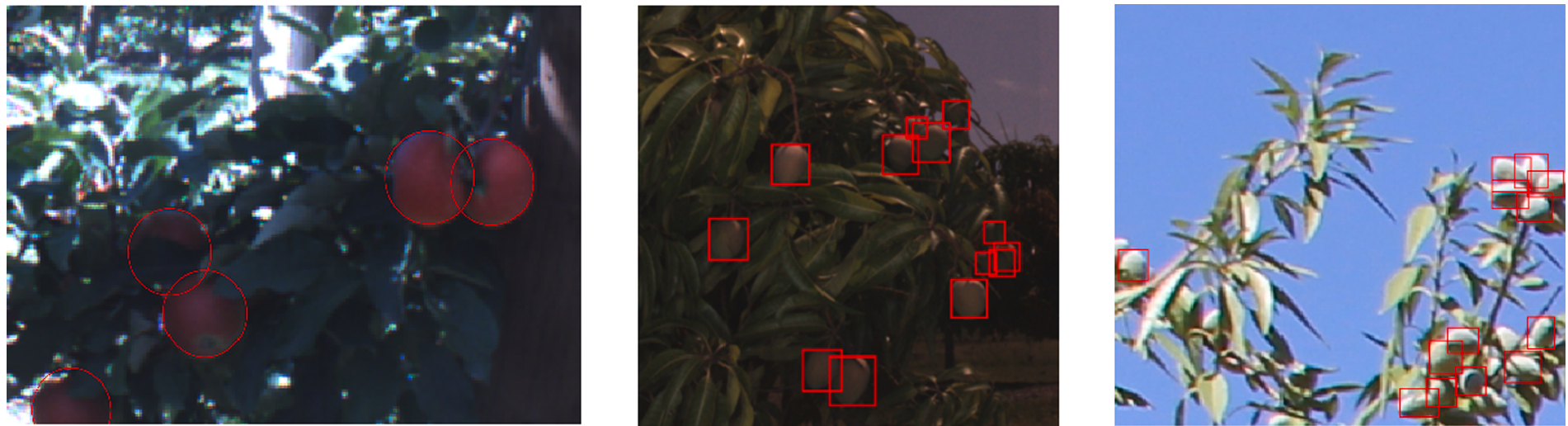 Figure 2: Examples of bounding box and pixel-level annotations for fruit detection tasks.
Critical Insight: The Synthetic Revolution
One of the most profound insights in the survey is the rise of Synthetic Data. Datasets like Synthetic SugarBeet Weeds and Capsicum Annuum prove that we don't always need more field time. By algorithmically modeling plant geometry and textures, researchers can generate infinite training data, reducing the manual annotation burden which can take up to 30 minutes per image for pixel-level tasks.
Recommendations for the Future
The authors suggest a shift in "Data Sharing Culture":
- Move to External Repositories: Stop hosting data on fragile university servers; use Zenodo, Figshare, or GitHub.
- Standardize Metadata: Every dataset should include imaging device specs, field site weather conditions, and growth stages.
- Leverage Crowdsourcing: Platforms like Amazon Mechanical Turk can solve the "human-labeler" bottleneck for large-scale agricultural tasks.
Conclusion
This survey is an essential reference for anyone building the next generation of agricultural robots. By moving from lab-based toys to field-tested datasets, we move closer to a future where precision agriculture is not just an academic hope, but a scalable reality.