
Beyond the Lab: Predicting Soil Fertility through Ubiquitous Context History
Computers and Electronics in Agriculture
The paper introduces a ubiquitous computing architecture for predicting soil fertility (organic matter, clay) and crop yield (wheat) using a variety of IoT sensors and Partial Least Squares (PLS) regression. By integrating Near-Infrared (NIR) spectroscopy with climatic context history, the system achieves a Pearson coefficient (R²) of 0.9189 for productivity and up to 0.1345 for organic matter detection.
TL;DR
Researchers have developed a ubiquitous computing architecture that skips the 21-hour wait for lab results. By combining portable Near-Infrared (NIR) sensors with a rich history of climatic data, their model predicts soil organic matter and wheat yield with high accuracy (R² > 0.91) using Machine Learning, effectively turning a tractor into a mobile laboratory.
Perspective: The Shift from One-Off Sampling to Contextual Intelligence
In traditional farming, soil health is a "snapshot." You take a sample, send it to a lab, and wait. This work argues that one-time sampling fails to capture the dynamic fluctuation of ions, pH, and nutrients across seasons. The authors position their "Ubiquitous Agriculture" model as a paradigm shift—moving from static measurements to a continuous Context History that accounts for everything from atmospheric pressure to spectral absorbance.
The Problem: The High Cost of Knowing Your Soil
Standardized techniques for measuring clay and organic matter—the pillars of fertility—require intensive sample preparation and generate chemical waste. Existing digital solutions often only scratch the surface, monitoring soil moisture or temperature but ignoring the complex chemical composition. There is a clear gap: a need for a non-invasive, fast, and proactive system that predicts not just what is in the soil now, but how it will perform during harvest.
Methodology: The "Brain" Behind the Sensors
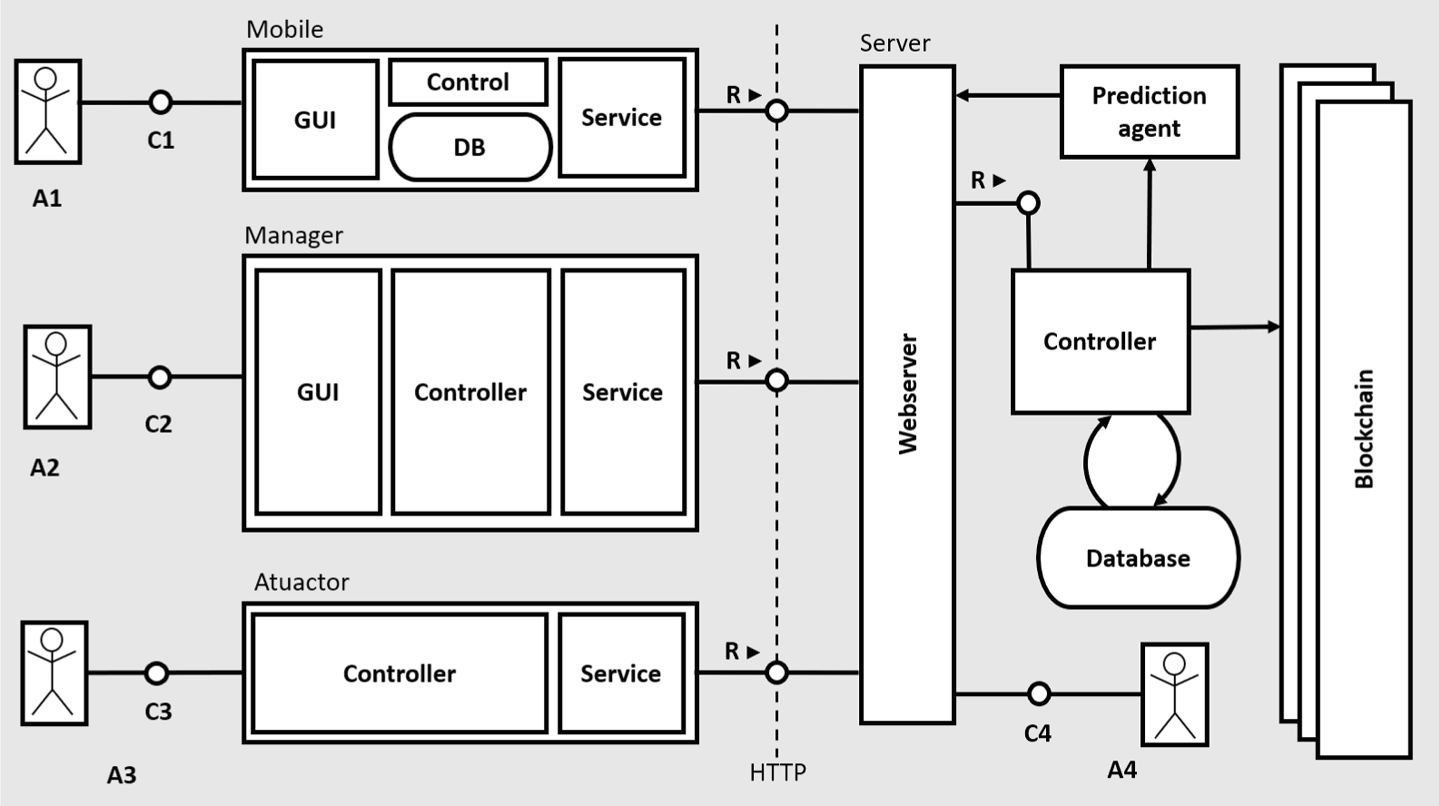
The proposed architecture is built on four pillars:
- Mobile Assistant: The farmer’s interface for real-time alerts.
- Actuator (The Field Unit): A Raspberry Pi-powered sensor array including a Texas Instruments NIRScan Nano, pH meters, and GPS.
- Server/ML Engine: The heavy lifter using Partial Least Squares (PLS) regression to handle the high correlation and noise inherent in multi-sensor data.
- Context History: A database storing structured event data (Latitude, Longitude, Spectral CSV, Climatic variables).
Why PLS Regression?
The authors chose PLS because it excels at "dimensionality reduction." When dealing with NIR spectra (where you have hundreds of variables for a single sample), PLS creates independent linear combinations (components) that capture the divergence without the noise, making it more robust than simple linear regression for chemometric data.
Experiments & Results: Accuracy that Rivals the Lab
The team tested their model using 450 soil samples and 15 years of wheat yield data.
- Soil Fertility: The organic matter prediction hit an R² of 0.9345, while clay reached 0.9239. This is a significant improvement over prior "on-the-go" tractor-mounted sensors which often struggle with soil moisture interference.
- Productivity: For wheat yield, the model achieved an R² of 0.9189 and an impressively low error of 0.20 T/ha.
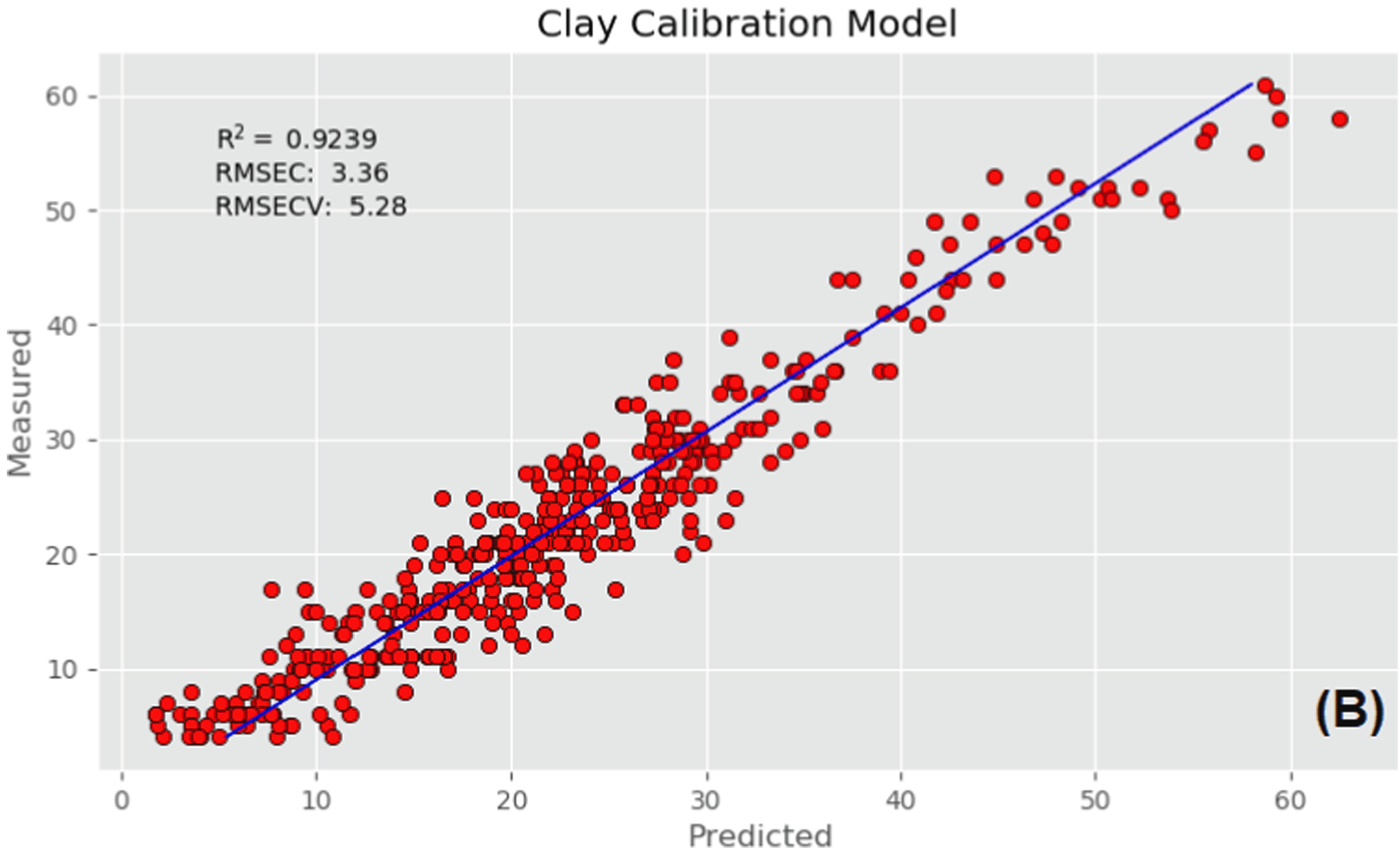
The results suggest that as more contextual data is added to the history, the model's predictive capacity evolves, effectively "learning" the specific nuances of a geographic region.
Critical Insight: The Value of "Negative" Climate Hits
Interestingly, the paper notes that the biggest errors occurred in years with extreme weather (e.g., 2007 and 2015, which had excessive rain). While these lowered the overall Pearson coefficient, they highlight a crucial Limitation: purely linear models like PLS may struggle with "black swan" climatic events. This opens the door for future work using non-linear models or Deep Learning to handle climate volatility.
Conclusion
This paper makes a compelling case for the IoT-ification of the soil. By proving that NIR spectroscopy and climate history can be fused via a ubiquitous architecture, the authors offer a blueprint for "Green" precision agriculture—one where data replaces chemicals, and prediction replaces guesswork.
Takeaway: The future of farming isn't just about better seeds; it's about better data history.