
Computing for Peace: Turning Technical Frictions into Intercultural Bridges
Computing Education for Intercultural Learning: Lessons from the Nairobi Play Project
The paper introduces the Nairobi Play Project (NPP), a constructionist computing education program designed for adolescent refugees in Kenya. It explores how programming and game design in Scratch serve as a "strategy of indirection" to foster intercultural learning and social cohesion in post-conflict environments.
Executive Summary
TL;DR: The Nairobi Play Project (NPP) uses Scratch-based game design to bring together refugee youth from conflicting ethnic backgrounds in Kenya. The study reveals that the most profound intercultural learning happens not through perfect software, but through technical breakdowns, shared humor, and the physical negotiation of limited resources.
Background Positioning: This work moves beyond the "access-only" narrative of tech education, positioning computing as a high-stakes site for intergroup contact theory and peacebuilding in post-conflict zones (CSCW/ICTD).
Problem & Motivation: Beyond the "Access" Checklist
Most computing education initiatives focus on who gets to code (diversity) and how much they learn (pedagogy). However, in regions like Kakuma Refugee Camp, where Dinka, Nuer, and Somali populations live in fragile proximity, the stakes are higher.
The authors argue that traditional peace education is often too "head-on." By using computing as a strategy of indirection, the NPP provides a pragmatic goal (learning a job skill) that justifies gathering across tribal lines. The central challenge: How do we turn a solitary act like coding into a collaborative, bridge-building experience?
Methodology: The Power of Productive Friction
The NPP design follows a three-phase "Constructionist" model:
- Trust Building: Basic Scratch remixing in cross-ethnic pairs.
- Investigation: Negotiating community-based themes for games.
- Creation: Collaborative development and playtesting.
The authors utilize Cultural-Historical Activity Theory (CHAT) to analyze how "contradictions" (conflicts) in the classroom actually spark change.
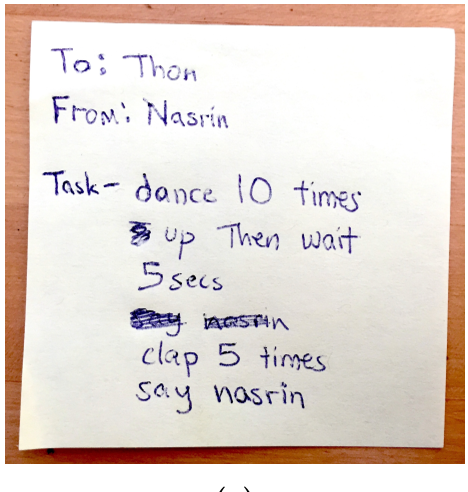 Figure 1: (a) "Empathy Notes" (pseudo-code) where students write instructions for each other; (b) "Shoulder-to-shoulder" interaction where limited hardware forces collaboration.
Key Insights: Why It Works (The "How")
1. The Computer as a "Confidence-Building Measure"
The status associated with "touching a computer" is so high that it overrides parental or cultural resistance to their children interacting with "others." For Somali girls, whose participation is often restricted, the computer serves as a legitimate gateway to the public sphere.
2. Breakdown-Induced Bonding
When a cartoon cat gets stuck in a Scratch maze wall, it creates a site of shared humor. These technological "breakdowns" provide a universal language—laughter—that bypasses linguistic and ethnic barriers.
3. The "Sticky" Device
Paradoxically, having fewer computers was better. Forcing two students from different tribes to share one mouse and keyboard created a physical site of negotiation. The "materiality" of the device acted as a glue that sustained interaction through early awkwardness.
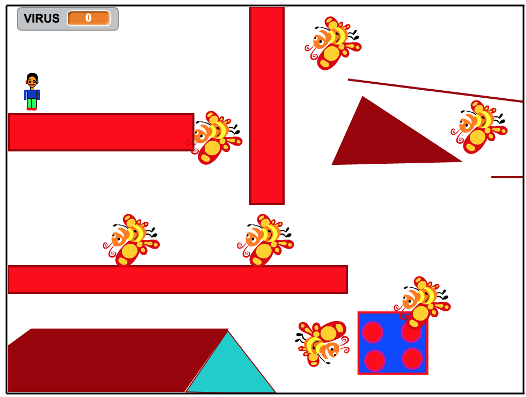 Figure 2: Student-designed games reflecting shared community struggles like malaria and migration.
Complications: The Dark Side of Bonding
The study is refreshingly honest about the limitations of this approach:
- Shared Xenophobia: In one instance, a Congolese/Sudanese team bonded over a game about "killing thieves" (rival tribes) to reclaim land.
- Assimilation Pressures: Interaction often forced minority groups (like Muslim Somali students) to adopt the secular or "Great Lakes" cultural norms of the majority, such as handshaking.
Critical Analysis & Conclusion
The Takeaway: Computing education is not a neutral transfer of skills. It is a social intervention. To build peace, designers shouldn't aim for a friction-less "user experience." Instead, they should design interruptions and negotiation points that force students to see the human being sitting next to them.
Future Outlook: The success of such programs hinges entirely on teacher capacity. We need to train "Computing Educators" who are also skilled "Intercultural Facilitators," capable of steering a technical debugging session into a moment of social healing.