
AG-S3: Leveraging Reputation for Scalable and Private Social Computing
Computing in social networks
This paper introduces the S3 problem (Scalable Secure Computing in a Social network) and proposes AG-S3, a decentralized protocol for computing aggregation functions. The method achieves complexity and provides both accuracy and privacy without traditional heavy cryptographic primitives by leveraging participants' reputation.
TL;DR
In the era of massive social platforms, how do we perform large-scale computations (like polls or data aggregation) without handing all our data to a central authority like Facebook? This paper defines the S3 Problem (Scalable Secure Computing) and introduces AG-S3, a protocol that uses a structured ring overlay and secret sharing to enable fast, private, and accurate aggregation. Unlike traditional methods, it uses the "human factor"—the desire to maintain a clean social reputation—to keep participants honest.
The Motivation: The Privacy-Scalability-Accuracy Trilemma
Performing a simple poll in a decentralized network seems easy until you consider three conflicting requirements:
- Scalability: Nodes can't talk to everyone; complexity must be sub-linear ().
- Accuracy: Malicious nodes shouldn't be able to "swing" the vote or corrupt the result.
- Privacy: Even if a coalition of nodes colludes, they shouldn't be able to pin a specific input to a specific user.
Prior works usually failed one of these. Heavy cryptography (SMC) is slow; differential privacy often fails when one person’s input is unique (the "rare configuration" problem). The authors' insight is brilliant: Users in a social network care about their reputation. If getting caught cheating means a permanent "faulty" tag on your profile, rational users will behave.
Methodology: The Architecture of AG-S3
The protocol relies on three distinct pillars to solve the S3 problem:
1. Structured Ring Overlay
Nodes are organized into groups (offices) of size arranged in a ring. Each node communicates only with its office-mates and a specific set of "proxies" in the next groups. This limits the "blast radius" of any single user and keeps message complexity low.
2. Secret Sharing & Aggregation
Instead of sending their real input, users split their value into multiple shares.
- Half the shares are random numbers.
- Half are the inverses of those random numbers.
- One share is the actual input. These shares are distributed to proxies. When summed up, the random values cancel out, leaving only the true aggregate.
3. Verification through "Reputation Stakes"
The protocol includes interleaved verification steps. Nodes check if received shares are within valid ranges. Since an office-mate can see if your intermediate results look suspicious, they can "tag" your profile. Because nodes are rational and value their social standing, this decentralized policing prevents significant bias.
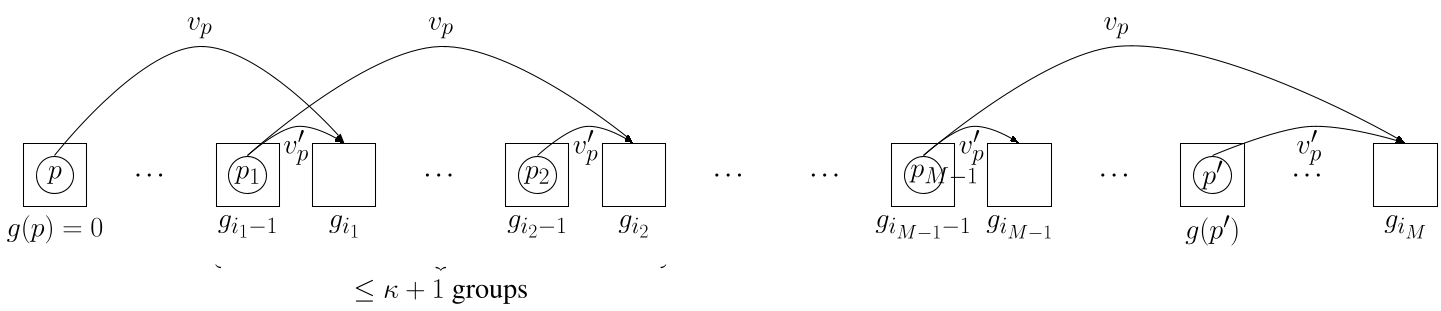 Figure 1: Illustration of the input swapping mechanism used to prove privacy (Anonymity).
Experiments & Results
The authors analytically prove that AG-S3 hits all the S3 targets:
- Scalability: Complexity is restricted to .
- Accuracy: The bias introduced by faulty nodes is negligible as grows (specifically ).
- Privacy: Through a "swapping" proof, they show that for any two non-faulty nodes, there exists a sequence of transformations that could have swapped their inputs without the faulty coalition knowing.
| Feature | SMC / Cryptographic | AG-S3 (This Paper) |
|---|---|---|
| Complexity | or higher | |
| Trust Model | Mathematical Hardness | Rationality / Reputation |
| Privacy Scope | Computational | Information-Theoretic (Anonymity) |
Critical Analysis: A Step Toward "Human-Centric" Computing
AG-S3 is a fundamental shift from viewing nodes as "blind processors" to viewing them as "social actors."
Strengths:
- Efficiency: Breaking the barrier for secure computation is vital for networks with millions of users.
- Physical Intuition: The secret sharing scheme is simple yet robust against "curious" but rational peers.
Limitations:
- The "Rational" Assumption: The protocol assumes nodes are rational. A purely malicious "kamikaze" node that doesn't care about its reputation could still attempt to disrupt the system, though its impact is bounded to .
- Function Limits: So far, this only works for aggregation (sums, averages). More complex logic like non-linear decision trees remains an open challenge.
Takeaway
AG-S3 demonstrates that social context is not just a vulnerability—it's a resource. By encoding reputation into the protocol design, we can build decentralized systems that are significantly faster than those relying purely on "hard" crypto, while still protecting individual privacy.