Beyond Compliance: Why HCI Professionals Struggle with Accessibility
How do professionals who create computing technologies consider accessibility?
2012-10-22
Summary
Problem
Method
Results
Takeaways
Abstract
The paper investigates how 199 UX and HCI professionals consider accessibility in their design and development workflows. Using a multi-method survey approach (IRI empathy scoring and open-ended coding), it finds that while 87% value accessibility, actual technical implementation remains narrow, primarily focusing on visual impairments.
## TL;DR
While nearly 90% of UX and HCI professionals claim accessibility is important, their actual practice is often restricted to visual aids or ignored due to organizational "lack of control." This study reveals a significant gap between professional intent and action, influenced heavily by individual empathy levels and career experience.
## The Motivation: Why Good Intentions Fail
For decades, the tech industry has been warned: excluding users with disabilities is a moral, legal, and financial failure. Yet, even with WCAG guidelines and Section 508 laws, the web remains a minefield for many. The authors of this paper ask a critical question: *What is happening on the front lines?* Why do the very people trained to be "user-centered" often treat accessibility as an afterthought?
## Methodology: Measuring Empathy and Action
The research team surveyed 199 professionals across various roles (Interaction Designers, Researchers, Developers). They didn't just ask "Is accessibility important?" (to which everyone says yes), but instead used:
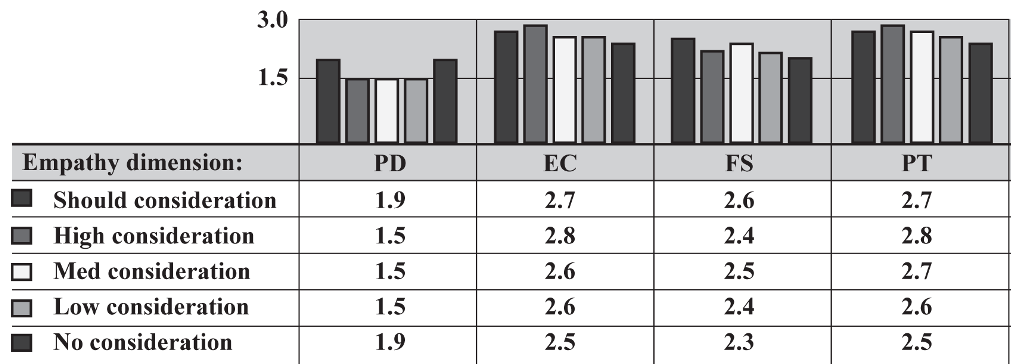
- **The Interpersonal Reactivity Index (IRI):** A psychological tool to measure empathy across four dimensions.
- **Inductive Coding:** Analyzing open-ended descriptions of their work to see if "consideration" actually matched "action."
## Key Insights: The Experience and Empathy Gap
### 1. The "Visual Bias"
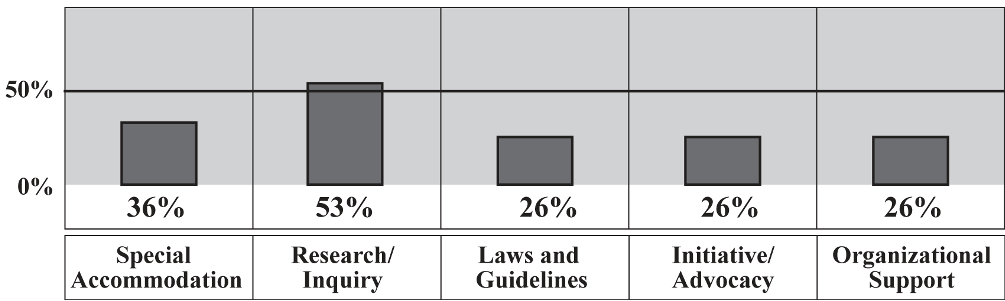
The study found that when professionals *do* consider accessibility, they almost exclusively focus on visual impairments (e.g., alt-text, color contrast). Cognitive disabilities and hearing impairments were rarely mentioned, highlighting a massive blind spot in current HCI education.
### 2. The Power of "Personal Distress"
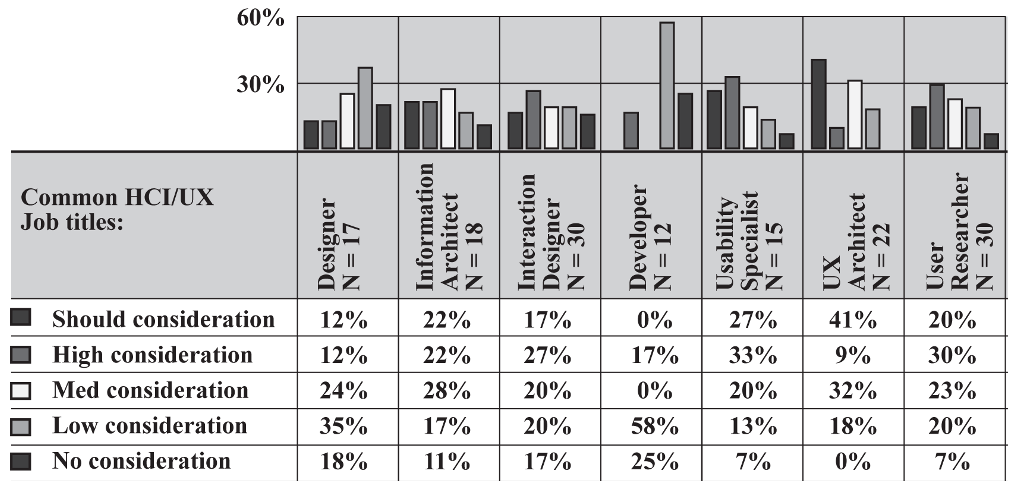
One of the most fascinating findings is the link between psychology and design. Professionals who scored high in **Personal Distress** (a dimension of empathy related to feeling unease in tense situations) were more likely to belong to the "Should" group—those who feel guilty or regretful that their current workplace ignores accessibility.
### 3. Junior vs. Senior Agency
Experience matters—but not in the way you might think. New professionals (those in their first job) reported the lowest levels of accessibility consideration. The authors hypothesize that junior designers feel a **lack of control**, sacrificing inclusive design to please clients or meet tight budgets, whereas senior professionals have the "agency" to advocate for better practices.
## The "Should" Trap
A significant portion of the workforce (19%) falls into the "Should" category. These individuals know accessibility is important but blame external factors:
- **Budget/Time:** "Clients don't have the budget for redundancy."
- **Apathy:** "My young co-workers barely care."
- **Lack of Support:** "My job is more concerned with 'gold-plating' than accessibility."
## Critical Analysis & Conclusion
The takeaway for the industry is clear: **Knowledge is not the bottleneck; organization and advocacy are.**
**Limitations:** The study is primarily web-focused and relies on self-reported data, which can lead to social desirability bias. Furthermore, it was conducted in 2012; today's professionals might have better automated tools but likely face similar organizational pressures.
**The Future:** To move the needle, HCI programs shouldn't just teach *how* to use a screen reader; they need to teach students how to build **cost-based arguments** and navigate corporate politics to ensure inclusive design isn't the first thing cut from the sprint.