
Empowering the Silent: A Meta-Environment for Deaf Literacy and Bilingualism
Conceptual meta-environment for Deaf children Literacy challenge: How to design effective Artifacts for bilingualism construction
The paper proposes a conceptual meta-environment framework for designing "Intellectual Artifacts" to support bilingual literacy (Libras/Portuguese) for Deaf children. It introduces a computer-mediated storytelling environment that leverages Sign Language iconicity and cognitive theories to bridge the communication gap between Deaf children and their non-Deaf parents.
TL;DR
Communication is a human right, yet 90% of Deaf children struggle because their hearing parents cannot sign. This paper introduces a Conceptual Meta-Environment framework to build computer-mediated "Intellectual Artifacts." By combining the iconicity of Brazilian Sign Language (Libras) with hyper-graph-based cognitive modeling, the authors create a storytelling environment that helps parents and children build bilingual literacy and emotional bonds simultaneously.
The "Language Gap" in the Family
In Brazil and globally, the "clinical view" of deafness often prioritizes fixing hearing (Oralism) rather than fostering language. This leads to a tragic irony: a child’s intellectual growth is stunted not by their deafness, but by the delay in accessing a natural, visual language.
The authors argue that literacy is not just about reading words; it is a social practice. Existing software often fails because it acts as a simple translator or a "digital book." True inclusion requires Intellectual Interaction—systems designed to evolve the user’s mental models through shared experience.
Methodology: Mapping Thought to Code
The framework operates through five distinct phases to transform abstract concepts into interactive narratives:
- Iconicity Selection: Leveraging the "visual-gestural" nature of Libras. For instance, the sign for "TREE" looks like a tree. This iconicity acts as a bridge for the child to form "Spontaneous Concepts."
- Knowledge Formalization: Using Concept Maps (CM) to define relations (e.g., "Sun" "Heat" "Shadow").
- The Hyper-graph Core: Unlike standard binary graphs, the paper uses Directed Hyper-graphs. This allows the system to model complex functional dependencies.
- Example: To understand "Shadow," the child must first interact with both the "Sun" and the "Tree."
- Path Algorithm: A search algorithm manages the flow of the story, ensuring that "Scientific Concepts" (abstract reasoning) are presented only after the prerequisite "Spontaneous Concepts" are visited.
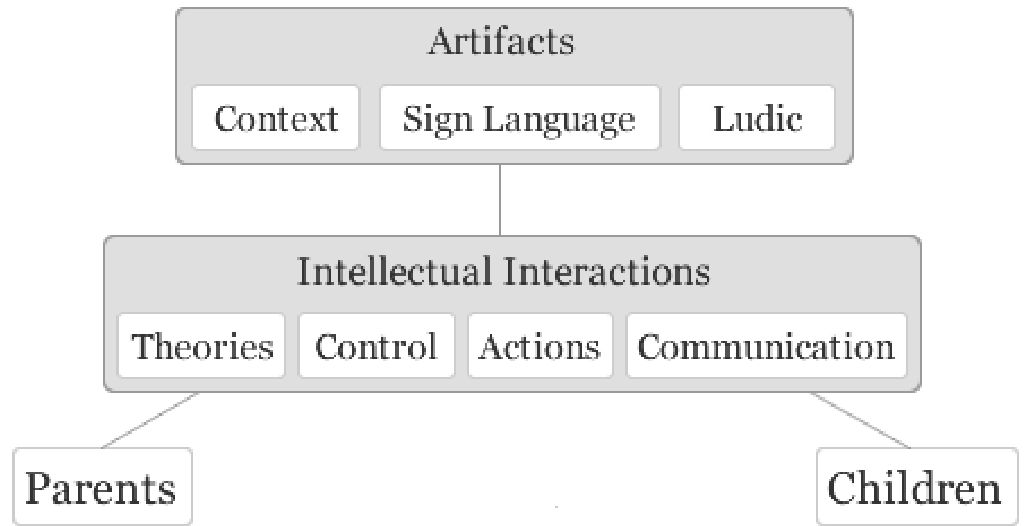 Figure 1: The feedback loop between the knowledge base and the instantiated interaction.
The "City Park" Artifact: Learning through Play
The authors demonstrated the framework with a City Park Storytelling tool. In this environment:
- A child clicks a Tree.
- The system displays a hand animation showing the Libras sign, blending with the tree's visual form.
- As the child interacts further (e.g., adding "Clouds" or "Sunglasses"), the story evolves dynamically based on the hyper-graph logic.
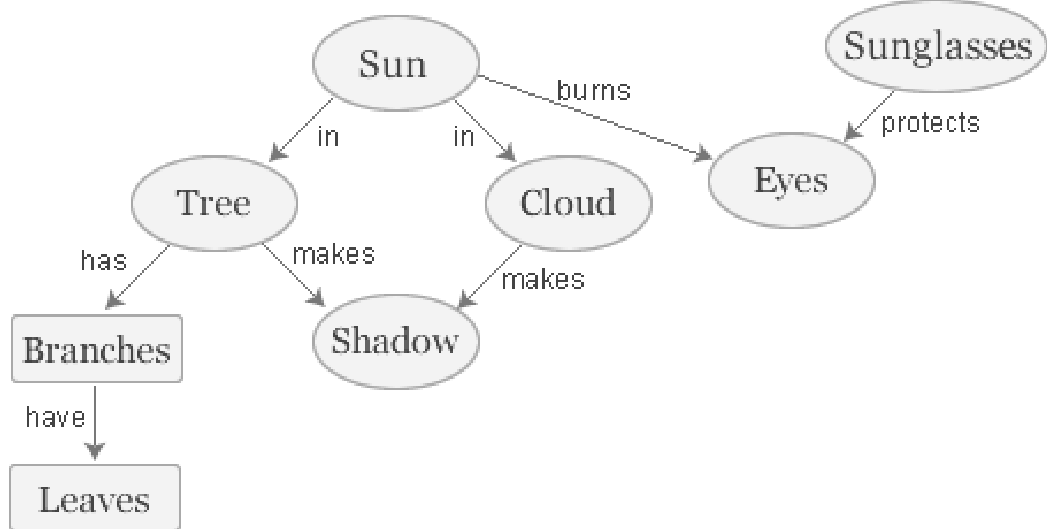 Figure 2: A Concept Map representing the "City Park" domain knowledge and its causal relations.
Experimental Validation
The framework underwent internal validation and was praised for moving beyond "translation" toward "knowledge creation." The use of Sense Making (SM) and Common Sense (CS) ensures that the software reflects the culture of the Deaf community rather than just technical requirements.
| Interaction Element | Spontaneous Concept | Scientific/Causal Concept |
|---|---|---|
| Sunglasses | Visual recognition of the object | Protection against UV damage |
| Tree | Iconic sign for tree/leaves | Source of shadow and animal habitat |
| Grass | A place to play | Needs rain and sun to grow |
Critical Insight & Future Outlook
The brilliance of this work lies in its Inductive Bias: it assumes that language acquisition for the Deaf is a visual-spatial journey, not an auditory one. By using hyper-graphs to manage knowledge, the authors offer a scalable way to create "intelligent" stories that don't follow a rigid A-to-B path.
Limitations: The current system relies on high-quality video recordings of Deaf signers for authenticity, which can be resource-intensive.
The Takeaway: This is a call to action for HCI researchers to stop seeing Sign Language as a "feature" and start seeing it as the architecture of the mind for millions. Future literacy tools must be bilingual, culturing-responsive, and family-centered.