
Beyond Static Pages: Leveraging Multi-Agent Semantic Web for Intelligent University Marketing
A Conceptual Multi-agent Semantic Web Model of a self-adaptive website for intelligent strategic marketing in learning institutions
This paper proposes a conceptual Multi-agent Semantic Web Model designed to transform static university websites into self-adaptive marketing tools. The system utilizes autonomous agents and ontology libraries to dynamically tailor website content based on real-time visitor preferences and geographical data.
TL;DR
Higher education institutions often struggle with "one-size-fits-all" websites that fail to convert visitors into students. This paper introduces a conceptual framework that combines Multi-agent Systems (MAS) with Semantic Web technologies to create self-adaptive websites. By generating unique software agents for every visitor, the system identifies preferences and dynamically reconfigures content—such as images and calls-to-action—to maximize marketing impact.
Background & Motivation: The "Static" Crisis
Most university websites are digital brochures: static, rigid, and indifferent to who is looking at them. While universities spend heavily on social media marketing, their landing pages often fail to answer the critical question: "Why should I study here?"
The authors point out a significant gap in current technology—while we have "content marketing," we lack the mechanism to deliver that content adaptively. Current personalization methods are often limited to tracking clicks, failing to translate data into strategic marketing actions.
Methodology: The Five-Component Architecture
The core of the proposal is the movement from a passive server to an active, agent-based environment. The process follows a sophisticated logic:
- Agent Generator: Upon arrival, a visitor is assigned a dedicated software agent.
- Preferences Model Base: The agent cross-references the visitor's IP and location against known group patterns.
- Grouping Process: If the visitor is new, the agent observes behavior to create a new profile; if recognized, it retrieves existing preferences.
- Ontology Library & Semantic Content: Using RDF and OWL, the agent "reads" the marketing assets available in the database, understanding the context of the content (e.g., "This image appeals to international engineering students").
- Rendering Engine: The agent feeds the selected assets to the engine, which modifies the UI in real-time.
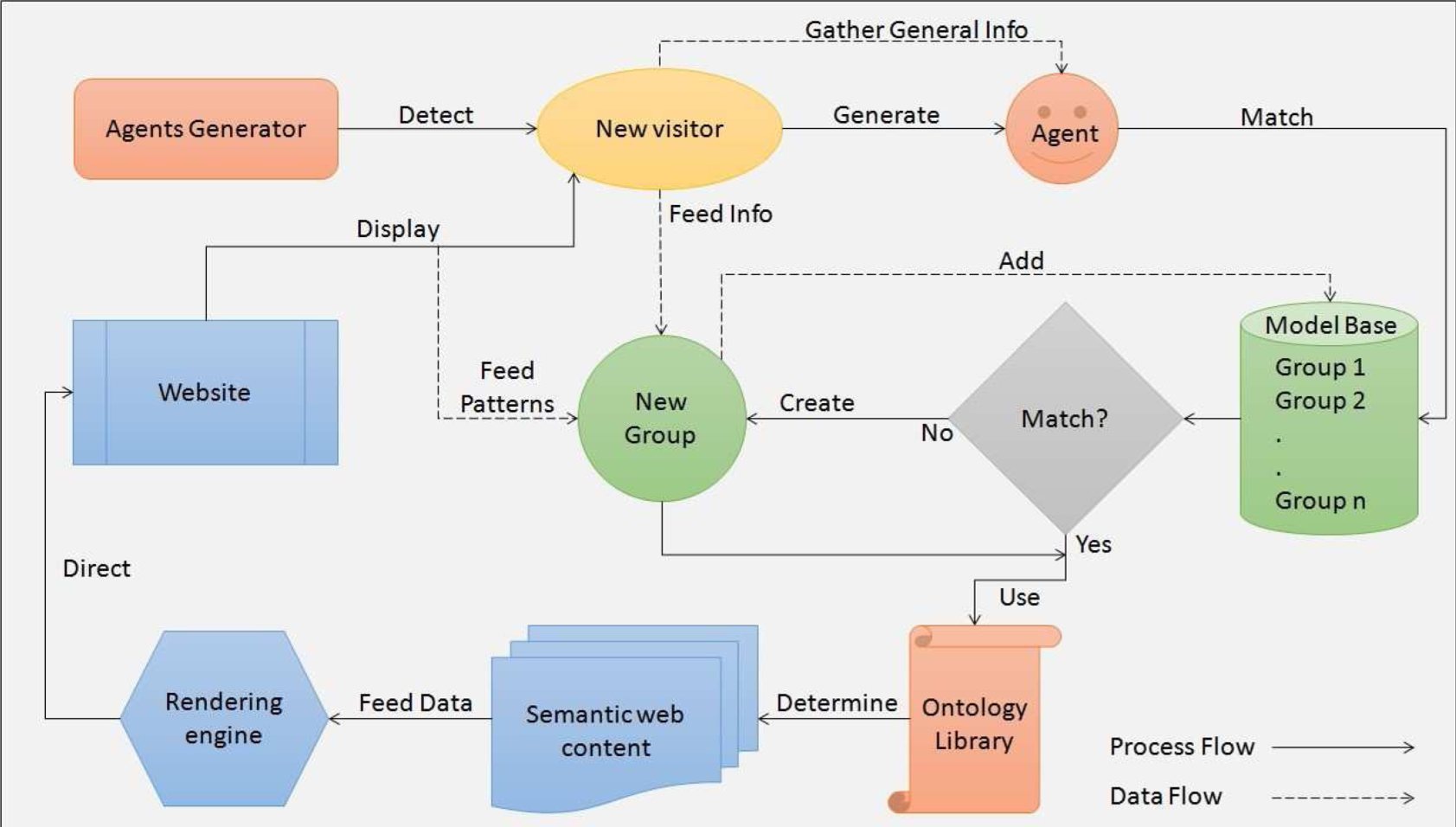 Figure 1: The Conceptual Multi-agent Semantic Web Model showing the interplay between the visitor, the agent, and the rendering engine.
The "Why" Behind the Strategy
Why use Multi-agent Systems? The researchers argue that MAS provides the flexibility and decentralized coordination required for self-adaptation. Instead of a massive, monolithic algorithm trying to serve thousands of users, individual agents handle individual visitors, reducing the complexity of the "self-adaptation" problem.
By utilizing the Semantic Web, the system moves from keyword-matching to concept-matching. This allows the website to provide answers not just to "what" or "where," but to the "why"—aligning university value propositions with specific student needs.
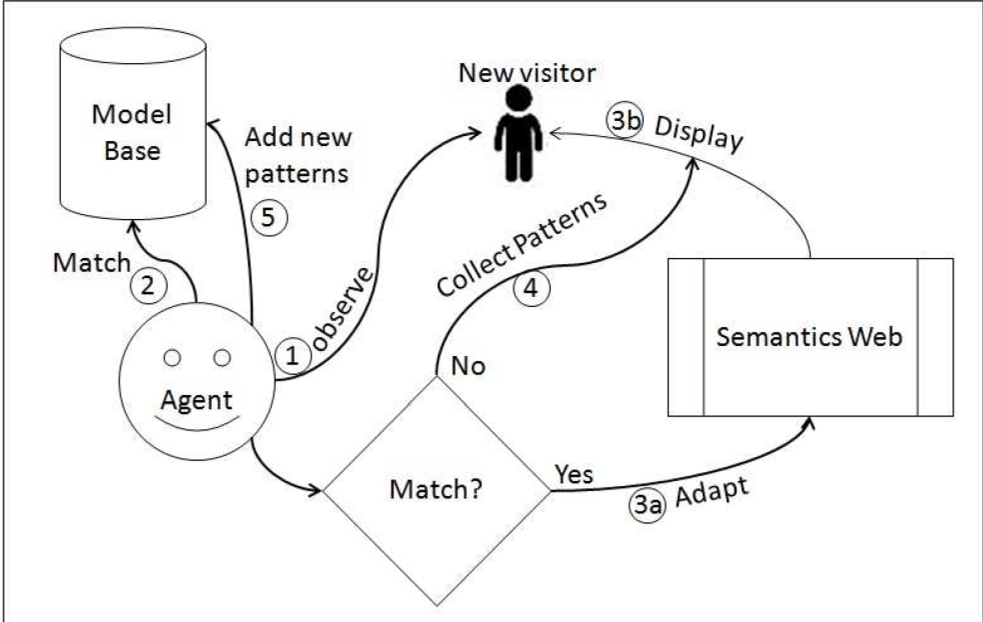 Figure 2: The Multi-agent Semantic Web Framework outlining the observation-adaptation loop.
Critical Insights & Future Outlook
While the paper presents a robust conceptual model, it acknowledges the computational hurdles. Performance of "reasoners" (the logic engines behind ontologies) can be a bottleneck when dealing with large, semantically interconnected datasets.
Key Takeaways:
- Tactical vs. Strategic: The system focuses on tactical changes (UI elements) rather than structural changes, ensuring the website remains stable while being personalized.
- Emotional Intelligence: The move toward a "Semantic Web" is an attempt to make digital interactions feel more like a "civilized conversation."
In the next phase of this research, the authors plan to conduct simulation studies to quantify the efficiency of this model in real-world scenarios. For learning institutions, this could mean the difference between a high bounce rate and a successful enrollment.
Conclusion
This work sits at the intersection of AI and Marketing. By treating a website as a living, breathing multi-agent ecosystem, the authors provide a blueprint for the next generation of customer-oriented digital platforms.