
CONF: Redefining Cloud Infrastructure for Time-Critical Social Networks
Co-located and Orchestrated Network Fabric (CONF): An Automated Cloud Virtual Infrastructure for Social Network Applications
The paper introduces Co-located and Orchestrated Network Fabric (CONF), an automated cloud virtual infrastructure solution designed for time-critical social network applications. Developed within the EU H2020 ARTICONF project, it provides a microservice-based architecture to automate the planning, provisioning, and self-adaptation of federated cloud/edge resources.
TL;DR
Modern social networks are no longer just static platforms; they are dynamic ecosystems like car-sharing services and gig-economy apps that demand extreme reliability and low latency. CONF (Co-located and Orchestrated Network Fabric) is an automated infrastructure solution that bridges the gap between complex application requirements and rigid cloud resources. It leverages microservices to plan, provision, and self-heal virtual environments across cloud and edge boundaries.
The "One-Size-Fits-All" Cloud Failure
Traditional IaaS providers offer generic DevOps tools that work well for basic web apps but fail miserably when faced with the unpredictability of social interactions.
Current platforms suffer from three major bottlenecks:
- Vendor Lock-in: Inability to move workloads seamlessly across providers based on cost or performance.
- Latency Negligence: Generic clouds often host data far from the actual event, causing performance drops in time-critical tasks.
- Static Over-provisioning: To avoid crashes during peak demand (e.g., a city-wide festival affecting a car-sharing app), managers pay for massive unused capacity.
Methodology: The CONF Architecture
CONF shifts the paradigm by treating infrastructure as a programmable, "orchestrated fabric" that responds to the application's heartbeat.
1. The Microservice Brain
The system is composed of specialized components coordinated via a REST Manager and a Message Broker:
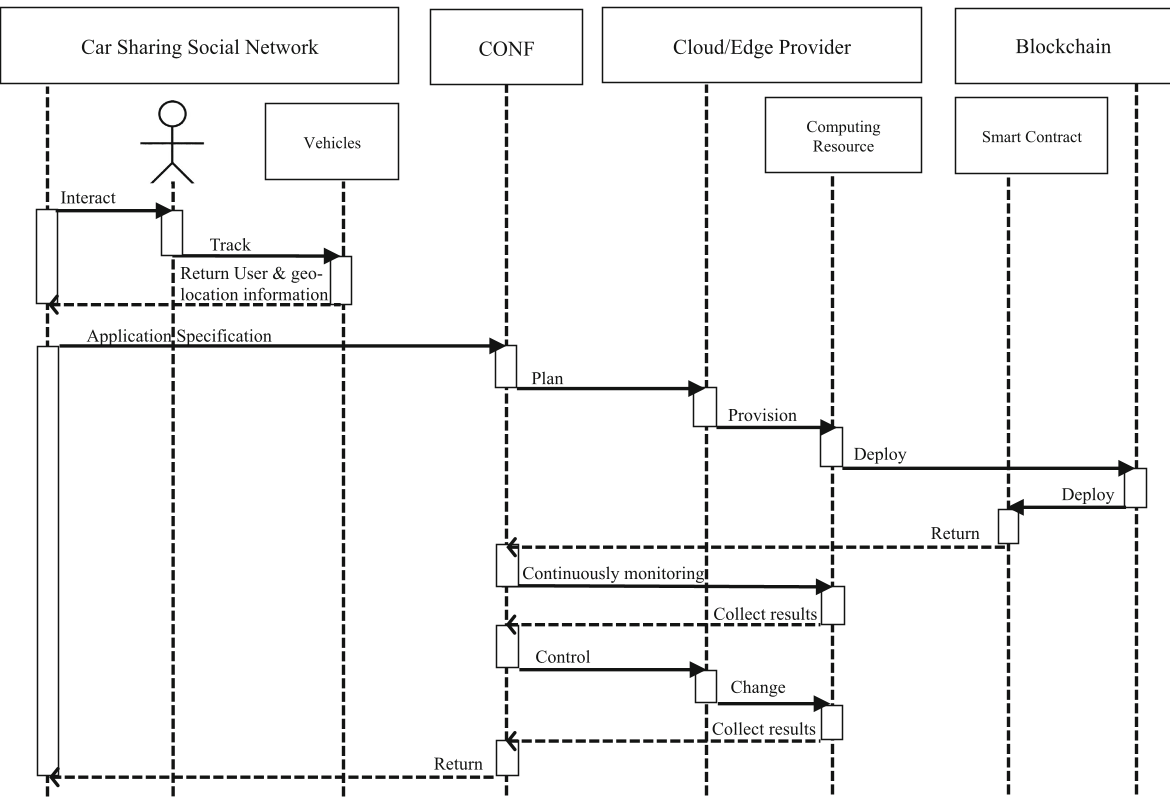
- Planner: Uses state-of-the-art algorithms to select optimal VM types and topologies based on budget and performance.
- Provisioner: Decomposes plans and deploys them across a federation of cloud, edge, and fog nodes.
- Controller: The "self-healing" module that adjusts resources in real-time based on QoS metrics.

Real-World Impact: The Car-Sharing Case Study
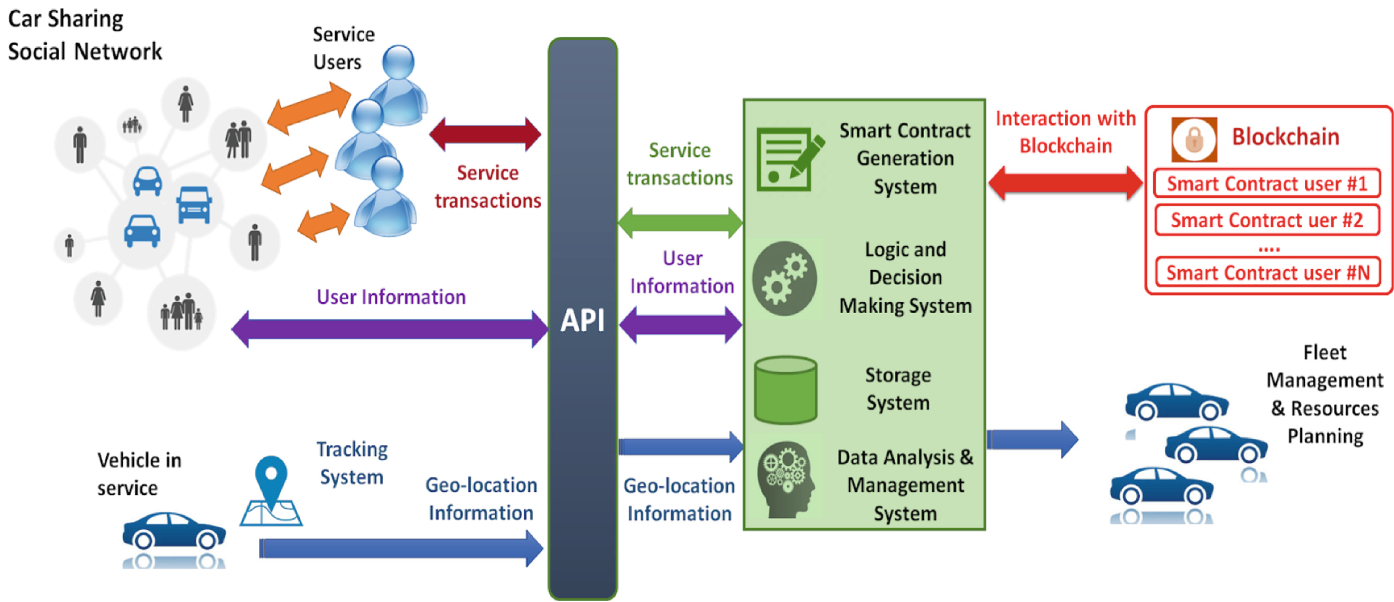
The paper validates CONF through a blockchain-based car-sharing use case. In this scenario, users interact via a decentralized social network to hire vehicles. The infrastructure management is complex because geolocation tracking and smart contract execution must happen in real-time.
Why it Works:
- Proximity-based Geo-profiling: CONF triggers edge resource stations close to the users. If a sudden rainstorm increases car-sharing demand in Amsterdam, CONF spins up local edge nodes immediately.
- Blockchain-as-a-Service: It automates the deployment of blockchain nodes onto the provisioned VMs, ensuring trust without manual configuration.
- Autonomous Scaling: When the metrics database detects a surge in transaction volume, the Controller initiates horizontal scaling before the user experience degrades.
Critical Insight & Future Outlook
The core philosophy of CONF is that Infrastructure should follow the Event. By co-locating computing resources geographically near the "social event," the system minimizes the "distance to data" bottleneck.
Limitations: While the architecture is robust, its success depends heavily on the interoperability of various cloud providers' APIs. If a provider changes its interface, the Provisioner's drivers must be updated.
Conclusion: CONF represents a significant step toward Autonomous DevOps. As we move toward more decentralized social media (Web3), the ability to orchestrate orchestrated networked services across a federated cloud will become the standard, not the exception.