
Apollo: Bridging the Reliability Gap in Social Sensing with Confidence-Aware Truth Estimation
Demo paper: A confidence-aware truth estimation tool for social sensing applications
This paper introduces a confidence-aware truth estimation tool for social sensing, leveraging a Confidence-Aware Expectation Maximization (CA-EM) scheme. Implemented within the "Apollo" framework, it distinguishes itself by being the first to explicitly model varying degrees of source confidence to ascertain the correctness of unvetted social media observations.
TL;DR
Social sensing turns millions of social media users into "human sensors," but how do we filter the truth from the noise? This paper presents the Apollo Fact-finder, a tool powered by a Confidence-Aware EM (CA-EM) algorithm. Unlike traditional models that treat all reports equally, Apollo listens to how sure a user is, providing a drastic lift in truth estimation accuracy during crises like the Boston Bombing and Hurricane Sandy.
The "Uniform Confidence" Fallacy
In the world of physical sensors—like a thermometer—we expect a consistent noise model. If the hardware is calibrated, its error margin stays predictable. Social sensing is messy. Humans are unvetted, and their reliability varies not just from person to person, but from tweet to tweet.
Current SOTA (State Of The Art) methods at the time assumed a "one-size-fits-all" reliability for each user. But consider these two scenarios for one user:
- "I am standing in front of the building; it is definitely on fire!" (High Confidence)
- "I think I heard an alarm, but I'm not sure if there's a fire." (Low Confidence)
By ignoring this distinction, prior algorithms diluted the weight of high-quality observations and gave too much credit to hesitant rumors.
Methodology: The CA-EM Scheme
The core innovation is the Confidence-Aware Expectation Maximization (CA-EM) scheme. The author's insight is that human sensors are capable of "self-reporting" their error probability through linguistic cues.
The Apollo Pipeline
- Data Collection: Filtering Twitter streams by keywords/geo-locations.
- Pre-processing: Clustering similar tweets to form a "Sensing Matrix."
- Truth Estimation: The CA-EM algorithm iteratively calculates:
- E-Step: Estimating the credibility of a claim based on who reported it and their expressed confidence.
- M-Step: Estimating the reliability of the source based on the accuracy of their claims.
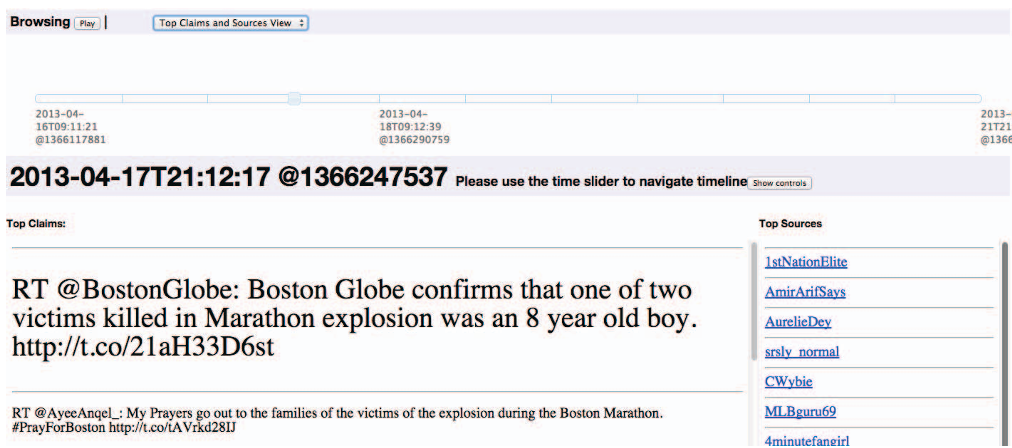 Figure 1: The Apollo framework architecture, highlighting the flow from raw social media data to truth estimation.
Real-World Battle Testing
To prove the system's robustness, the authors tested it against three major historical events. The scale of the data (summarized below) highlights the "Big Data" challenge of social sensing:
| Trace | Boston Marathon | Hurricane Sandy | Egypt Unrest |
|---|---|---|---|
| Tweets | 123,402 | 12,931 | 93,208 |
| Users | 101,209 | 7,583 | 13,836 |
In the Boston Bombing case study, the tool was able to pinpoint the most credible claims (e.g., specific suspect locations) and identify the most reliable sources in real-time, effectively filtering out the massive amount of misinformation that typically follows high-stress events.
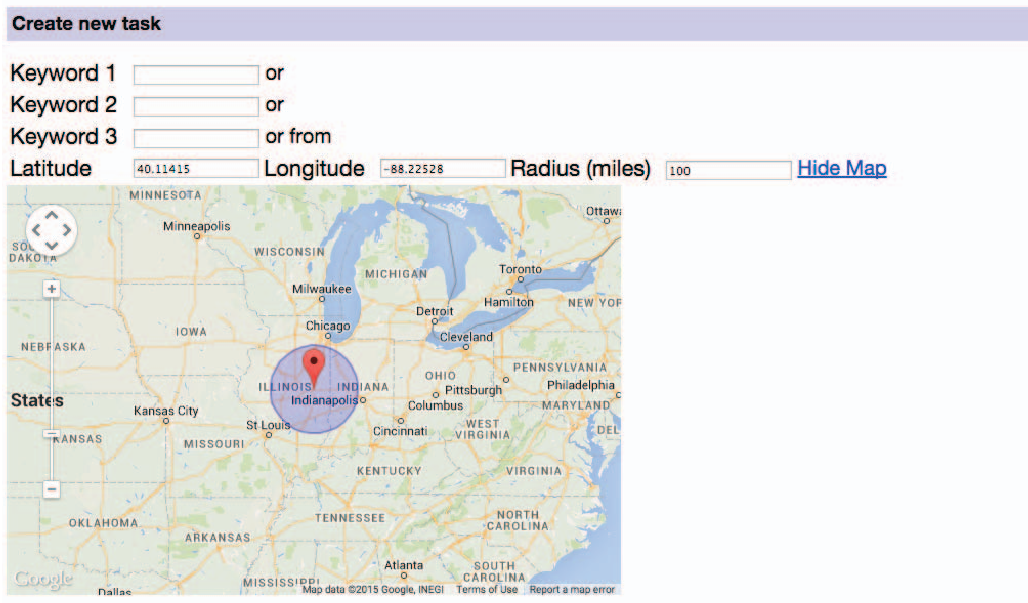 Figure 2: Real-time UI of the Apollo tool showing the ranking of claims and source reliability during the Boston Bombing.
Critical Insight: Why This Matters
The shift from "Physical Sensing" to "Social Sensing" requires a fundamental rethink of Inductive Bias. We cannot assume human sensors are calibrated instruments. By incorporating Confidence, the authors acknowledged the subjective nature of human observation.
Takeaway for the Future: This work laid the groundwork for modern fact-checking systems. As we move into an era of AI-generated content, the ability to assess the expressed certainty of a source remains a vital pillar of information integrity.
Limitations & Outlook
While the tool is powerful, it relies on users being honest about their confidence. A malicious actor could provide "High Confidence" lies to game the system. Future work must bridge this by combining Confidence-Awareness with Malicious Source Detection (i.e., Sybil attacks) to ensure the truth estimation remains resilient against adversarial manipulation.