
Beyond Singular Smiles: Multi-Person Confidence Fusion for Socially Intelligent Robots
11547_Confidence fusion based emotion recognition of multiple persons for human-robot interaction.
The paper introduces a multi-person emotion recognition system that fuses a Feature Vectors based Approach (FVA) with a Differential-Active Appearance Model Features based Approach (DAFA) to identify facial expressions and social atmosphere for Human-Robot Interaction. Implemented on a "young Einstein" robot head, the system achieves SOTA-level accuracy (over 90% for positive emotions) in real-time tracking and environment mood analysis.
TL;DR
Researchers from National Taiwan University have developed an integrated system allowing robots to not only see faces but to "feel the room." By fusing geometric feature vectors with manifold-based appearance models (DAFA), the system tracks multiple individuals, recognizes subtle emotion transitions, and calculates the overall "ambient atmosphere" to drive a 30-DOF humanoid Einstein robot.
Context: The Social Gap in Robotics
For a robot to transition from a laboratory machine to a social companion, it must decode the primary channel of human sentiment: facial expressions. However, most SOTA models struggle with two things: the dynamic nature of expressions (we don't live in static "apex" frames) and the social context (multiple people interacting at once). This paper bridges that gap by moving from individual classification to "Atmosphere Identification."
Methodology: The Power of Confidence Fusion
The architecture relies on a dual-pathway fusion strategy to ensure robustness against lighting, identity variations, and tracking errors.
1. FVA (Feature Vectors based Approach)
This path focuses on "Geometry." It tracks 11 specific distances—such as the gap between eyebrows or the height of the mouth—normalized against the outer corners of the eyes. This provides a hard, rule-based foundation for detecting obvious muscle movements.
2. DAFA (Differential-AAM Features based Approach)
This path focuses on "Texture." Instead of looking at raw pixels, it uses Differential-AAM Features (DAFs). By calculating the difference between a neutral face and the current frame, it removes person-specific "noise" (like a person's natural bone structure) and maps the remaining emotional signal onto a low-dimensional ISOMAP manifold.
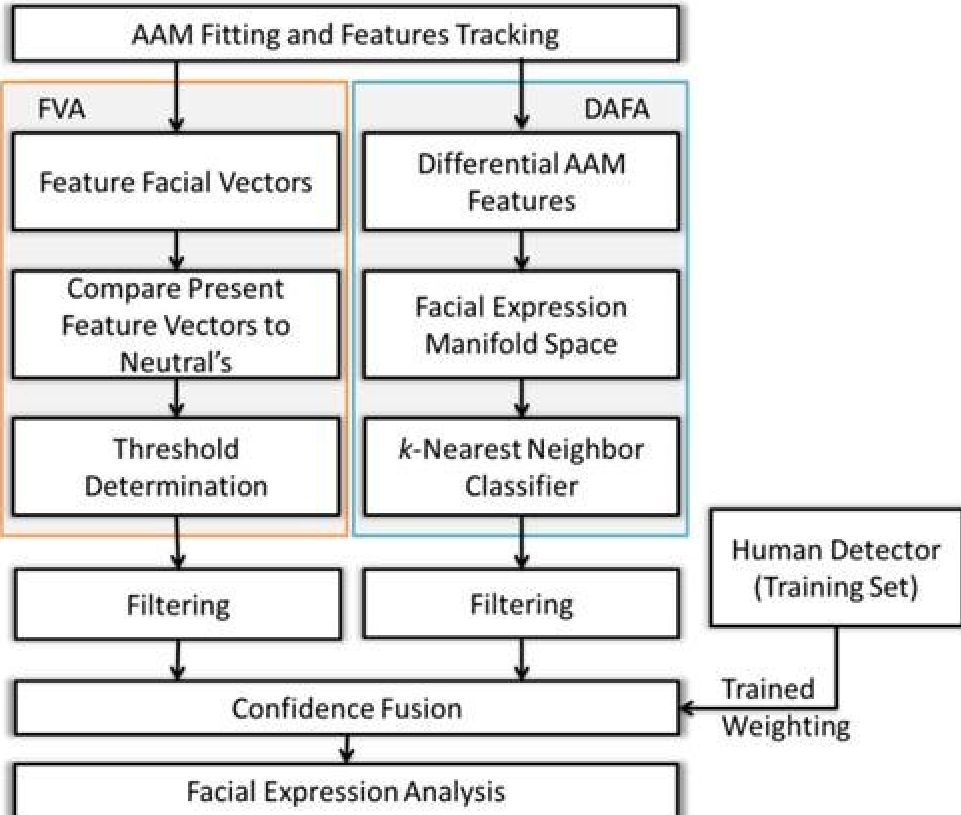 Fig 1: The dual-pathway fusion architecture combining FVA and DAFA via weighted voting.
The Weighted Voting & Bayes Filter
The system doesn't just average the two paths. It uses a Linear Discrimination Function where weights are learned based on "Human Detector" data (how humans perceive these emotions). To handle flickering or temporary occlusions, a Bayes Filter maintains a temporal probability distribution, ensuring the robot doesn't "forget" a person is happy just because a single frame was blurred.
Experimental Insights: Manifold Separability
The most striking evidence for this approach is seen in the manifold distribution. When comparing standard AAM parameters to DAFs, the DAFs show much tighter, more separable clusters for different emotions in the ISOMAP space.
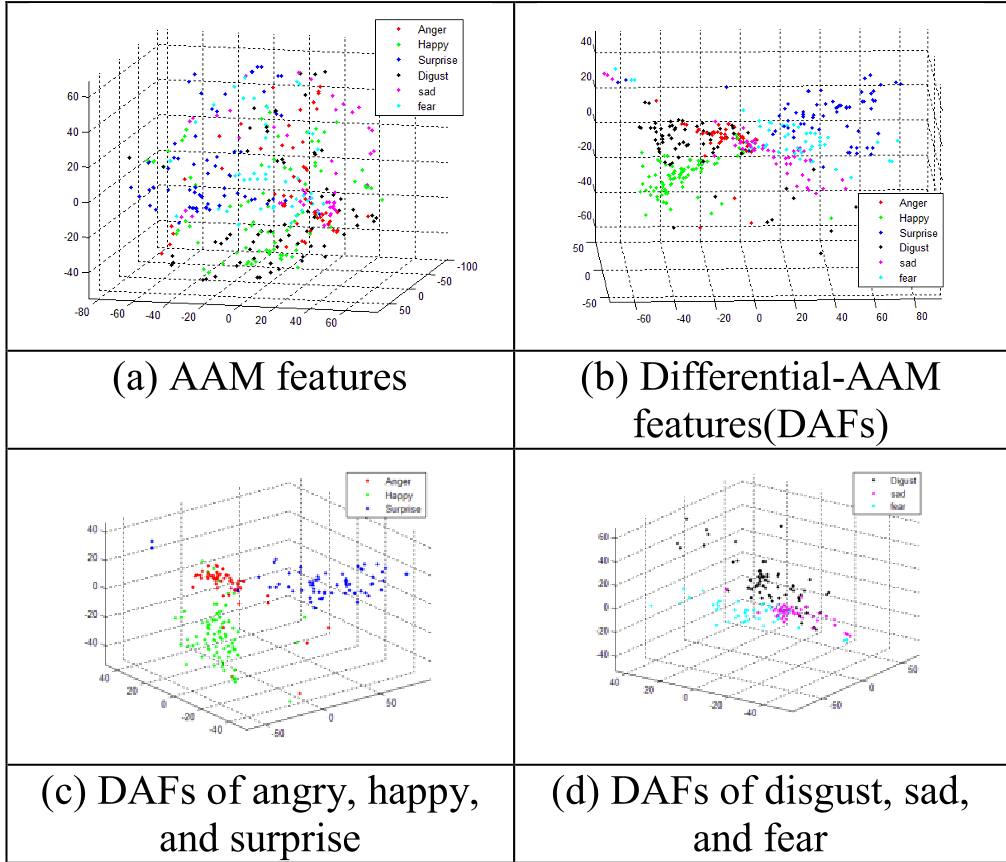 Fig 2: ISOMAP visualization showing how Differential features (DAFs) create clearer boundaries between emotional states.
Results at a Glance:
- High Accuracy: Recognition of Surprise, Happy, and Angry exceeded 90%.
- The "Negative" Challenge: Emotions like Sadness and Disgust remain harder to distinguish (~70-80%) due to smaller variations in feature points.
- Real-time Interaction: The system successfully piloted the Einstein Robot Head, reacting to social cues with synchronized lip movement and neck gestures.
Social Intelligence: The Ambient Atmosphere
The system's "Killer Feature" is its ability to weight different people in the room. By analyzing the Region of Interest (ROI) size, the robot identifies the "Protagonist"—the person closest or most engaged—and weights their emotion more heavily when deciding the global social mood.
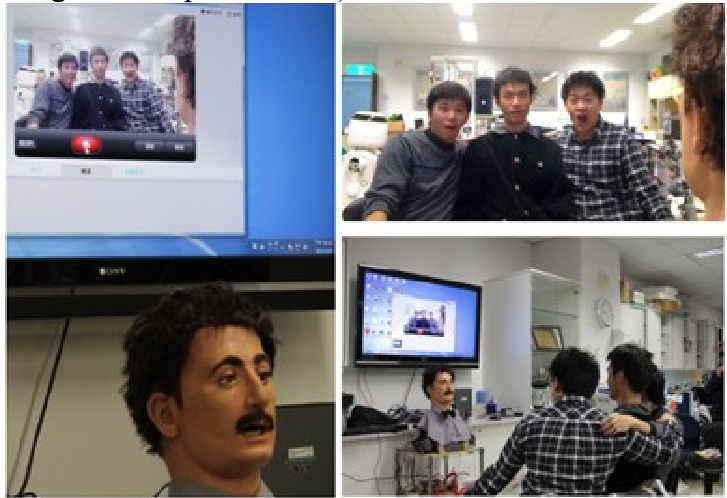 Fig 3: The Young Einstein robot head performing a "Surprise" response during human interaction.
Conclusion & Future Outlook
While the system excels at positive emotion detection, the authors acknowledge a need for improved accuracy in "low-intensity" negative emotions. The future of this work lies in Multimodal Fusion—integrating hand gestures, body posture, and vocal prosody to create a truly empathetic machine.
This paper marks a significant step toward robots that don't just "see" us, but understand the social context of our presence.