
Petimo: Reimagining Social Networking Through Tangible Robotics and Safe Physicality
Connected Online and Offline Safe Social Networking for Children DILRUKSHI ABEYRATHNE, CHAMARI EDIRISINGHE, NIMESHA RANASINGHE, KASUN KARUNANAYAKA, KENING ZHU, ROSHAN LALINTHA PEIRIS, OWEN NOEL
Petimo is a tangible robotic social networking system designed for children aged 7-12, combining a physical robot with a 3D virtual environment called "Petimo World." It introduces a hardware-authenticated "friend-adding" mechanism to ensure safety and foster real-world physical interaction.
TL;DR
Petimo is a pioneering social networking system that moves beyond the screen. By requiring a physical, soft-bodied robot to touch another robot to "add a friend," it eliminates the risks of online anonymity. It merges the joy of 3D virtual worlds with the developmental necessity of physical interaction, ensuring that a child's digital social circle is an extension of their real-world environment.
Background: The Digital-Physical Divide
Modern Social Networking Services (SNS) like Facebook or Club Penguin have created a "Privacy Paradox." While they offer connectivity, they often expose children to inappropriate content and cyberbullying. More critically, they displace "strong-tie" physical relationships with "weak-tie" digital ones.
The authors argue that children in the Concrete Operations Stage (7-12 years) require physical manipulation and social cues—shaking hands, sharing objects—to develop empathy and social skills. Current SNS platforms lack this "physical dimension," leading to what researchers call the Internet Paradox: a technology intended for social involvement that actually reduces psychological well-being.
Methodology: Bridging Worlds with Petimo
The Petimo system is comprised of two synergistic parts:
1. The Tangible Robot (The Gateway)
Unlike the hard plastic of most gadgets, Petimo features a soft encasing to evoke care and empathy. It serves as the physical key to the virtual world:
- Physical Friend Adding: Friendship initiation is restricted to the physical world. Two children must physically touch their Petimo robots together to exchange 80-bit RFIDs via the server.
- Tactile Inputs: Instead of just buttons, children use natural gestures like squeezing the robot to send "virtual gifts" or scrolling a touch-pad for navigation.
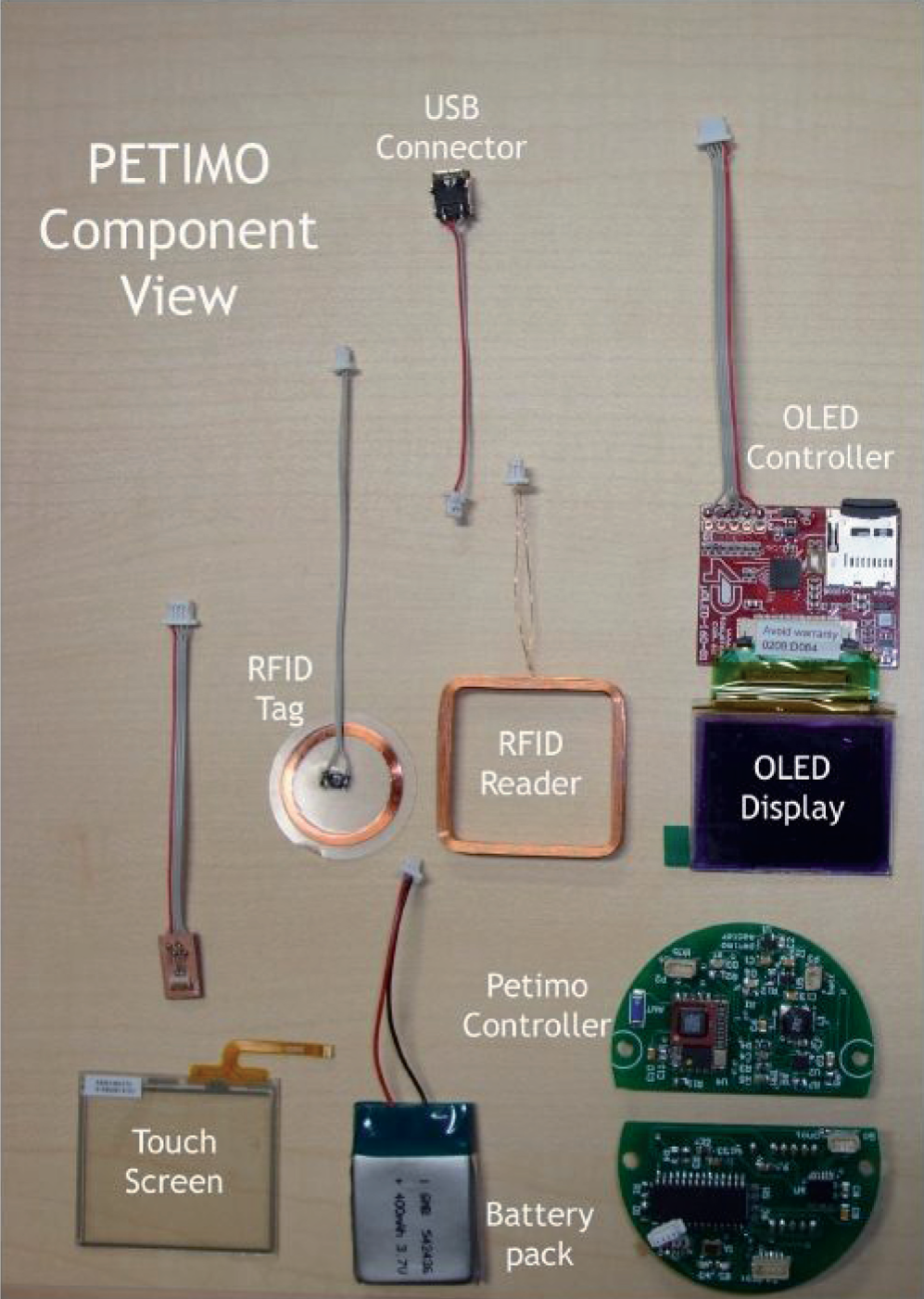 Fig 1. The final integrated Petimo robot with its soft, user-friendly design.
2. Petimo World (The 3D Multiverse)
The software architecture uses a unique "Galaxy" metaphor to represent social circles:
- Macro World: A 3D orbit system where friends (called 'seedars') are arranged by friendship strength. Closest friends are in the center, while casual acquaintances are in distant orbits.
- Micro World: A personal "garden" planet where children can visit one another to chat, send emoticons, and exchange digital gifts that have been "squeezed" from the physical robot.
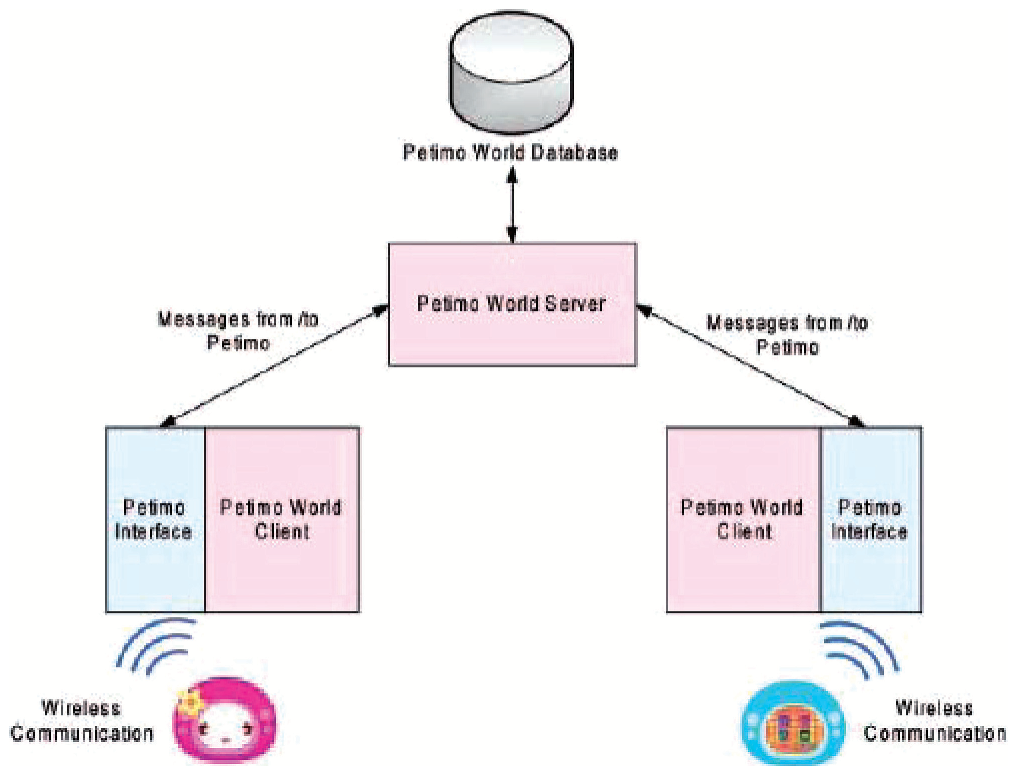 Fig 2. The communication architecture between the Robot, the Server, and the 3D World.
Why It Works: The Intuition
Petimo’s brilliance lies in its Inductive Bias toward safety. By moving the "Friend Request" from an anonymous click to a physical encounter, the system inherently trusts the user's physical social circle.
The inclusion of multisensory feedback (OLED displays for emotions, vibration for gifts) ensures that the digital interaction has a physical "weight." When a friend sends an emoticon in the virtual world, the robot in the child's hand vibrates and shows an animation. This closes the feedback loop between the screen and the skin.
Experiments & Results
The proof-of-concept demonstrated that the system could handle robust, reliable communication across a multiverse platform.
- Security: The 80-bit RFID exchange effectively mitigated anonymity risks prevalent in sites like Club Penguin.
- Interaction Design: The tactile feedback (Vibration and Audio) was found to enhance the "Social Capital" perceived by children, making digital interactions feel more "real."
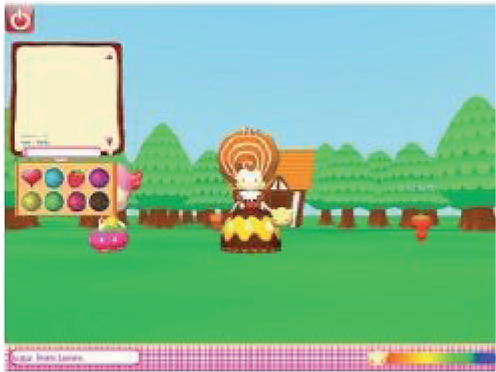 Fig 3. The Micro World: A personalized space for chat and gift exchange.
Depth Insight: The Future of Tangible SNS
Petimo represents more than just a toy; it is a philosophy of Socially Conscious Computing.
Key Takeaways:
- Hardware as Trust: In an era of deepfakes and AI bots, physical hardware keys (like Petimo) may become the gold standard for verifying human-to-human relationships.
- Multisensory Socializing: The transition from GUI (Graphical User Interface) to TUI (Tangible User Interface) is essential for emotional development in early childhood.
Limitations & Future Work:
The current version relies on a centralized server and a specific 3D engine. The authors envision a "Petimo Platform" where children can build their own custom components, turning social networking into a creative, physical, and collaborative engineering project.
Conclusion: Petimo doesn't shy away from the digital age—it anchors it in the physical world, ensuring that as children grow their online presence, they don't lose their grip on reality.