
Sharetouch: Bridging the Digital Divide via Tangible Social Interaction for Seniors
Connecting Communities: Designing a Social Media Platform for Older Adults Living in a Senior Village
This paper introduces Sharetouch, an innovative multi-touch social media platform designed specifically for older adults living in senior villages to combat social isolation. By utilizing a "table-as-interface" metaphor with a nature-inspired "pond" UI, it achieves high user satisfaction and significant perceived ease of use among elderly users (average age 78.3).
TL;DR
As the global population ages, social isolation among the elderly has become a "silent epidemic." Sharetouch is a hardware-software social platform that transforms a standard communal table into a 52-inch multi-touch "pond." By moving away from keyboards and toward intuitive, tangible interactions, this system successfully encourages social engagement among seniors with zero prior computer experience.
Background: The Crisis of Disengagement
Sociological theories like Disengagement Theory suggest that as people age, their social circles naturally shrink. However, the Activity Theory counters this, positing that maintaining social ties is vital for physiological health and preventing Alzheimer’s. Despite this, data shows that seniors spend only about 4.2% of their time in social activity rooms. The barrier isn't just physical—it's technical. Traditional computers are designed for the "digitally native," leaving the "digitally distant" behind.
The Sharetouch Philosophy: From Desktop to Tabletop
The researchers' core insight was to merge the digital desktop with the physical table—a centerpiece of social life in Taiwanese senior villages.
1. Intuitive Hardware Integration
The system is more than just a screen. It includes:
- RFID Identification: Users simply place their resident ID cards on the table to log in—no passwords required.
- Voice Control: Hidden microphones detect the direction of conversation, creating "visual waves" on the digital pond.
- Tangible Multi-touch: A 52-inch panel allows up to four residents to interact simultaneously, fostering side-by-side social contact.
2. The "Pond" Metaphor
Instead of icons and folders, Sharetouch uses a nature-themed interface.
- Users as Fish: Each resident is a fish.
- Tie Strength Visualization: Big fish represent frequent contacts (strong ties), while smaller fish represent infrequent ones.
- Interaction: Tapping a fish allows a user to see a friend's photo or listen to/leave voice messages, transforming asynchronous social networking into a playful, familiar activity.
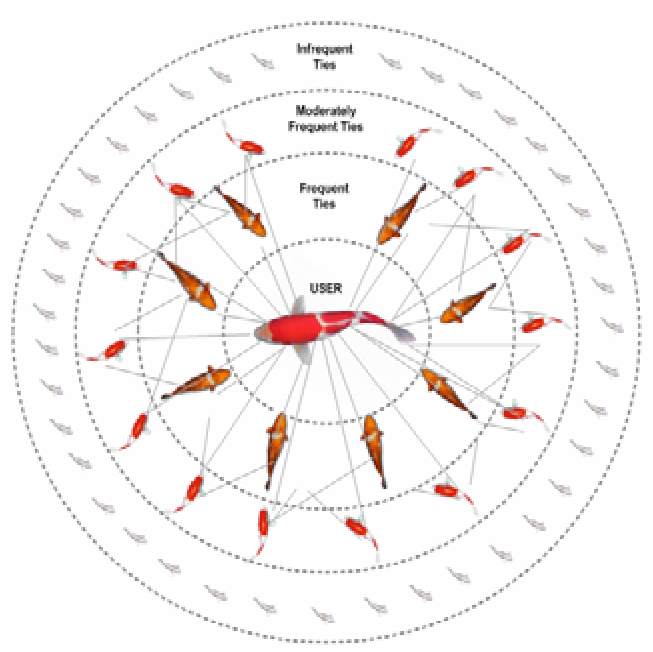 Figure 1: The conceptual mapping of social ties to the pond interface.
Validating Acceptance: The TAM Analysis
To measure success, the authors applied the Technology Acceptance Model (TAM2). They tested the system with 52 participants ranging from 64 to 91 years old.
Key Findings:
- Simplicity Wins: "Ease of Use" scored consistently high (Mean 5.17/7), proving that multi-touch removes the "fear of technology."
- Joy as a Catalyst: Participants found the system highly interesting (Enjoyment Mean 6.15/7), suggesting that "gamifying" social connection is effective for this demographic.
- Education Gap: Interestingly, while age and gender didn't significantly impact scores, those with higher educational levels tended to rate the system even more favorably, suggesting a need for even simpler metaphors for those with less formal schooling.
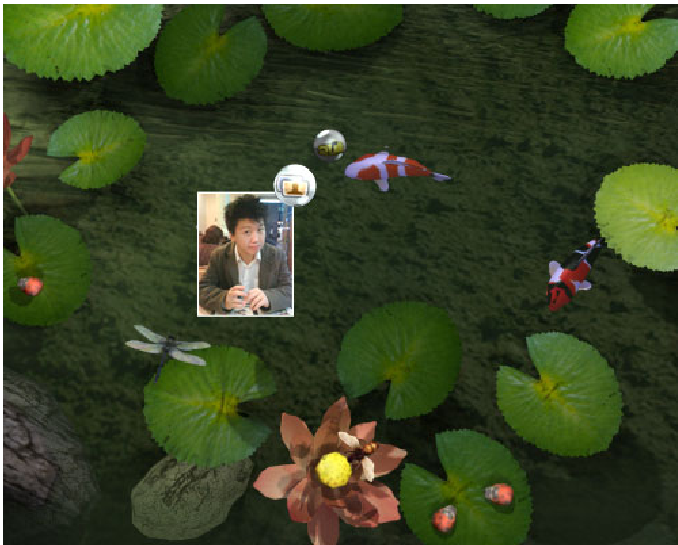 Figure 2: Real screenshot showing how residents perceive their social network on the Sharetouch platform.
Critical Insight: Why Sharetouch Matters
Most "Age-Tech" focuses on monitoring (fall detection, health tracking). Sharetouch focuses on living. It treats the elderly not as patients to be monitored, but as social beings who need connection. By utilizing an Egocentric Network model—where the UI literally physically centers the user and shows their world swimming around them—the platform provides a cognitive map of their community that is both functional and therapeutic.
Conclusion & Future Work
Sharetouch proves that the "digital divide" is a design failure, not a user failure. By grounding digital interaction in physical reality (the table) and natural metaphors (the pond), we can reintegrate older adults into the digital fabric of society. Future iterations could integrate more diverse media sharing (like digital scrapbooking) to further deepen these high-strength social ties.
Takeaway: Design for the elderly should be "tangible" and "social-first," moving away from the utilitarian efficiency of standard UIs toward experiential joy.