
LinkedInFinder: Bridging the Gap Between Social Graphs and CRM Systems
Connecting Customer Relationship Management Systems to Social Networks
The paper introduces the SocialCRMConnector framework, designed to integrate social network data into Customer Relationship Management (CRM) systems. It presents LinkedInFinder, a proof-of-concept tool that pulls second-degree connections from LinkedIn into Microsoft Dynamics CRM to identify potential business leads.
TL;DR
As social media matures into a critical business tool, the silos between social networks and Customer Relationship Management (CRM) systems are becoming a major bottleneck. This paper proposes the SocialCRMConnector framework and implements LinkedInFinder, a tool that integrates Microsoft Dynamics CRM with LinkedIn. By focusing on second-degree connections, the system provides a structured way for sales teams to find "warm" leads at target companies directly within their CRM workflow.
Background: From Transactional to Social CRM
The world of Sales has shifted from traditional marketing (finding new customers) to CRM (cultivating long-term relationships). However, the rise of Web 2.0 has created "Social Customers" who are active, well-informed, and highly connected. The authors position their work at the heart of Social CRM (sCRM), where the goal isn't just to record a sale, but to "join the conversation" happening on platforms like LinkedIn and Twitter.
The Problem: The "Outside-the-App" Search Hurdle
Salespeople spend significant time manually searching LinkedIn for contacts at target companies, then manually entering that data into their CRM. This process is:
- Fragmented: Important relationship context is lost between the social site and the business tool.
- Stale: Data in a CRM becomes obsolete quickly, whereas social APIs provide real-time updates.
- Disconnected: It is difficult to see the "path of introduction" (who can introduce me to this lead?) when looking at a standard CRM record.
Methodology: The SocialCRMConnector Architecture
The researchers developed a general framework called SocialCRMConnector. The logic is simple yet effective: Create a mashup that queries social APIs and maps the results to relational CRM tables.
1. Entity Matching
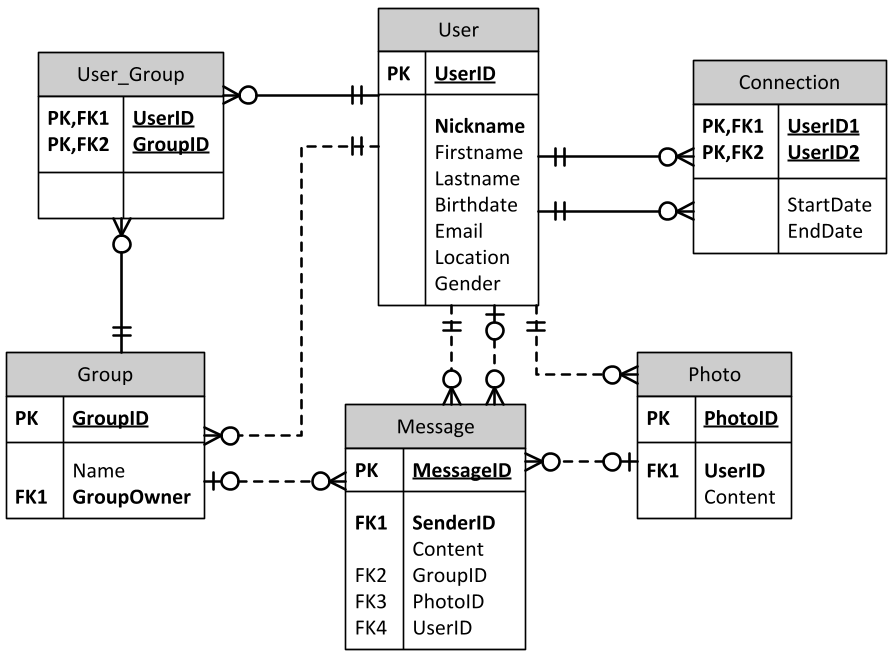
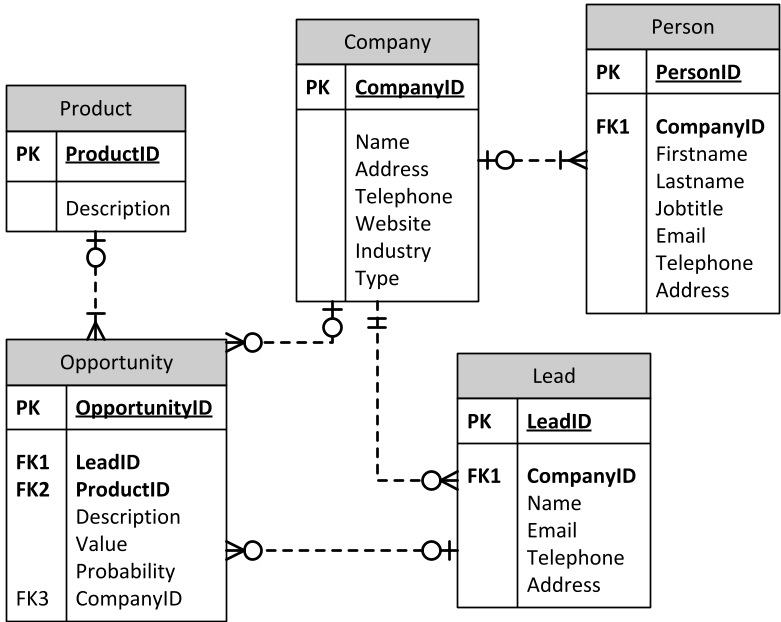
The paper bridges the gap between the "User-centric" social world and the "Company-centric" CRM world.
- Social Side: Centered on the
User,Connections, andGroups. - CRM Side: Centered on the
Company,Person, andLead.
2. The Logic of 2nd-Degree Connections
The "LinkedInFinder" implementation focuses specifically on Distance = 2.
- Distance 1: You already know them.
- Distance 2: You share a mutual connection. This is the "Sweet Spot" for B2B sales—close enough to get a warm introduction, but far enough to represent a new business opportunity.
Implementation: Integrating with Microsoft Dynamics
Built using ASP.NET and the LinkedIn Developer Toolkit, the application retrieves profile data via OAuth. When a user views a company inside Microsoft Dynamics CRM, the tool automatically triggers a query to find employees at that company who are 2nd-degree connections of the CRM user.
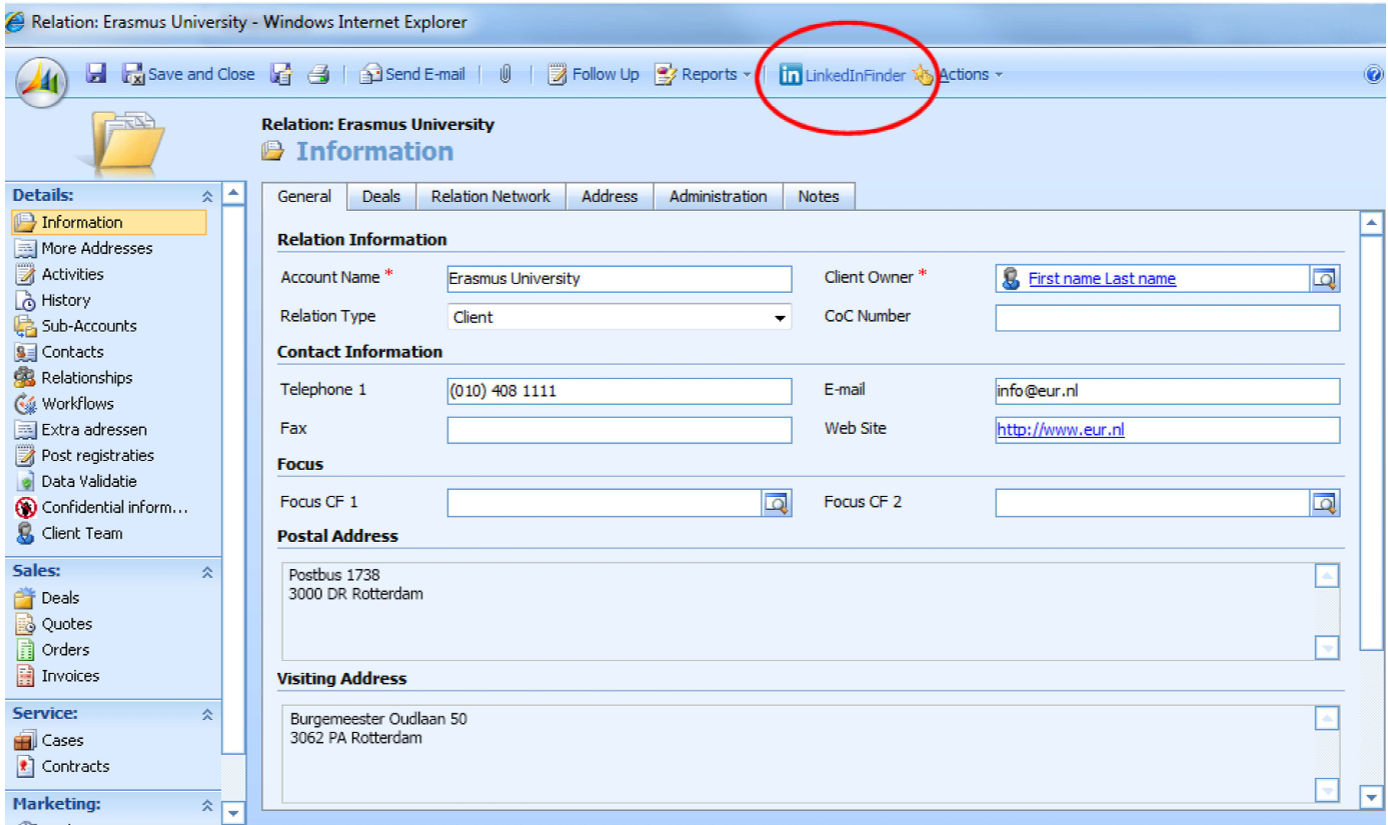
The tool doesn't just show who to call; it shows how you are connected to them, listing the common contacts that can provide the referral.
Does it Work? Evaluation & User Survey
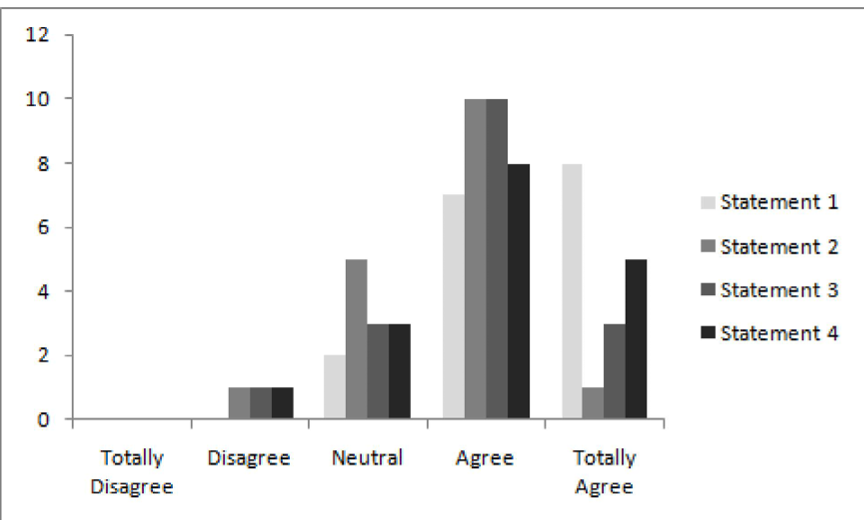
The authors conducted a survey using a 5-point Likert scale. Overwhelmingly, users agreed that the application was useful (p < 0.01 significance in rejection of a neutral stance).
- Search Validation: The results matched LinkedIn’s own advanced search, ensuring data integrity.
- Design Adequacy: Users found the information density (distance, title, mutual connections) sufficient for professional use without being overwhelming.
Critical Insight: The "Flattening" Advantage
A key technical takeaway from the paper is the practice of Data Flattening. Social APIs often return denormalized data (e.g., returning a location name rather than a ID to a country table). The authors argue that this simplicity is actually an advantage for CRM integration, as it allows for easier execution of business rules without complex join logic on the client-side.
Conclusion & Future Outlook
While this paper focuses on LinkedIn and Microsoft Dynamics, the SocialCRMConnector framework is platform-agnostic. The future of this work lies in:
- Multi-Platform Proximity: Combining data from Facebook, Twitter, and LinkedIn to find the "closest" possible path to a lead.
- Automated Enrichment: Automatically updating CRM records when a contact changes jobs on LinkedIn.
However, modern developers must remain wary of API Throttling and Privacy Restrictions, which have become significantly stricter since this paper's publication. The core value—turning social connections into structured business intelligence—remains the "holy grail" of modern sales tech.