
Efficient Consensus: Solving the $100 Million Urban Resettlement Conflict with AI and Optimization
An efficient consensus reaching framework for large-scale social network group decision making and its application in urban resettlement
This paper proposes an efficient consensus-reaching framework for Large-Scale Social Network Group Decision-Making (LSSNGDM) using a two-layer "dual social network" and an optimization-based cost model. Tested on an urban resettlement project with 1,861 participants, it achieves SOTA results by reducing negotiation costs by up to 3.22% while handling partially missing trust relations.
TL;DR
Large-scale urban resettlement often stalls due to the "Holdout" problem—where a few dissenting voices among thousands stop a project. This paper introduces an automated framework that fuses social network analysis with SVM classification and Linear Programming to reach a group consensus at the minimum economic cost. In a real-world test with 1,861 households, it saved over $7.8 million compared to traditional business strategies.
The "Invisible" Network: Why Large Groups Fail to Agree
Most Group Decision-Making (GDM) research focuses on small committees (less than 20 people). In these settings, you can simply "talk it out." But when you have 1,861 families, traditional feedback mechanisms collapse.
The authors identify two fatal flaws in previous approaches:
- Incomplete Information: We rarely know the "trust relations" between all 1,000+ people.
- Heterogeneous Preferences: Some people want cash; others want new apartments; others want to choose their own developer. How do you map these different "data types" onto a single scale?
Methodology: The Dual Social Network & Inner Product SVM
The core innovation is the Dual Social Network structure. Instead of viewing social connections as a flat graph, the authors create a two-layer topology:
- Base Layer: Known trust relations (who trusts whom).
- Embedded Layer: Preference similarity (who thinks alike).
Bridging the Gap with SVM
To handle the "Suspension Nodes" (the thousands of people whose social trust labels are unknown), the authors treat consensus as a Classification Problem. They define a high-dimensional Inner Product Space to measure the "distance" between different preference formats (e.g., comparing a simple ranking to a complex utility matrix).
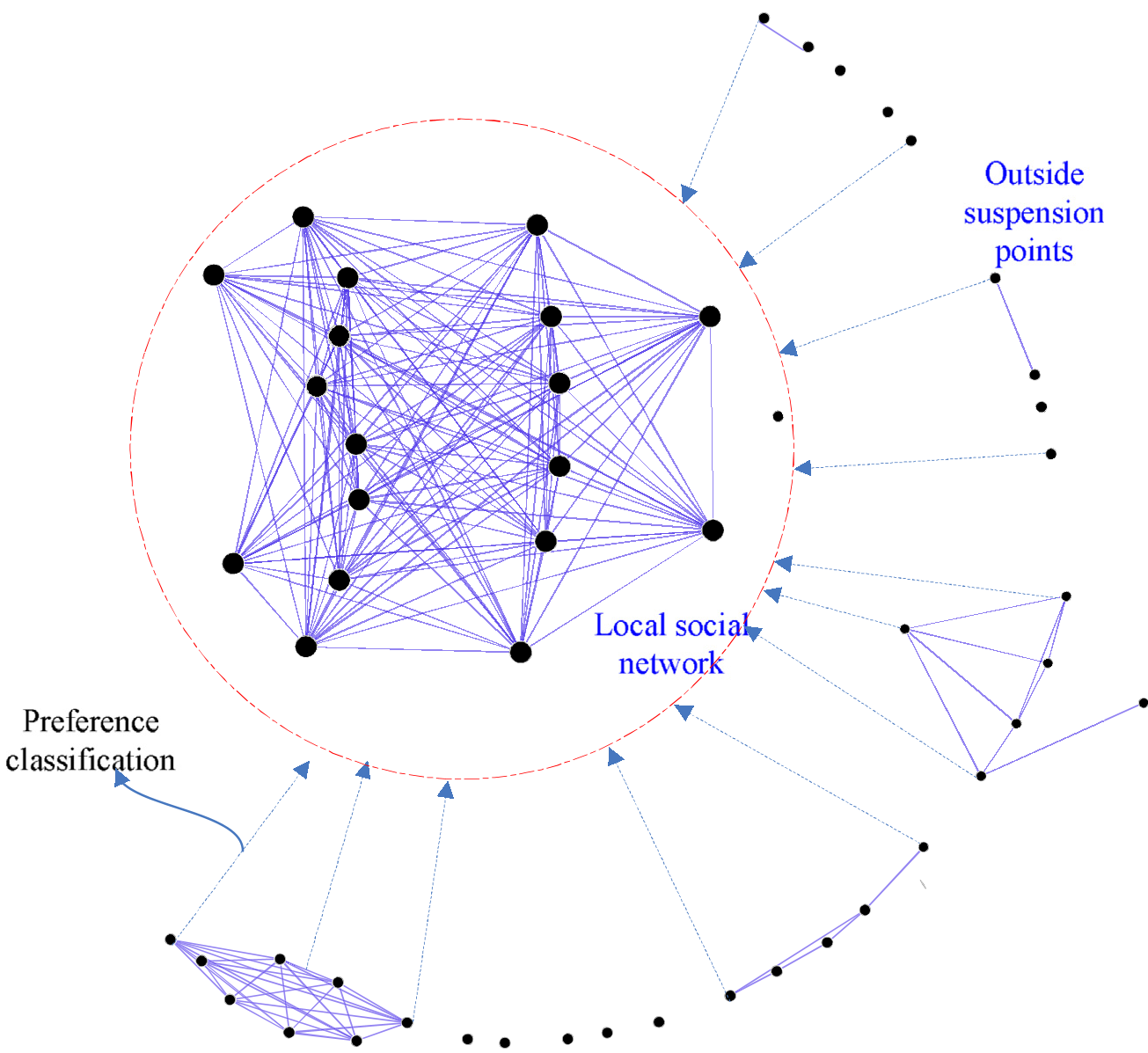
Using Spectral Clustering on the core representatives and SVM on the masses, the group is partitioned into manageable subgroups (e.g., the "Cash-Seekers" vs. the "Location-Sticklers").
Optimization: Reaching Agreement at Minimum Cost
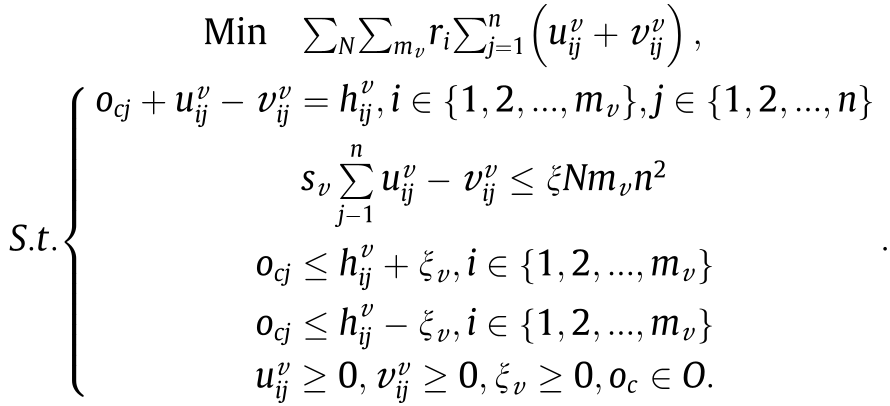
Once subgroups are defined, the problem becomes a mathematical optimization: How much "compensation" (concession) is needed to move someone’s opinion toward the group average?
The authors use Weighted Eigenvector Centrality. The logic is brilliant: Influence is Power.
- People at the center of the social network have more influence; their preferences are harder to change, so they get more weight in the final decision.
- Peripheral DMs are given higher "preference modification ranges" but are incentivized by the Minimum Cost Model.
Case Study: The "69 Mail Box" Project
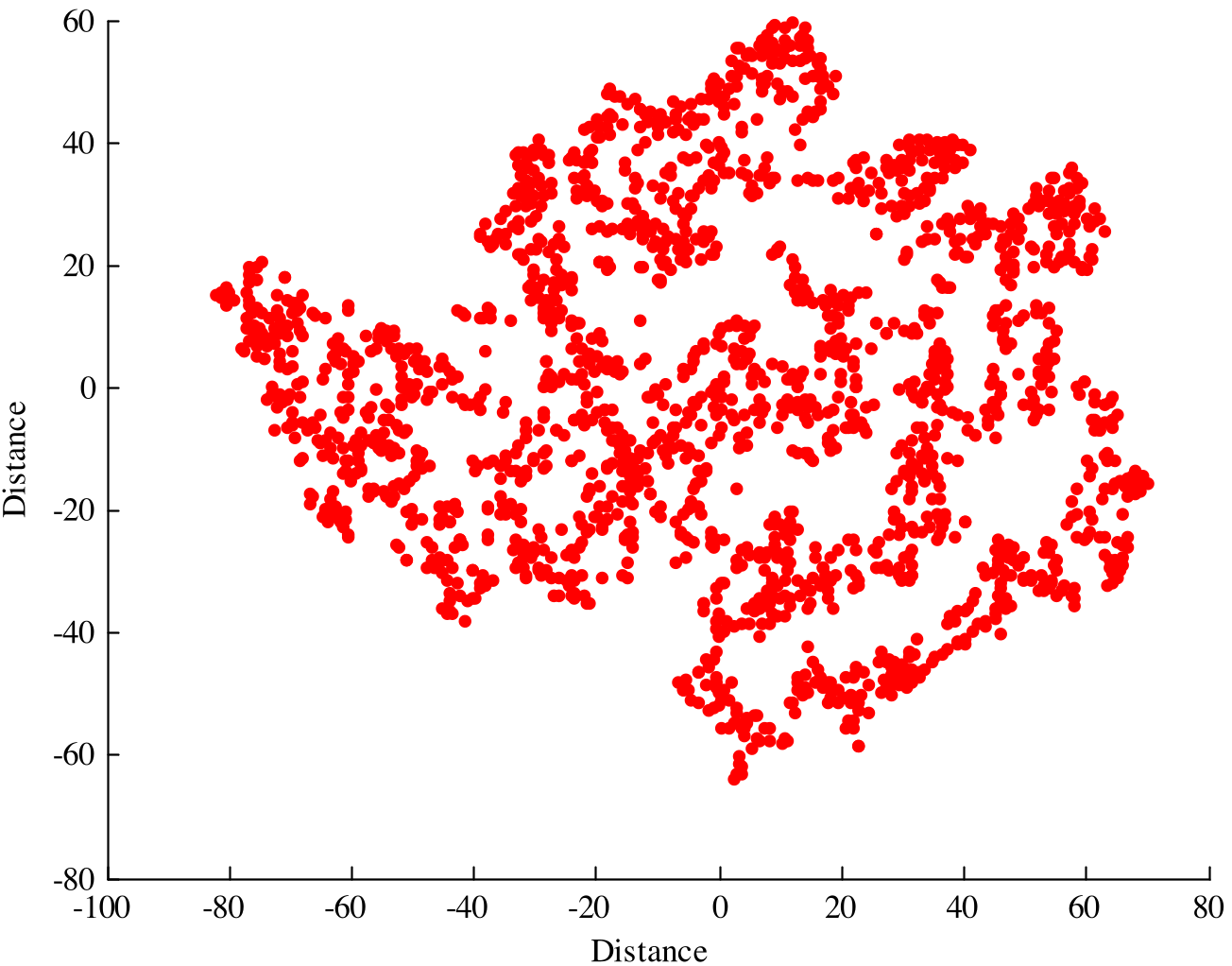
The framework was applied to a massive resettlement project in Chengdu, China. The distribution of initial preferences was chaotic (as seen in the t-SNE visualization below), proving that a "one-size-fits-all" compensation plan was bound to fail.
Results vs. Reality
| Strategy | Total Consensus Cost | Efficiency Gain |
|---|---|---|
| Average Preference | 14,934 | - |
| Developer's Plan | 15,070 | - |
| This Framework | 14,585 | Reduced cost by 2.34% - 3.22% |
In terms of actual money, the authors' method reduced the demolition budget by RMB 54.71 million ($7.85 million) compared to the real estate developer’s standard business approach.
Critical Analysis & Professional Insight
This paper elevates Group Decision-Making from a psychological exercise to an Algorithmic Governance tool.
- The Strength: It addresses the "Missing Label" problem in social networks using SVM, which is a significant leap for the LSSNGDM field.
- The Limitation: The "Unit Compensation Cost" () is treated as a linear coefficient. In real life, human stubbornness is often non-linear; the cost to move someone's opinion the "last mile" is significantly higher than the first.
- Future Impact: This could revolutionize "Financial Inclusion" and "Social Credit" systems, where group consensus is needed to grant loans to under-banked populations (as explored in Appendix E).
Conclusion
By treating social consensus as a combination of Graph Theory and Constrained Optimization, Chao et al. provide a template for resolving high-stakes social conflicts. It proves that mathematical fairness—weighting opinions by their centrality in a network—is not just more democratic, but also more cost-effective.