
Social Media in TVET: Breaking Constraints for Collaborative Learning in Nigeria
Constraints and strategies for effective use of social networking sites (snss) for collaborative learning in tertiary institutions in nigeria: perception of tvet lecturers
This study investigates the integration of Social Networking Sites (SNSs) for collaborative learning among Technical and Vocational Education and Training (TVET) lecturers in Nigeria. Using a descriptive survey of 128 educators and exploratory factor analysis, it identifies key barriers and proposes a strategic framework to transform SNSs from entertainment tools into robust pedagogical assets.
TL;DR
Social Networking Sites (SNSs) are no longer just for entertainment; they are the new frontier for vocational education. This study explores why Nigerian TVET lecturers utilize social media personally but struggle to use it professionally. By identifying 13 core constraints (from data costs to privacy fears) and 10 specific strategies, the research provides a roadmap for shifting traditional classrooms into interactive, collaborative digital hubs.
Background: The Information Age Shift
Technical and Vocational Education and Training (TVET) is at a crossroads. As the world transitions from an industrial economy to a knowledge-driven one, the delivery of vocational skills must evolve. In Nigeria, the gap between high graduate unemployment and the demand for digital fluency is widening. The authors argue that SNSs offer a "just-in-time" learning environment that enhances student engagement and mimics real-world social and employment situations.
The Core Paradox: Personal Connectivity vs. Pedagogical Absence
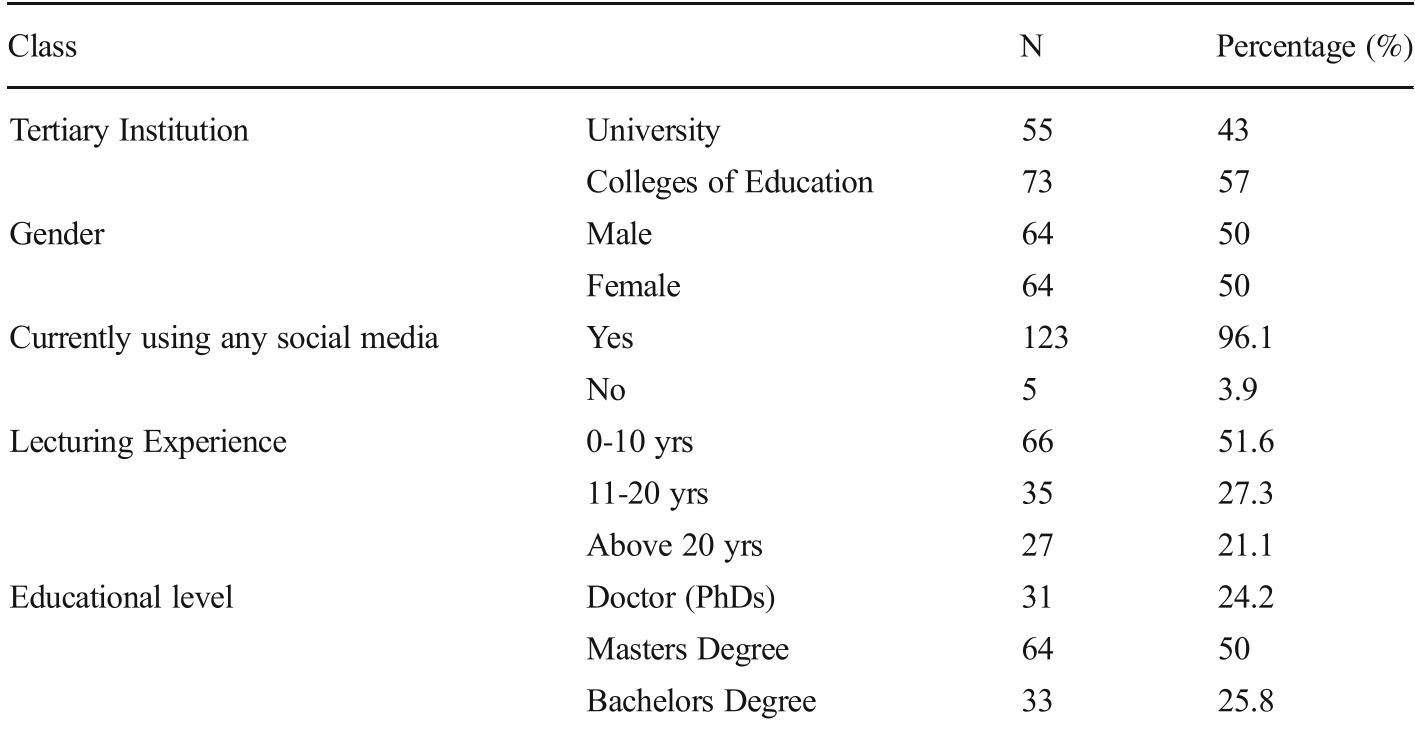
The study reveals a fascinating contradiction. While 96.1% of the surveyed lecturers are active on social media—with Facebook, WhatsApp, and ResearchGate topping the list—their use of these tools for formal teaching remains significantly low.
Why the Resistance?
The research deep-dives into the "Why" behind this hesitation, identifying several critical "Pain Points":
- Infrastructure & Cost: A lack of institutional Wi-Fi forces lecturers and students to bear the "additional cost of data subscriptions."
- Skill Deficits: Many lecturers feel they lack the specific "soft skills" to moderate an online educational group effectively.
- Privacy & Morality: Significant concerns exist regarding "sexual predators," "cyber-bullying," and the risk of losing personal data to unauthorized users.
Methodology: A Consensus Across Genders
One of the most robust findings of this study is the lack of a "gender gap" in perception. Using T-test analysis, the researchers found that male and female lecturers share nearly identical views on both the problems and the solutions. This suggests that departmental interventions can be uniform rather than gender-stratified.
Strategic Solutions (The How-To)
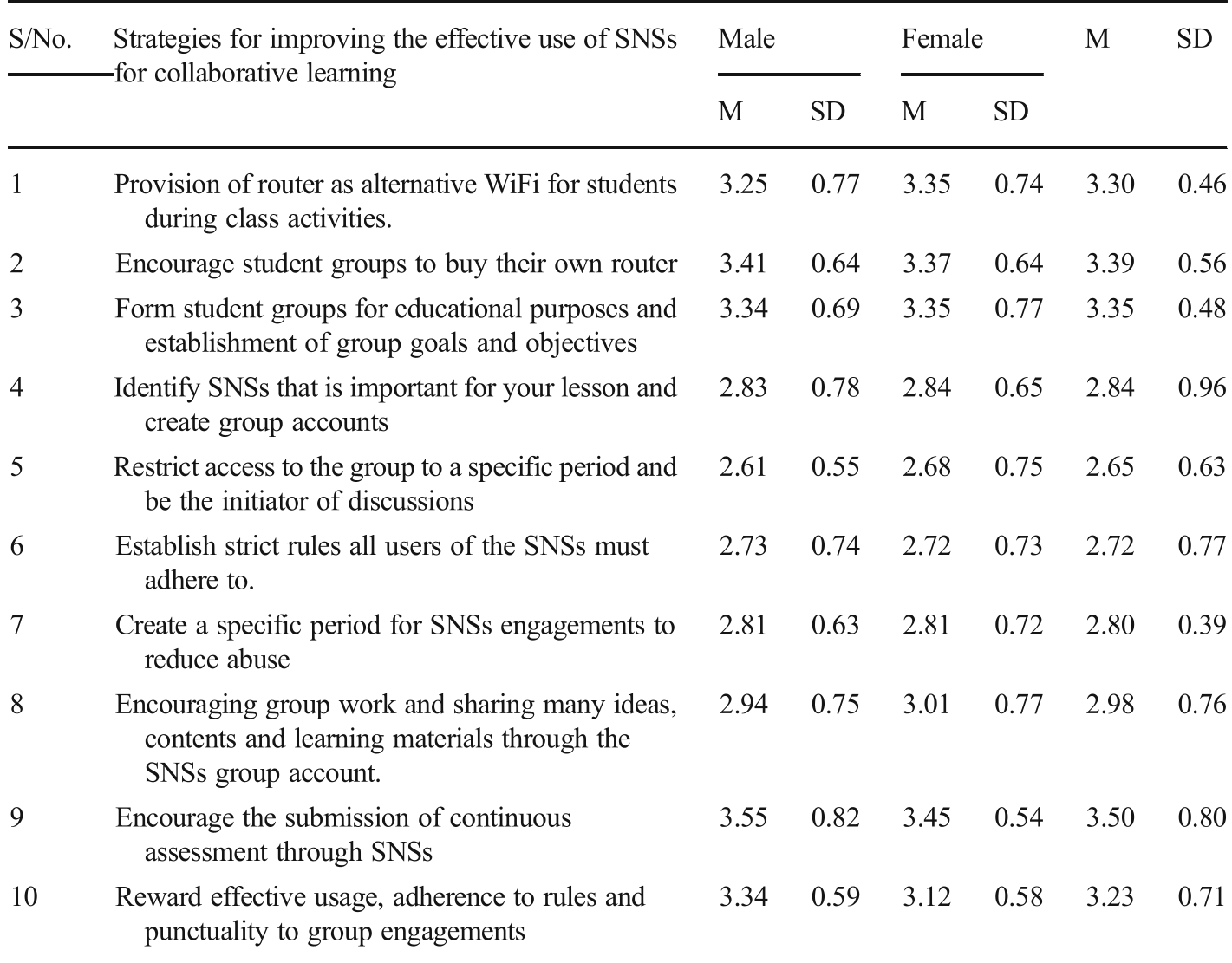
The paper doesn't just list problems; it proffers 10 actionable strategies, categorized by the researchers through factor analysis:
- Group Governance: Establishing strict rules and specific "engagement periods" to reduce abuse and maintain focus.
- Assessment Integration: Encouraging the submission of continuous assessments through SNSs to normalize professional usage.
- Infrastructure Workarounds: Encouraging student "router groups" and providing institutional routers as an alternative to expensive mobile data.
Critical Insight: Beyond the "Transmittal Model"
The paper’s most profound insight is the critique of the Transmittal Model. Without proper training, lecturers tend to use technology as a fancy digital blackboard—merely pushing information. Effective SNS integration requires the lecturer to become a "guide on the side," facilitating peer-to-peer knowledge sharing and "online collaborative problem solving."
Conclusion & Policy Future
The study concludes that TVET products in Nigeria can only be competitive in the global workplace if their instructors embrace ICT. The call to action is clear:
- For Administrators: Initiate Continuous Professional Development (CPD) focusing on digital moderating skills.
- For Policy Makers: Invest in "Model Classrooms" equipped with dedicated Wi-Fi.
By transforming social media from a "time-wasting activity" into a "virtual learning space," Nigeria can better equip its TVET students for the 21st-century labor market.
Main takeaway: Technology is already in the hands of the students; the challenge is putting the pedagogy in the hands of the technology.