
MUPI: Deciphering the EFL Teacher's Perspective on Mobile Social Learning
Construction and validation of Mobile Social Network Sites Utility Perceptions Inventory (MUPI) and exploration of English as foreign language teachers’ perceptions of MSNSs for language teaching and learning
The study develops and validates the Mobile Social Network Sites Utility Perceptions Inventory (MUPI), a 36-item instrument designed to assess English as a Foreign Language (EFL) teachers' attitudes toward using platforms like Telegram and WhatsApp. Through Exploratory Factor Analysis (EFA) and data from 184 Iranian teachers, the research identifies a robust three-factor structure (Advantages, Collaboration, and Barriers) and achieves high internal consistency (Cronbach’s Alpha = 0.93).
TL;DR
This research introduces and validates the Mobile Social Network Sites Utility Perceptions Inventory (MUPI), a comprehensive tool to measure how English teachers view mobile social platforms (like WhatsApp/Telegram). By analyzing 184 Iranian EFL teachers, the study highlights a paradoxical landscape: teachers acknowledge the massive pedagogical potential of these tools but find themselves paralyzed by institutional barriers and concerns over student distraction.
Contextual Positioning
In the digital humanities, we often assume technology adoption is a linear path from availability to implementation. However, in "developing" educational contexts, this path is obstructed by a complex web of cultural and technical friction. This study serves as a methodological bridge, providing a validated psychometric instrument to quantify these frictions in the EFL domain.
Problem & Motivation: The Research Gap
While students are "digital natives" using MSNSs for informal learning, teachers remain the gatekeepers of formal instruction. The authors identified a significant gap:
- Lack of Tools: No specialized, validated scale existed to measure teacher perceptions specific to Mobile Social Networks.
- Institutional Paradox: Mobile phones are ubiquitous in personal life but banned in ~69% of classrooms.
- The Iranian Context: High social media penetration (80%+) vs. zero official educational support creates a unique tension.
Methodology: Building the MUPI
The authors didn't just write a questionnaire; they engineered a psychometric scale.
- Qualitative Seed: Semi-structured interviews provided the "raw" themes.
- Expert Pruning: Applied linguistics and educational tech scholars reduced 56 items to 36 to ensure content validity.
- Factor Discovery: Using Exploratory Factor Analysis (EFA), the researchers mapped the 36 items into three stable cognitive "factors."
 Above: The systematic research procedure from interview to validation.
Key Findings: The Three Pillars of Perception
The EFA results categorized teacher perceptions into three specific dimensions:
1. Advantages (Factor 1)
Teachers were highly positive about using MSNSs for sharing feedback, accessing online content, and boosting student motivation. They recognized MSNSs as a "world of information."
2. Communication & Collaboration (Factor 2)
Interestingly, this was the lowest-scoring factor. Teachers still seem to favor traditional face-to-face interaction for deep academic discussions, suggesting that while MSNSs are good for "sharing," they aren't yet seen as a total replacement for the classroom "agora."
3. Barriers (Factor 3)
This is where the reality of the Iranian context hits. Major hurdles included:
- Student Distraction: The fear that social media is a toy, not a tool.
- Infrastructure: Insufficient bandwidth and outdated school hardware.
- Institutional Policies: Lack of support from school administrations.
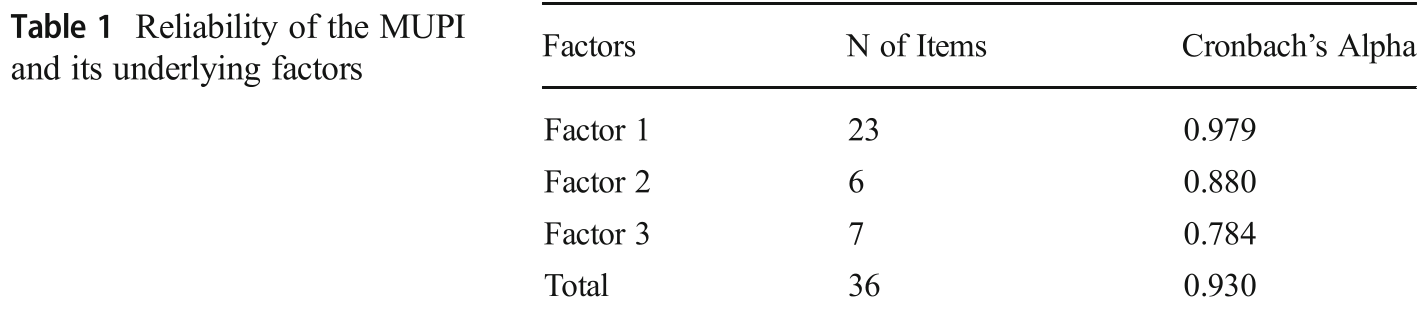 Above: The MUPI demonstrated high reliability (Total α = 0.930), making it a gold-standard tool for future research.
Critical Insight & Conclusion
The study’s most profound takeaway is that perception does not equal practice. Iranian EFL teachers are "technologically ready" but "environmentally restricted."
The "Distraction" Myth vs. Reality
One of the most significant barriers highlighted was the fear of student distraction. This suggests that modern ELT pedagogy needs to move away from "banning" and toward "integrating"—teaching students how to use their habitual platforms for cognitive gain rather than just social dopamine.
Future Outlook
For curriculum designers, the message is clear: Stop ignoring Telegram and WhatsApp. These are the primary environments where language is actually being consumed and produced by students today. The MUPI scale provides the necessary data-driven foundation to begin reforming teacher education programs to include MSNS-based pedagogy.
Limitations: The study heavily skewed female (74%) and focused on private institutes. Future validation should seek balance in gender and public school representation.