
Instagram Acceptance: Why Hedonism and Habit Rule the Social Feed
Consumer Acceptance and Use of Instagram
This study extends the Unified Theory of Acceptance and Use of Technology 2 (UTAUT2) to investigate consumer behavior on Instagram. It introduces "self-congruence" as a key driver and establishes a link between use behavior and "user indegree" (follower count), achieving a high variance explanation (67% for intention, 46% for use).
TL;DR
Why do we keep scrolling through Instagram? This study applies the UTAUT2 framework to discover that Hedonic Motivation (fun) and Habit are the true engines behind Instagram usage. By replacing "price" with Self-Congruence, the researchers explain 67% of why we intend to use the app and prove that your follower count (user indegree) is a direct, experience-moderated result of consistent use behavior.
Background: Moving Beyond the Office
Traditional models like TAM or the original UTAUT were built to answer why employees use Excel or ERP systems. In those settings, "Performance Expectancy" (efficiency) was king. However, Social Networking Services (SNSs) are voluntary and inherently social. This paper shifts the focus from "work utility" to "consumer pleasure," testing the UTAUT2 model on 187 Instagram users to see what actually drives digital engagement.
Problem & Motivation: The Free Choice Paradox
Existing models often fail in the SNS context because:
- The Price is Zero: Most SNSs are free, making "Price Value" irrelevant.
- The Goal is Social: Users don't just use the app; they seek to build an identity and influence.
- The Logic is Hedonic: We don't use Instagram to save time; we use it to spend time enjoyably.
The authors' insight was to replace cost-benefit analysis with Self-Congruence—the feeling that "people like me use this app"—and to treat the number of followers as a measurable outcome of technology use.
Methodology: The Adapted UTAUT2 Model
The researchers modified the UTAUT2 architecture to fit the SNS ecosystem. They dropped "Price Value" and added "Self-Congruence" and "User Indegree."
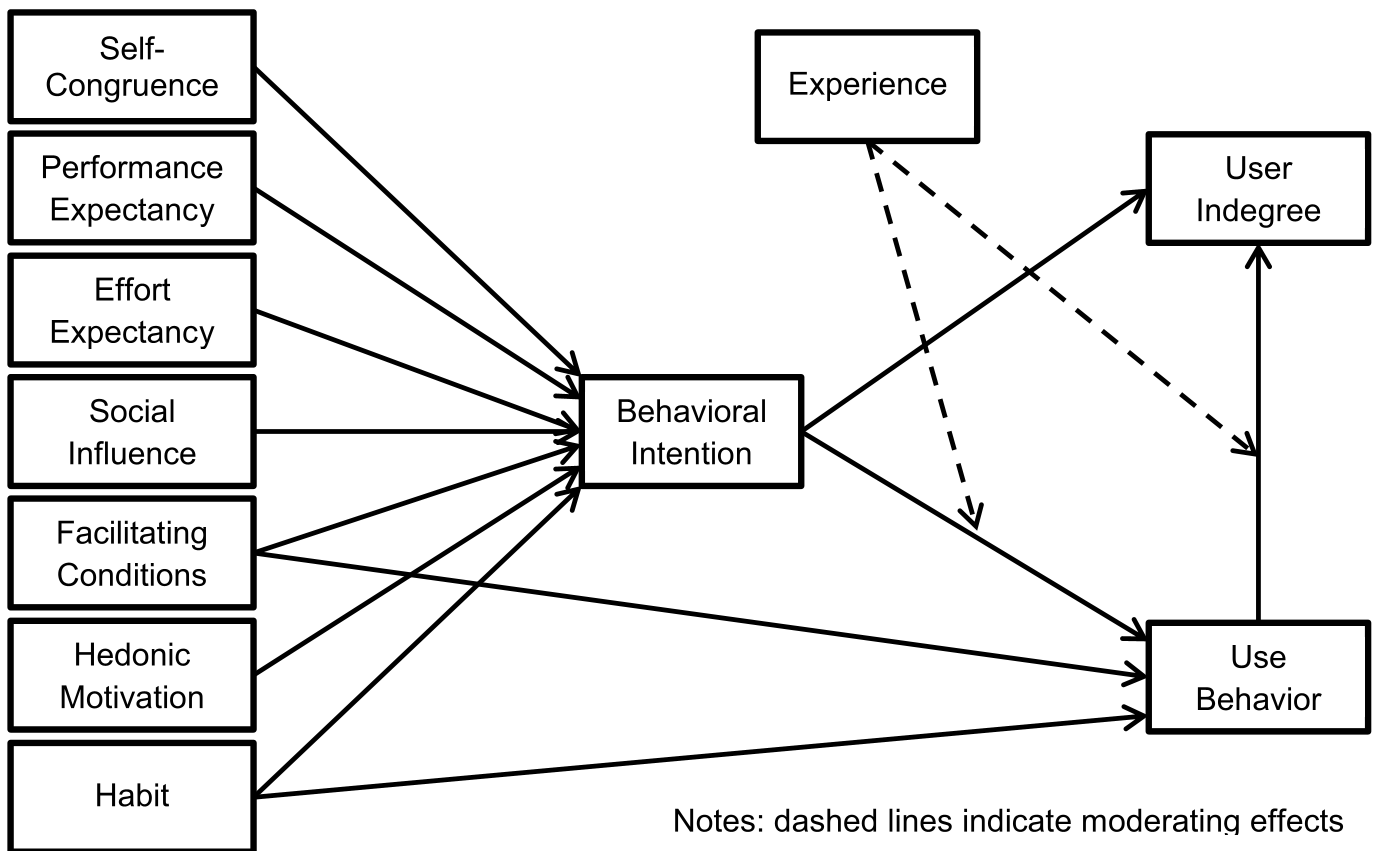 Figure 1: The modified UTAUT2 framework featuring Self-Congruence and User Indegree.
The model was tested using Partial Least Squares Structural Equation Modeling (PLS-SEM), which is highly effective for identifying the strongest predictors within a complex set of behavioral variables.
Core Findings: Pleasure Over Productivity
The results provide a fascinating look at our social media psychology:
- The Power of Fun: Hedonic Motivation was the strongest driver of behavioral intention. If it’s not fun, users won't plan to stay.
- The Habit Loop: Once usage begins, Habit becomes a much stronger predictor of actual behavior than conscious Intention. We use Instagram because we are used to using it, not necessarily because we "decide" to.
- Social Influence doesn't matter?: Surprisingly, Social Influence (what important people think) was not significant. In a voluntary hedonic context, personal enjoyment outweighs social pressure.
- The Follower Formula: Use behavior directly leads to a higher User Indegree. Interestingly, Experience acts as a moderator; as you gain more experience, your active behavior becomes even more effective at attracting followers.
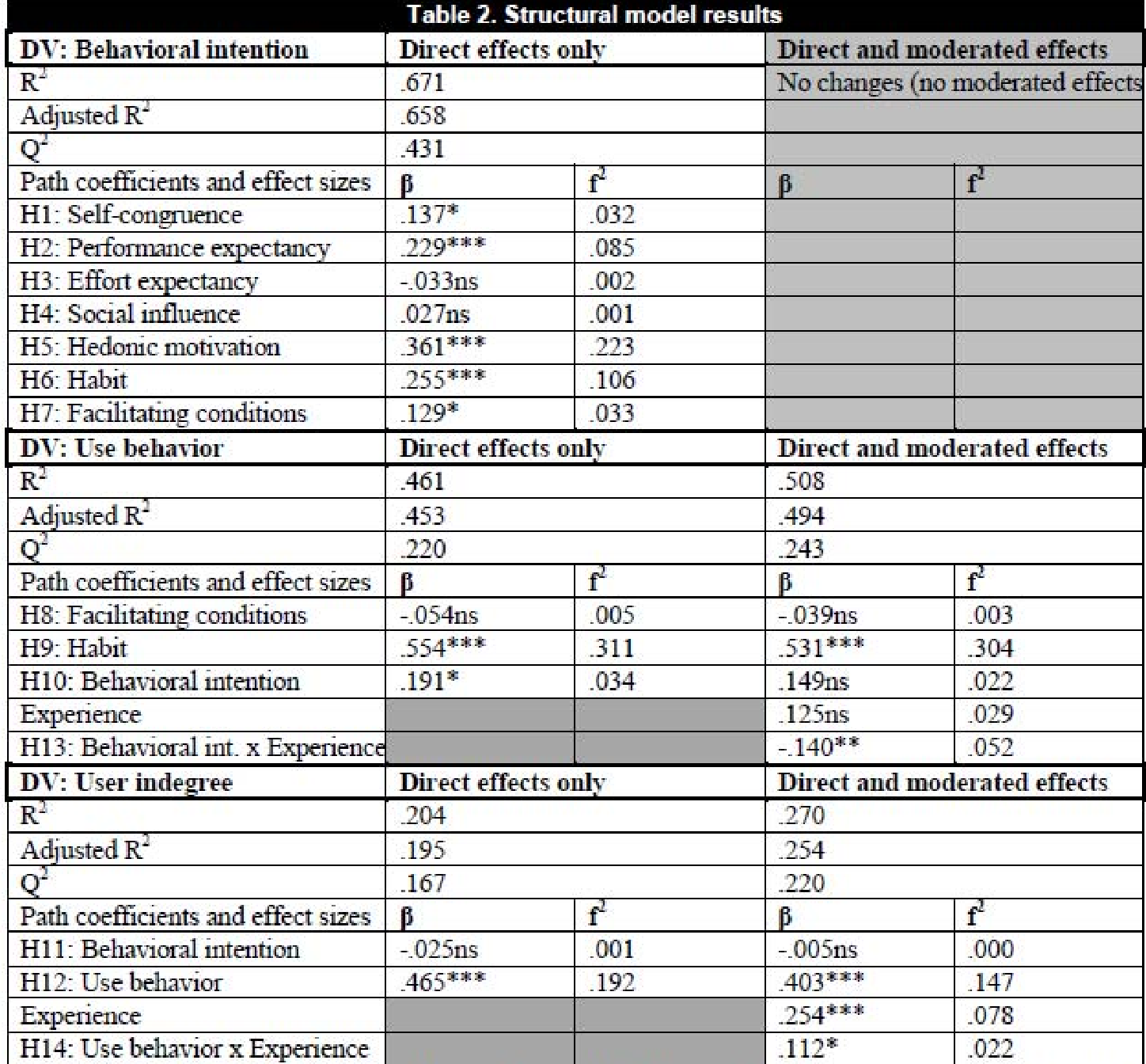 Table 2: Structural model results showing significant paths for Hedonic Motivation and Habit.
Critical Analysis & Conclusion
Takeaway
For platform developers and marketers, the message is clear: Entertainment is the primary value proposition. To grow an SNS, you must facilitate habit formation by removing friction and maximizing the co-creation of "fun" content between users.
Limitations
- Geographic Bias: 86.6% of respondents were from Europe, potentially overlooking cultural differences in social media adoption.
- Self-Reporting: Both usage and follower counts were self-reported, which can introduce bias compared to server-side logs.
Future Outlook
This study paves the way for "Identity-driven" technology models. As we move into the era of the "Creator Economy," understanding how Self-Congruence and Habit convert into Social Influence (Indegree) will be vital for anyone building the next generation of digital communities.