
Decoding the Digital Fashionista: How Community Structure Shapes Brand Influence
Analysis of Consumer Community Structure and Characteristic Within Social Media
This paper presents a framework for analyzing consumer community structures and content characteristics on SNSs, specifically targeting the fashion brand Michael Kors Japan on Twitter. By combining Social Network Analysis (SNA) with Latent Dirichlet Allocation (LDA), the authors identify distinct consumer clusters and their specific interests to optimize Social Media Marketing (SMM) strategies.
TL;DR
Not all followers are created equal. This research analyzes 30,000+ followers of Michael Kors Japan to prove that consumer networks are organized into a "Core-Periphery" structure. By combining graph theory (Modularity) with AI-driven text mining (LDA), the study offers a roadmap for brands to move beyond "spray and pray" marketing toward "cluster-specific" engagement, significantly lowering the cost of information diffusion.
The "One-Size-Fits-All" Marketing Trap
In the era of Social Media Marketing (SMM), brands often measure success by total follower count. However, this paper argues that the topology of those followers is what actually dictates ROI. Some communities are dense clusters of enthusiasts (low diffusion cost), while others are scattered individuals (high diffusion cost). The missing link in current research is a methodology that simultaneously answers: "Who is connected to whom?" and "What are they actually talking about?"
Methodology: The Fusion of Structure and Semantics
The researchers developed a three-stage workflow to bridge the gap between social structure and consumer intent.
1. Building the Weighted Network
Instead of simple binary connections, the authors used the Dice Coefficient to weight the similarity between followers based on their shared followings. This ensures that the "strength" of a digital relationship is mathematically grounded.
2. Community Detection via Modularity
By maximizing the Modularity () value, the network was partitioned into communities where internal connections are dense and external connections are sparse.
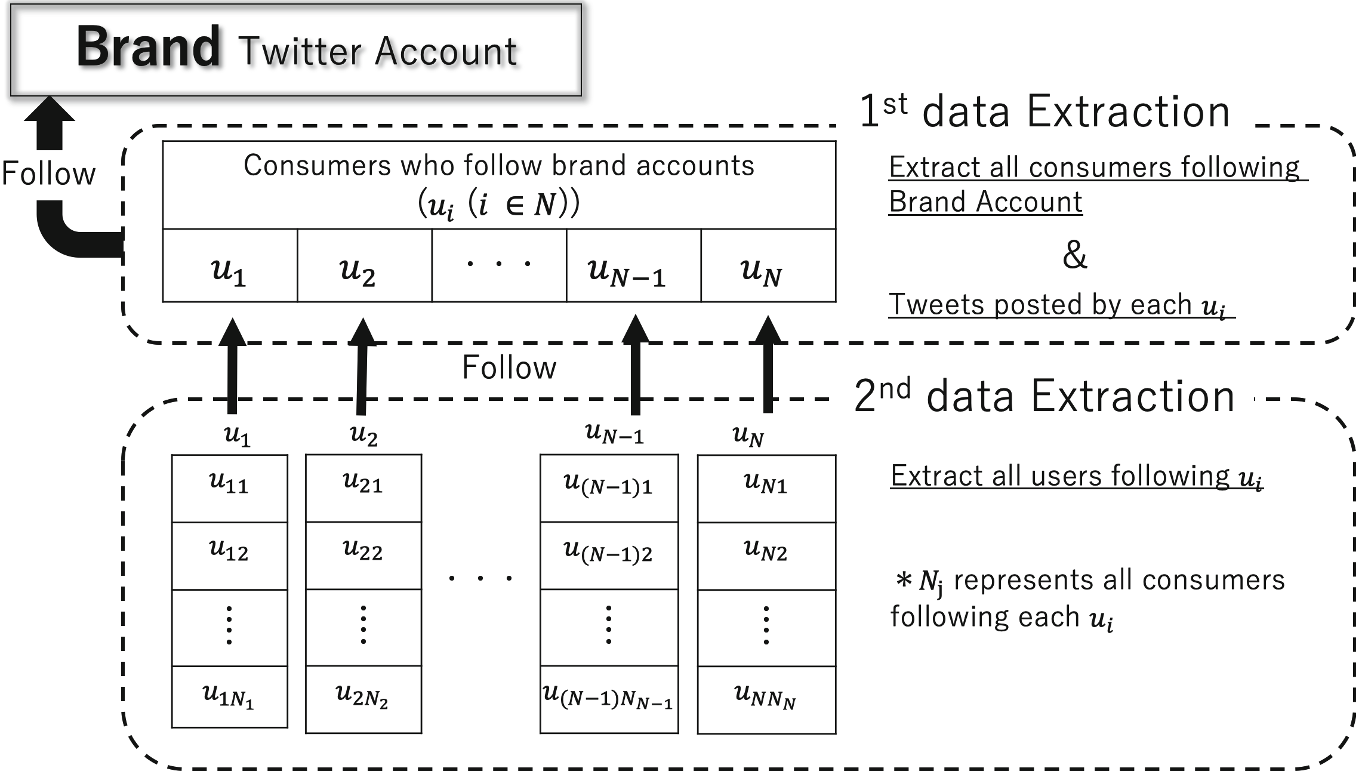 Fig 1: The overall workflow from data extraction to community and topic analysis.
3. LDA Topic Modeling
Using Latent Dirichlet Allocation (LDA), the authors extracted 10 core topics from thousands of consumer posts. These ranged from "Gift Promotions" and "Cosmetics" to "Celebrity/Model Support" and "Daily Conversations."
Key Findings: The Anatomy of a Brand Network
The study visualized a network of 309 primary nodes and 826 edges, uncovering a fascinating "Core Community" hierarchy.
- The Core (Large-scale): Dominated by a few massive communities (e.g., Community 2). These are the "influencers" with the highest PageRank average. They are the bridge-builders of the network.
- The Satellites (Medium-scale): High-density, independent clusters located around the core. They are self-contained and don't rely on other groups.
- The Fringe (Small-scale): Isolated groups of 2-6 nodes scattered on the outskirts.
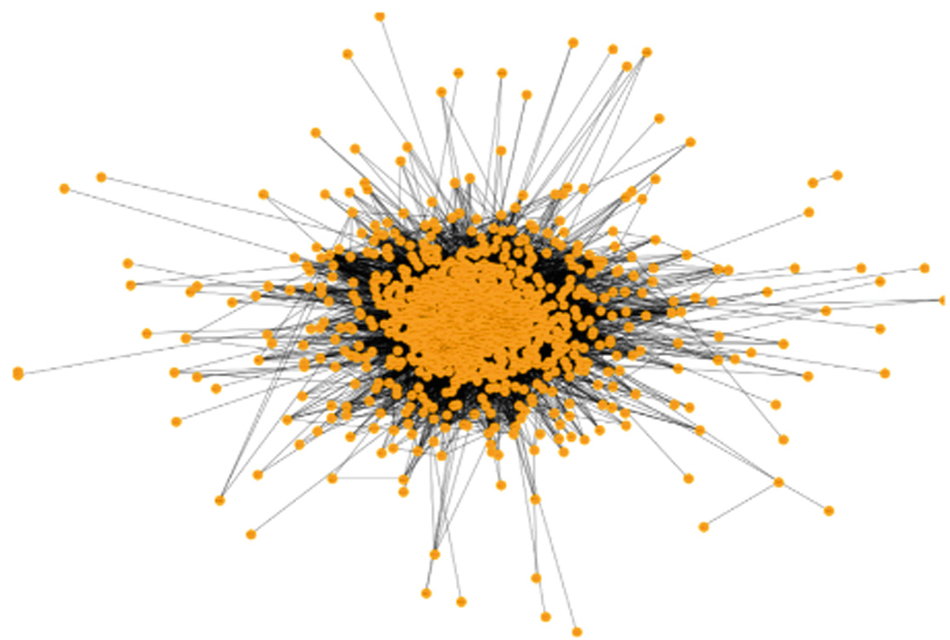 Fig 2: The visualization of the consumer network showing the dense core and scattered periphery.
Strategic Insights: Why This Matters for SMM
The real "aha!" moment comes when mapping these clusters to their interests using Bipartite Graphs.
- Targeting the Core: Community 2 (the most influential) showed a high affinity for Topic 3 (Celebrities). For Michael Kors, this means promotions featuring their brand ambassadors will resonate most strongly here, triggering the widest diffusion.
- Niche Engagement: Community 5 is obsessed with Topic 1 (Gifts/Giveaways). Sending celebrity news here might fail, but a coupon code or a contest will drive massive engagement.
- Efficiency Gains: By understanding that Medium-scale communities are independent, marketers can avoid "double-dipping" ad spend on overlapping groups.
Critical Analysis & Conclusion
Takeaway
The study successfully demonstrates that a brand's SNS presence is a "network of networks." By identifying the Core Community, brands can find the most efficient path for information to travel.
Limitations & Future Work
While robust, the study relies on a snapshot of data from 2019. Social networks are dynamic and fluid. The authors acknowledge that the next frontier is Time-Series Analysis—tracking how a piece of information actually moves through these clusters in real-time to identify "Information Super-spreaders."
For brands, the message is clear: Stop looking at your follower list as a number. Start looking at it as a map.