
Decoding the Viral DNA: Why Anger Wins and Over-Emotion Fails
Content Virality on Online Social Networks: Empirical Evidence from Twier, Facebook, and Google+ on German News Websites
This paper presents a cross-platform empirical study on content virality by analyzing 4,278 German news articles across Twitter, Facebook, and Google+. Utilizing human classifiers and text mining (SentiStrength), the authors identify how emotionality and article characteristics drive sharing behavior, establishing that while anger consistently boosts virality, general emotionality ironically hinders it in the German media context.
TL;DR
Is a viral hit purely luck, or is it engineered? By analyzing over 4,000 German news articles, researchers have mapped the "sharing DNA" of Twitter, Facebook, and Google+. The verdict: Anger is a universal fuel for virality, but contrary to popular belief, overly emotional writing might actually drive your readers away.
Background Positioning
In the landscape of social science and data mining, this study serves as a critical bridge between Psychology (what we feel) and Network Science (how we share). While previous work by Berger & Milkman (2012) looked at the New York Times, this paper expands the horizon to a multi-platform, cross-network comparison, providing a SOTA snapshot of how digital audiences in a major European market consume news.
The "Emotional Inhibition" Paradox
The most striking insight from the authors is the Negative Effect of General Emotionality. While we often assume "emotional" content goes viral, this study finds that in the context of German journalism, highly emotional articles are shared less frequently.
Why? The researchers suggest an "Objectivity Bias": readers of high-quality news value neutrality and facts. When an article feels too "clickbaity" or emotionally charged, it loses its perceived investigative value, leading users to refrain from hitting the "Share" button.
Methodology: The Science of the Share
The researchers didn't just look at "Likes." They used a sophisticated Negative Binomial Regression model to handle the "long-tail" nature of social media—where most posts get zero shares and only a tiny few explode.
The Variable Blueprint
- Sentiment Analysis: Using SentiStrength to quantify positivity vs. negativity.
- Human Intuition: Four coders manually rated articles for "Awe," "Anger," and "Practical Utility."
- Technical Controls: Factoring in "Author Fame," "Writing Complexity," and even the "Number of Pictures."
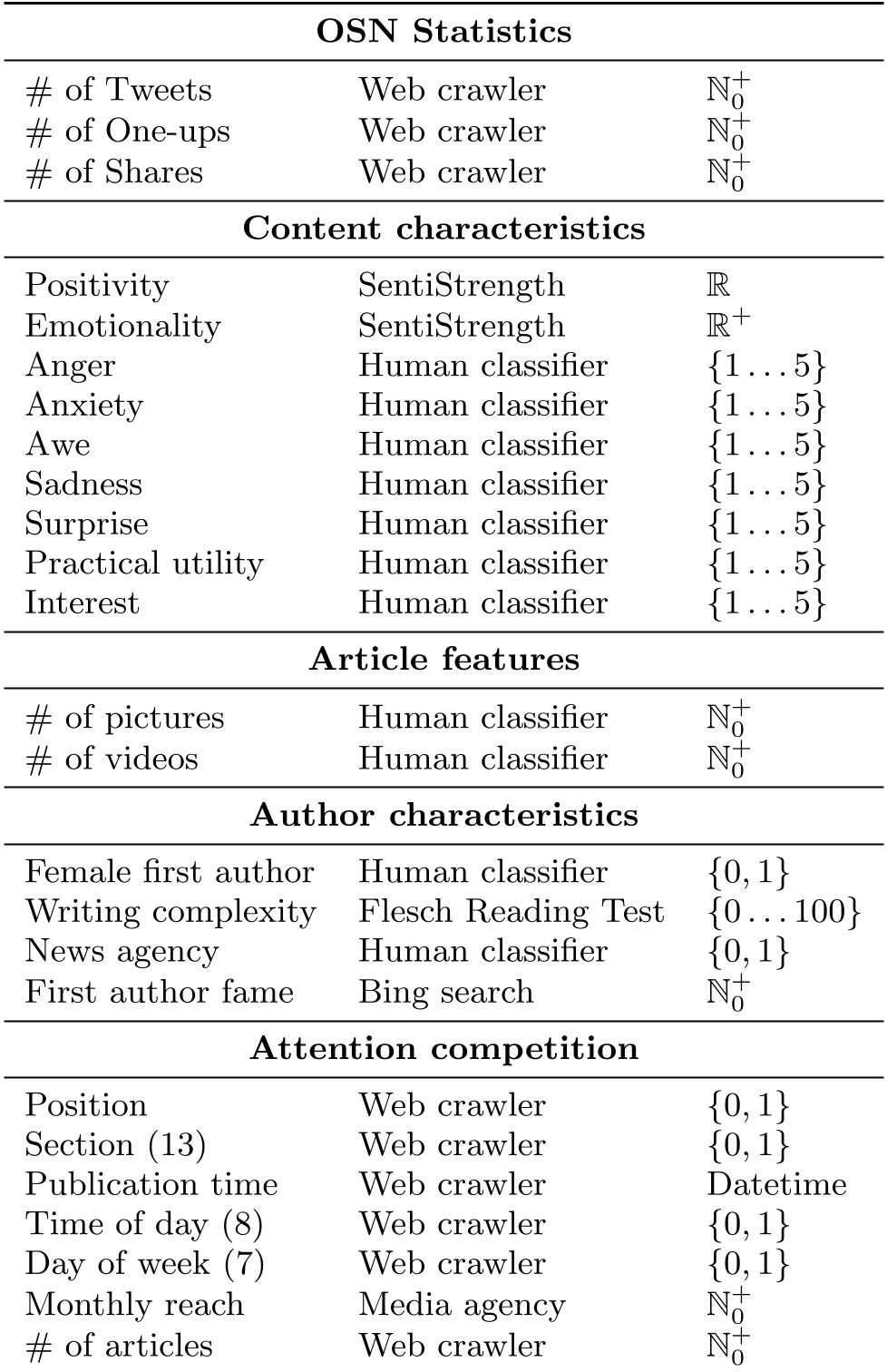 Table 1: The multi-dimensional dataset capturing OSN statistics, content traits, and attention competition.
Key Results: Platform-Specific Personalities
The study proves that social networks have "personalities" that dictate what goes viral:
- The Anger Universal: Anger is the strongest predictor of virality across all platforms. If a story makes people mad (e.g., a cycling disqualification or a political scandal), they will share it.
- Facebook's Niche: Facebook users are driven by Awe and Interest, but they are significantly less likely to share "Practical Utility" (how-to) news articles compared to other platforms.
- The Professional Duo: Twitter and Google+ users are remarkably similar, showing a high preference for Politics, Technology, and Science.
- The "Originality" Premium: Content sourced from news agencies (DPA, etc.) saw a massive drop in sharing. Users demand the "unique take" of a magazine's own journalists.
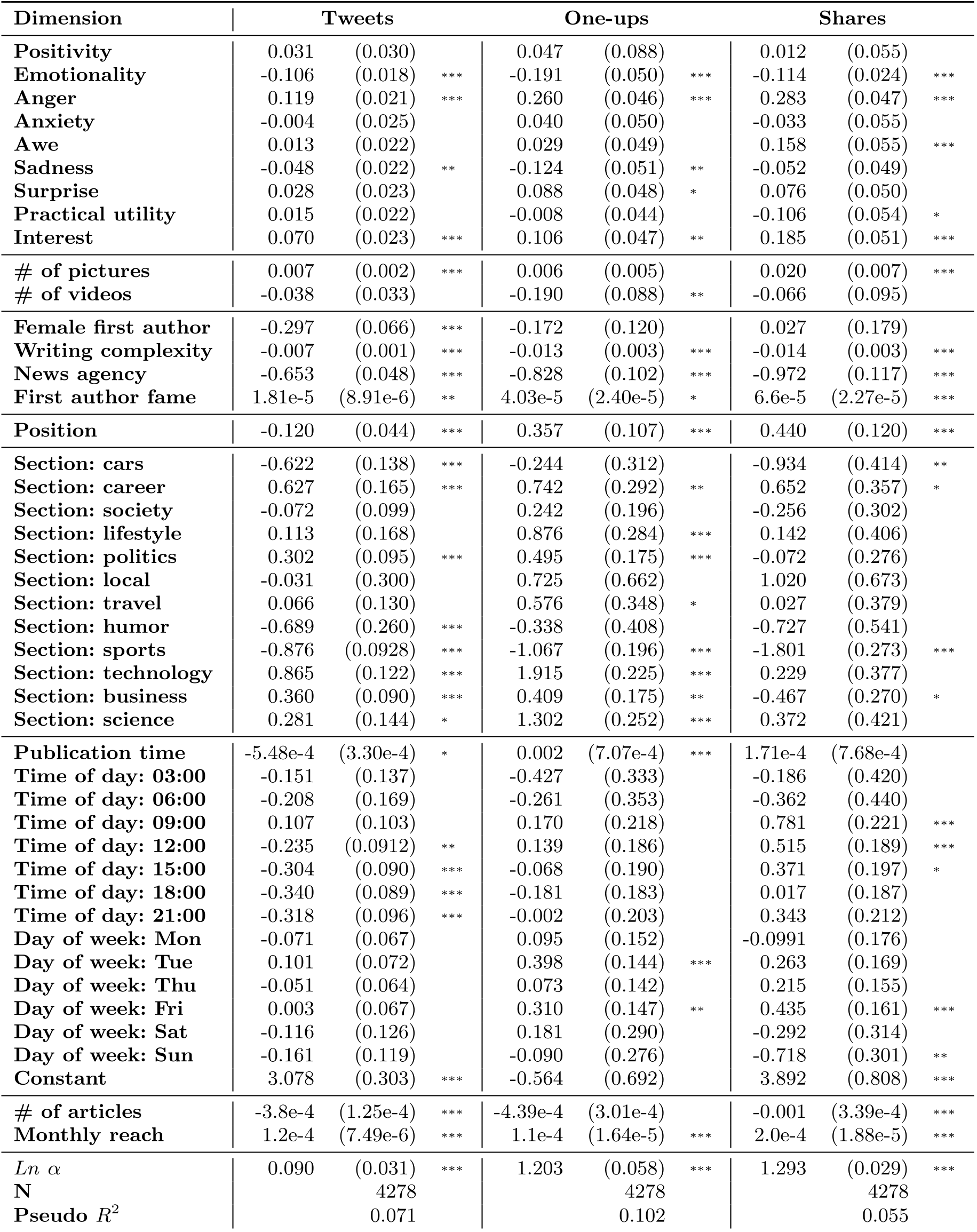 Table 4: Regression results showing how different emotions and sections impact Tweets, One-ups, and Shares.
Critical Insight: The Author's "Fame" Factor
The data confirms a "Matthew Effect": the rich get richer. Author Reputation and Main Page Placement remain dominant predictors of virality. Technical complexity (high Flesch-Reading-Ease) also surprisingly correlates with more shares, suggesting that for news, readers equate "sophisticated writing" with "share-worthy authority."
Conclusion & Future Outlook
This work highlights that virality is a transaction. Users share content to signal their identity:
- Sharing a Science article on Google+ signals intelligence.
- Sharing an Angry post on Facebook signals social alignment.
Limitations: The study focuses on 2012 data. In the age of AI-curated feeds (TikTok/Reels), the "Attention Competition" has intensified. However, the core psychological triggers—Anger, Awe, and Originality—remain the fundamental pillars of the social web.
Takeaway for Creators: If you want to go viral, don't just be "emotional"—be interestingly provocative. And more importantly, know your room: Science belongs on Twitter; Awe belongs on Facebook.