
Integrating Fuzzy Logic and Context-Awareness: A New Frontier for Supply Chain Finance
Integrating Context-Aware and Fuzzy Rule to Data Mining Model for Supply Chain Finance Cooperative Systems
This paper introduces a context-aware and fuzzy rule-based data mining model tailored for Supply Chain Finance (SCF) cooperative systems. It integrates multi-agent simulations of banks, buyers, and suppliers with fuzzy logic to optimize decision-making and profit maximization across the entire supply chain network.
TL;DR
This research presents a sophisticated data mining model for Supply Chain Finance (SCF) that combines Multi-Agent Systems (MAS), Context-Awareness, and Fuzzy Logic. By treating banks, suppliers, and buyers as intelligent agents, the model extracts deep insights from cooperative interactions and optimizes financial decision-making through fuzzy "if-then" rules.
Contextual Intelligence: The Missing Link in SCF
In the world of Supply Chain Finance, data is abundant but often lacks "context." Prior works largely focused on transactional data—who bought what and when. However, they ignored the relational context: the intricate cooperative bonds between entities that influence creditworthiness and operational efficiency.
The author argues that a truly intelligent SCF system must be Context-Aware, meaning it senses, interprets, and adapts to the specific situation of the buyers and suppliers. Without this, data mining remains a reactive tool rather than a proactive strategic asset.
Methodology: The Three Pillars of Cooperation
The proposed architecture is built upon three distinct layers designed to transform raw data into actionable financial intelligence:
1. Multi-Agent Simulation Model
The system simulates the SCF environment using specialized agents representing the Bank, the Buyer, and the Supplier. These agents interact over a company's network, mimicking real-world negotiation and transaction flows.
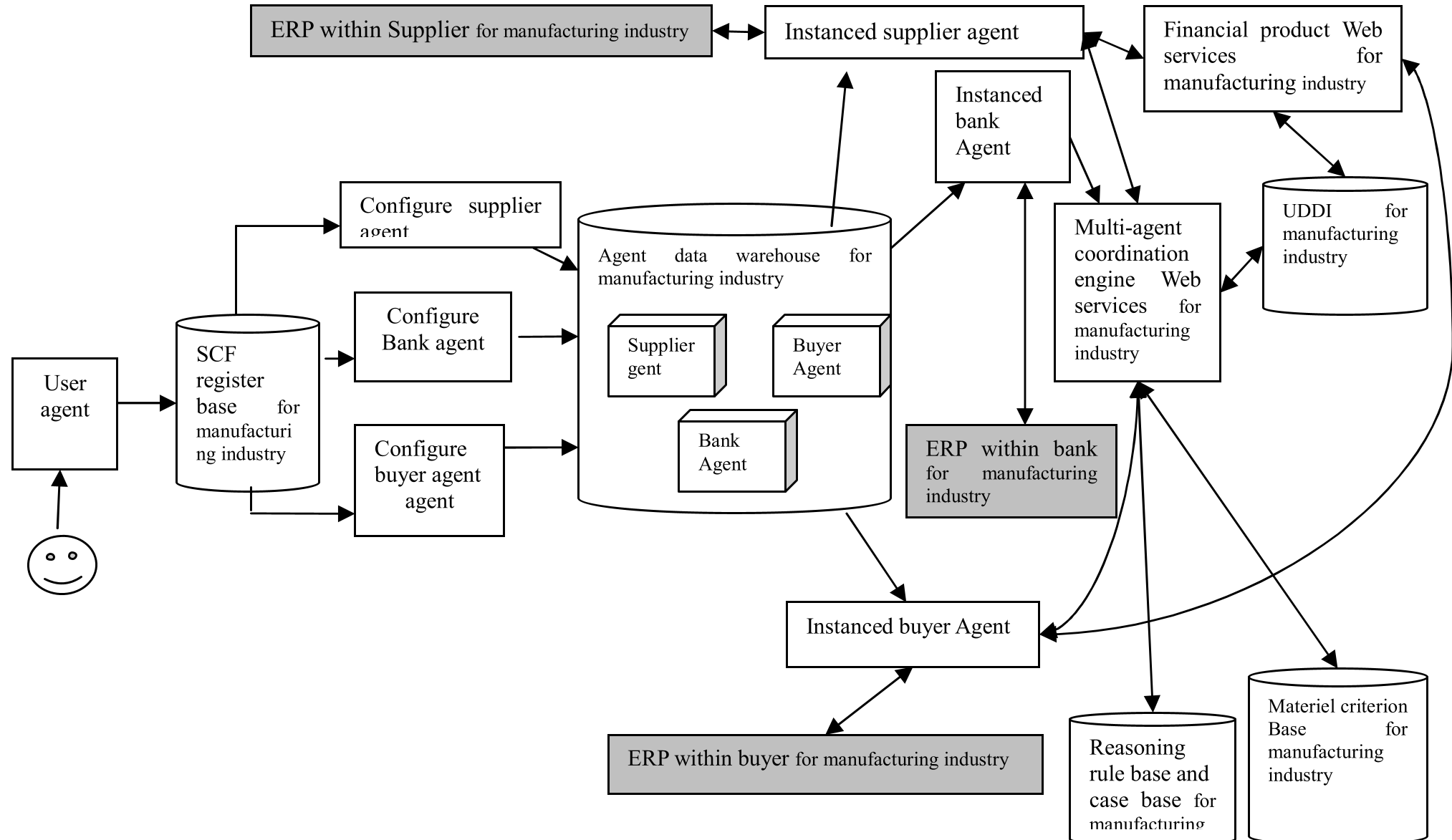 Fig 1. The abstract level of the simulation model for enterprise supply chain finance cooperative systems.
2. Context-Aware Preprocessing (The "Picks")
To handle the fuzzy nature of business data, the model uses:
- Horizontal/Vertical Picks: Selecting specific tuples (rows) or fields (columns) based on the context (e.g., picking specific financial health indicators during a market downturn).
- Fuzzy If-Then Rules: Generating rules like: “If supplier reliability is HIGH and bank liquidity is MEDIUM, then Classify as LOW RISK.”
3. Objective Function Optimization
Unlike models that only seek to maximize individual profit, this model introduces a global coordination function: This ensures that the "Bank Agent" acts as a coordinator, balancing the health of the entire ecosystem.
Implementation & Experimental Insight
The prototype was developed using ASP.NET and C#, leveraging SQL Server 2005 for the underlying data warehouse. The system demonstrated its ability to deliver context-relevant information (such as targeted financial products or advertisements) as specific supply chain events occurs.
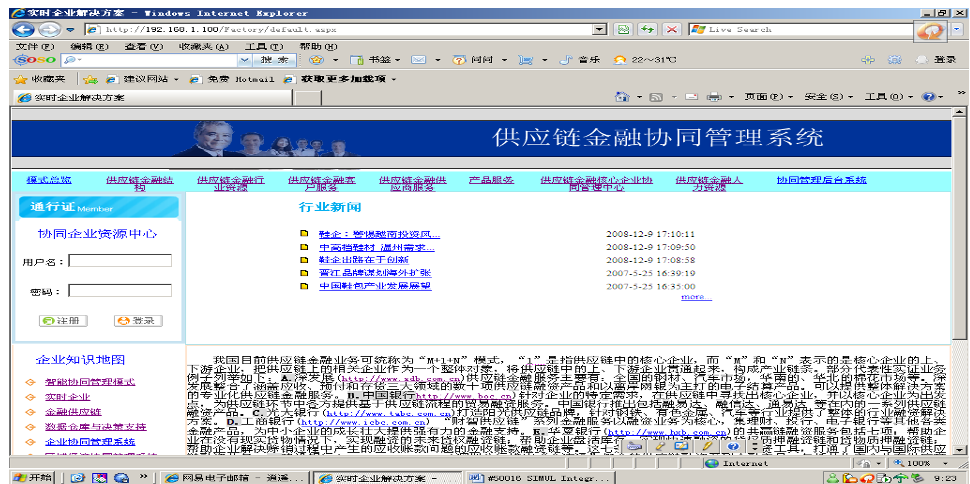 Fig 2. Functions of the case for enterprise supply chain finance cooperative systems.
The implementation proves that bridging the gap between raw data collection (via ADO.NET) and high-level reasoning (via Fuzzy Logic) is technically feasible and operationally beneficial for complex manufacturing networks, such as the footwear industry mentioned in the case study.
Critical Analysis & Future Outlook
Strengths:
- Holistic View: It moves beyond the "siloed" profit-seeking behavior to a cooperative "win-win-win" model.
- Flexibility: The use of fuzzy logic handles the inherent uncertainty and qualitative nature of business relationships.
Limitations:
- The paper lacks extensive benchmark comparisons against other modern AI methods like Graph Neural Networks (GNNs).
- Real-time processing of massive datasets across distributed networks remains a scalability challenge.
Takeaway: This work serves as a foundational blueprint for modern "Smart Finance" systems. By integrating context-aware data mining, organizations can finally turn their supply chain data into a strategic defensive moat and an offensive growth engine.