
Decentralized Adaptation: Reforming COPD Telemonitoring with Context-Aware Architectures
Context-Aware Healthcare Adaptation Model for COPD Diseases
This paper introduces a decentralized, context-aware self-adaptive architecture designed specifically for the telemonitoring of Chronic Obstructive Pulmonary Disease (COPD) patients. The framework utilizes a specialized adaptation engine and a rule-based reasoning system to dynamically adjust healthcare interventions based on real-time biometric, environmental, and activity data.
TL;DR
Managing Chronic Obstructive Pulmonary Disease (COPD) requires more than just passive data collection; it demands a system that "thinks" and "adapts" to a patient's changing environment. This paper presents a self-adaptive architecture that breaks down complex medical data into specialized monitoring units (Biometrics, Environment, Activities), allowing for real-time risk detection and proactive intervention through a decentralized rule-based engine.
The Challenge: The Data Deluge in Chronic Care
COPD is currently the fourth leading cause of death globally and is rapidly climbing to third. While home telemonitoring is a promising solution to reduce hospitalizations, it faces a technical bottleneck: Contextual Overload.
Traditional systems often struggle to process the simultaneous streams of heart rate, oxygen levels, air quality, and physical activity. Without a way to filter this data through the lens of medical expertise in real-time, the system becomes a "dumb" pipe rather than a clinical tool. The authors argue that existing solutions lack a comprehensive proposal for a system that can self-adapt its logic as the patient’s context changes.
Methodology: Decentralization via Separation of Concerns
The core innovation lies in its Self-Adaptation Engine, which deviates from traditional monolithic structures by adopting a decentralized, aspect-oriented approach.
1. The Global State & Shared Memory
Instead of units communicating directly, the system utilizes a Global State. This shared memory serves as the "single source of truth," divided into sub-states for biometrics, environment, and activities.
2. Specialized Adaptation Subunits
The architecture splits the adaptation logic into three distinct units:
- Biometrics Unit: Focuses on vital biomarkers (e.g., SpO2, Heart Rate).
- Environmental Unit: Monitors external risks (e.g., humidity, pollutants).
- Activities Unit: Tracks physical movements (e.g., walking, resting).
3. Rule-Based Reasoning
Utilizing the W5H-Pattern (Who, What, Where, When, Why, How), the authors define exactly how the system behaves. By using an ontology-based approach with SWRL rules, the system doesn't just monitor; it compares current values against "safe ranges" that are themselves dynamically adjusted based on the patient's current activity level.
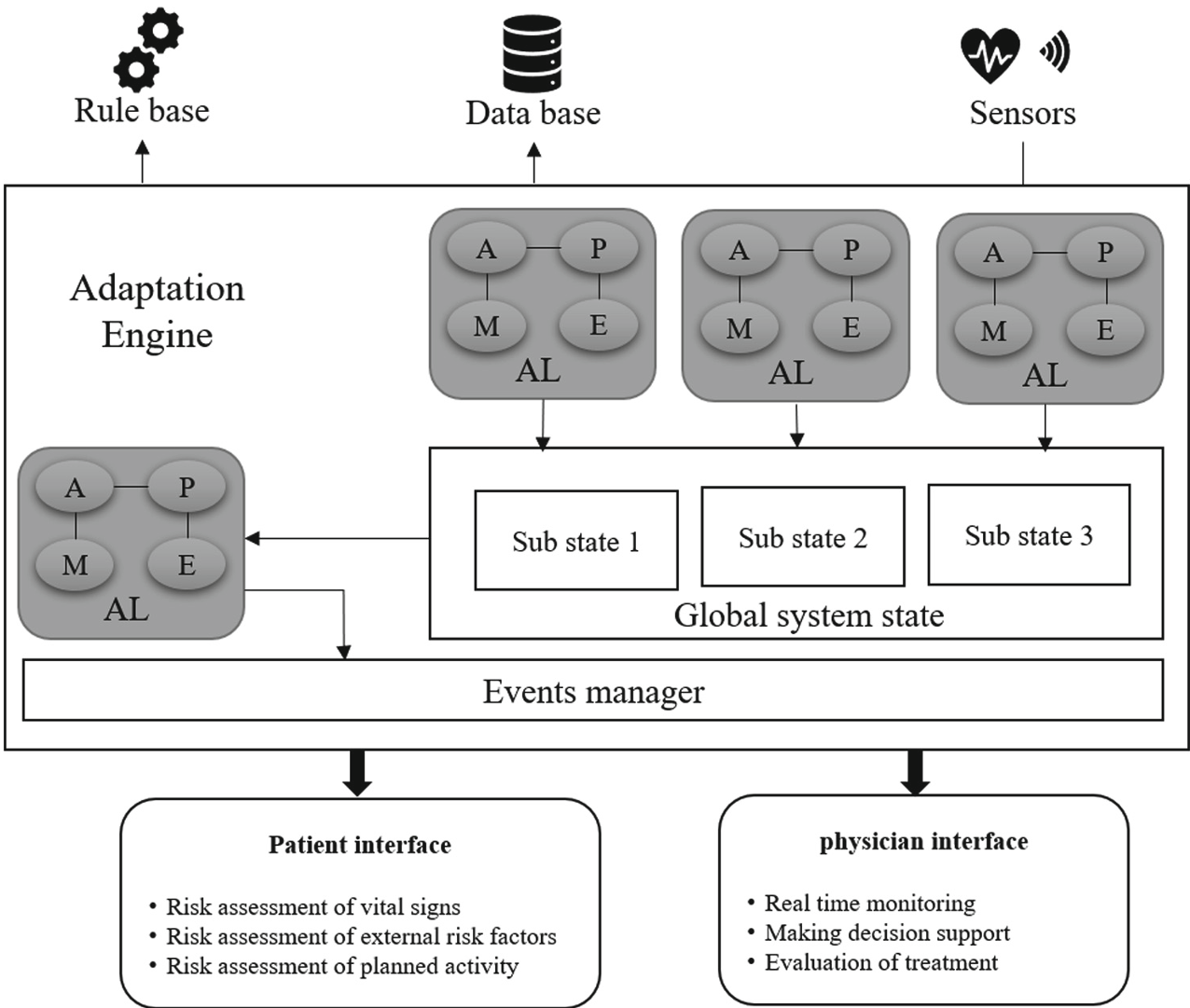 Figure 1: High-level view of the adaptation architecture and its connection to the rule base.
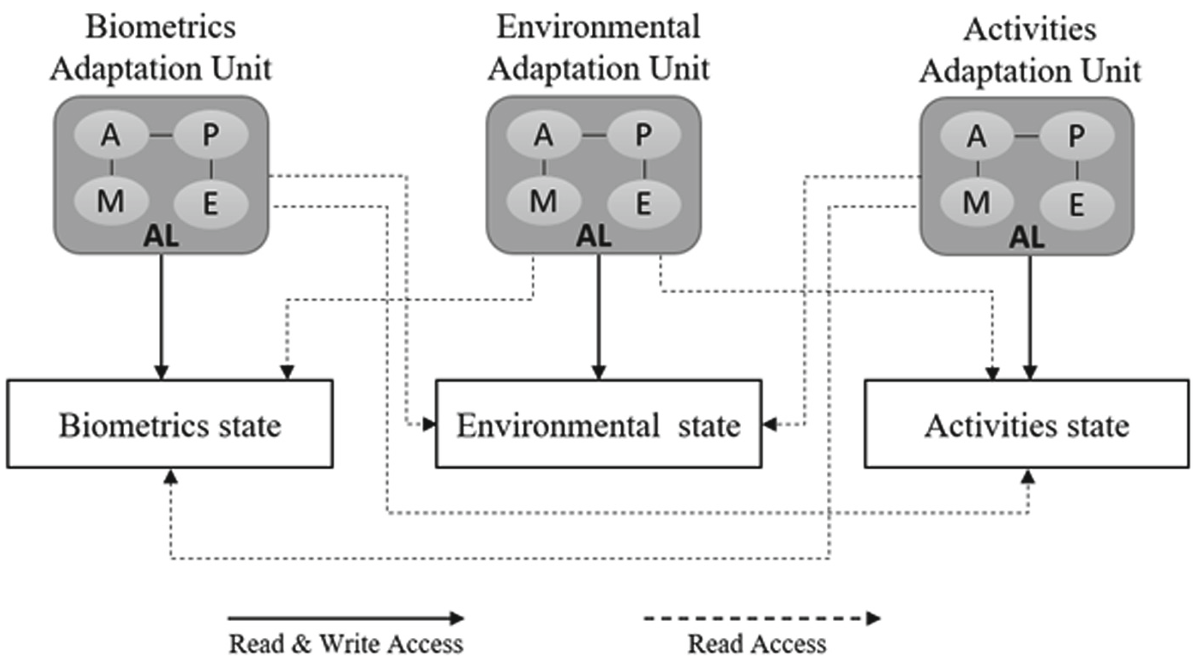 Figure 2: The interaction between the Biometrics, Environmental, and Activities subunits with the Global State.
Experiments and Results
To validate this decentralized logic, the researchers simulated data from medical records and integrated real-world COPD clinical rules.
- Efficiency: The aspect-oriented approach significantly reduced the complexity of the adaptation logic by isolating data categories.
- Responsiveness: The system successfully updated "safe ranges" dynamically. For example, if a patient began swimming, the Biometrics Unit adjusted the expected heart rate thresholds according to rules specific to physical exertion.
- Reliability: The central unit successfully detected abnormal "Out-of-Range" events and triggered precluding actions intended to prevent exacerbations.
Critical Analysis & Conclusion
Takeaway
The paper effectively demonstrates that Self-Adaptation is the "missing link" in making telemonitoring clinically viable. By decentralizing the MAPE (Monitor, Analyze, Plan, Execute) loop, the system avoids the performance bottlenecks inherent in processing diversified IoT data.
Limitations & Future Work
While the architecture is sound, the validation was performed in a simulated environment. The real test will occur when this system is deployed with live sensors on actual patients, where data "noise" and sensor "dropout" are frequent. Furthermore, the authors acknowledge that the full library of COPD rules needs to be integrated into the engine to assess the system's performance under maximum logical load.
In conclusion, this work provides a scalable blueprint for future healthcare systems, moving us closer to a world where chronic diseases are managed by "invisible" intelligent software that intervenes before a patient even realizes they are in danger.